
UN Rights Chief Sounds Alarm Over US Immigration Policies Ahead of the 2026 World Cup
The United Nations' top human rights official has issued a stark warning to the United States government, calling for a "massive rethink" of its immigration and security enforcement strategies ahead of the 2026 FIFA World Cup. The high-profile tournament, co-hosted by the United States, Canada, and Mexico, is expected to draw millions of international visitors, athletes, and officials to American soil — and the UN says current immigration policies could put the entire event's inclusive spirit in serious jeopardy.
From racial profiling and mass surveillance to aggressive on-the-ground enforcement, the UN's concerns are broad and deeply rooted in documented human rights standards. The warning signals a critical moment for US authorities to reconsider how immigration policy intersects with international sporting events and the fundamental dignity of every person who crosses its borders.
What the UN Is Saying — And Why It Matters
The UN High Commissioner for Human Rights has made clear that the current trajectory of US immigration enforcement is not just a domestic political issue — it carries real-world consequences for people traveling internationally. Teams, football officials, referees, and supporters from around the world will be subject to US entry procedures, and the fear is that those procedures, as currently structured, create an unequal and potentially discriminatory experience based on race, nationality, or religion.
Racial profiling — the practice of targeting individuals based on their race or ethnicity rather than their individual behavior — has been a persistent concern in US law enforcement for decades. Ahead of a global tournament that prides itself on unity and inclusion, the continuation of such practices sends a troubling message to the international community. The UN's intervention underscores that this is not simply a matter of domestic policy preference; it is a question of adherence to internationally recognized human rights norms.
Surveillance technologies, including facial recognition systems and expanded biometric data collection at airports and border crossings, have also drawn scrutiny. Critics argue these tools disproportionately misidentify people of color and can result in wrongful detentions or travel delays that have a chilling effect on international movement.
The Stakes for the 2026 FIFA World Cup
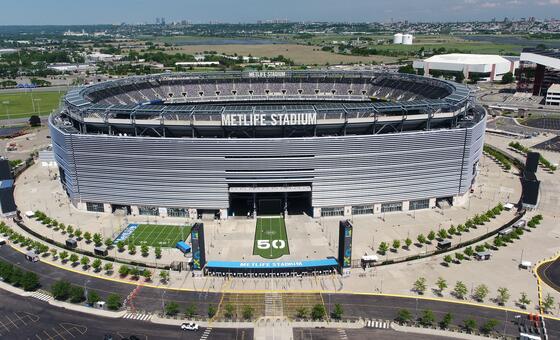
The 2026 World Cup is shaping up to be one of the most logistically complex tournaments in FIFA history. With matches spread across 16 host cities in three countries — including major US venues in New York, Los Angeles, Dallas, Miami, and Seattle — the movement of people across borders will be constant and voluminous. Fans from every corner of the globe will be making travel arrangements, applying for visas, and navigating US Customs and Border Protection in numbers not seen since the 1994 World Cup, which was also held in the United States.
If immigrants, people of color, or travelers from majority-Muslim or majority-Black nations feel targeted or unwelcome at US entry points, it could actively suppress attendance and participation. Beyond the economic loss to host cities, it would represent a significant reputational failure for the United States on a global stage — precisely the kind of moment when the world is watching most closely.
FIFA has its own anti-discrimination commitments that require host nations to provide safe, welcoming, and fair environments for all participants. The UN's intervention effectively puts the US on notice that meeting those standards will require more than stadium construction and transportation logistics — it will require meaningful immigration and security reform.
Racial Profiling, Surveillance, and Aggressive Enforcement: A Pattern of Concern
The UN's call for a "massive rethink" is not emerging from a vacuum. Over recent years, a pattern of increasingly aggressive US immigration enforcement has been well documented. Raids, deportations, expanded detention capacity, and the targeting of immigrant communities have all intensified. At the same time, surveillance infrastructure has grown more sophisticated and more pervasive, raising civil liberties concerns that go far beyond the question of football fans.
Human rights organizations have long argued that these enforcement trends have an outsized impact on communities of color — both US residents and international visitors alike. For World Cup travelers from Africa, Latin America, the Middle East, and Southeast Asia, these aren't abstract policy concerns. They translate directly into anxiety about whether they will be treated with respect and fairness when they arrive at a US port of entry.
The UN's statement adds authoritative international weight to what advocacy groups have been saying for years: that the current approach to immigration enforcement is incompatible with the values of openness and equality that a global sporting celebration is meant to embody.
What Needs to Change Before 2026
The call for a "massive rethink" implies more than minor adjustments. Among the areas where reform advocates and human rights experts believe change is urgently needed are the following:
- Clear anti-profiling guidelines for all border and security personnel stationed at World Cup venues and entry points, with robust mechanisms for accountability and complaint resolution.
- Transparency in surveillance practices, including limitations on biometric data collection and facial recognition technology that has been shown to produce racially biased results.
- Streamlined and fair visa processing for fans and officials traveling from countries that historically face elevated levels of visa denials or delays, particularly in the Global South.
- Training and oversight for Customs and Border Protection officers on cultural sensitivity, international human rights obligations, and the specific context of large-scale international sporting events.
- Coordination with FIFA and civil society organizations to establish clear standards, grievance mechanisms, and monitoring frameworks that operate independently of enforcement agencies.
A Defining Moment for US Human Rights Leadership
Hosting the FIFA World Cup is a privilege — and with that privilege comes responsibility. The United States has an opportunity in 2026 to demonstrate that it can welcome the world not just logistically, but humanely. The UN's warning is not an attack on US sovereignty or its right to enforce its laws. It is a call to ensure that those laws and their enforcement are consistent with the universal human rights standards to which the United States itself has committed.
How the US government responds to this intervention in the months ahead will say a great deal about its priorities — not just for the World Cup, but for its broader standing on the world stage. A genuine, substantive rethink of the immigration and security policies that affect international travelers is not only the right thing to do. It may well be essential to making the 2026 World Cup the unifying, joyful global event it has the potential to be.