
Europe Is Changing the Way It Handles Border Crossings
If you've traveled to Europe before, you're probably used to the ritual: hand over your passport, watch a border officer flip through its pages, hear the satisfying thud of a stamp, and you're on your way. That experience is now being phased out across the European Union. The new Entry/Exit System, widely known as the EES, replaces those ink stamps with a fully digital border management process — and if you're a non-EU traveler, it will directly affect how you enter and exit Schengen Zone countries going forward.
Having recently passed through one of the EES-enabled border points firsthand, there's a lot worth sharing about what the process actually looks like in practice, what surprised me, and what you should know before your next trip to Europe.
What Is the European Entry/Exit System (EES)?
The EES is a new EU-wide digital border system designed to modernize and automate the tracking of non-EU nationals traveling into and out of the Schengen Area. Rather than relying on physical passport stamps — which are easy to miss, forge, or simply run out of page space for — the system registers each traveler's entry and exit electronically.
When you cross a Schengen border, the EES collects and stores the following data:
- Your name, date of birth, and travel document details
- A facial image captured at the border
- Fingerprint scans (typically four fingers)
- The date, time, and location of your entry and exit
This data is stored in a centralized EU database and can be accessed by border authorities across all participating member states. The system automatically calculates how many days a traveler has spent in the Schengen Zone, helping authorities enforce the 90-day-in-180-day rule that applies to most non-EU visitors.
Who Does the EES Apply To?
The EES applies specifically to third-country nationals — that is, travelers who are not citizens of an EU member state or a country with a special bilateral agreement granting free movement rights. This includes travelers from the United States, Canada, the United Kingdom, Australia, and most other non-European nations.
EU citizens, EEA nationals, and Swiss citizens are exempt from EES registration. Long-term visa holders and those with EU residency permits are also generally excluded, as the system is primarily aimed at short-stay visitors traveling on tourist or business visas, or under visa-free arrangements.
British nationals, it's worth noting specifically, are now subject to EES following Brexit. UK citizens traveling to the Schengen Area — whether for holidays, city breaks, or short work trips — will need to complete the EES registration process.
What the Process Actually Looks Like at the Border
In practice, the EES check at the border is more involved than a traditional passport stamp, at least for your first crossing. When I arrived at the border point, the process unfolded in a few distinct steps.
First, a border officer scanned my passport using a document reader. Then I was directed to a self-service kiosk where my biometric data was collected — a facial scan and four fingerprints. The kiosk walked me through each step with on-screen prompts, and the whole thing took about three to four minutes once I reached the front of the queue.
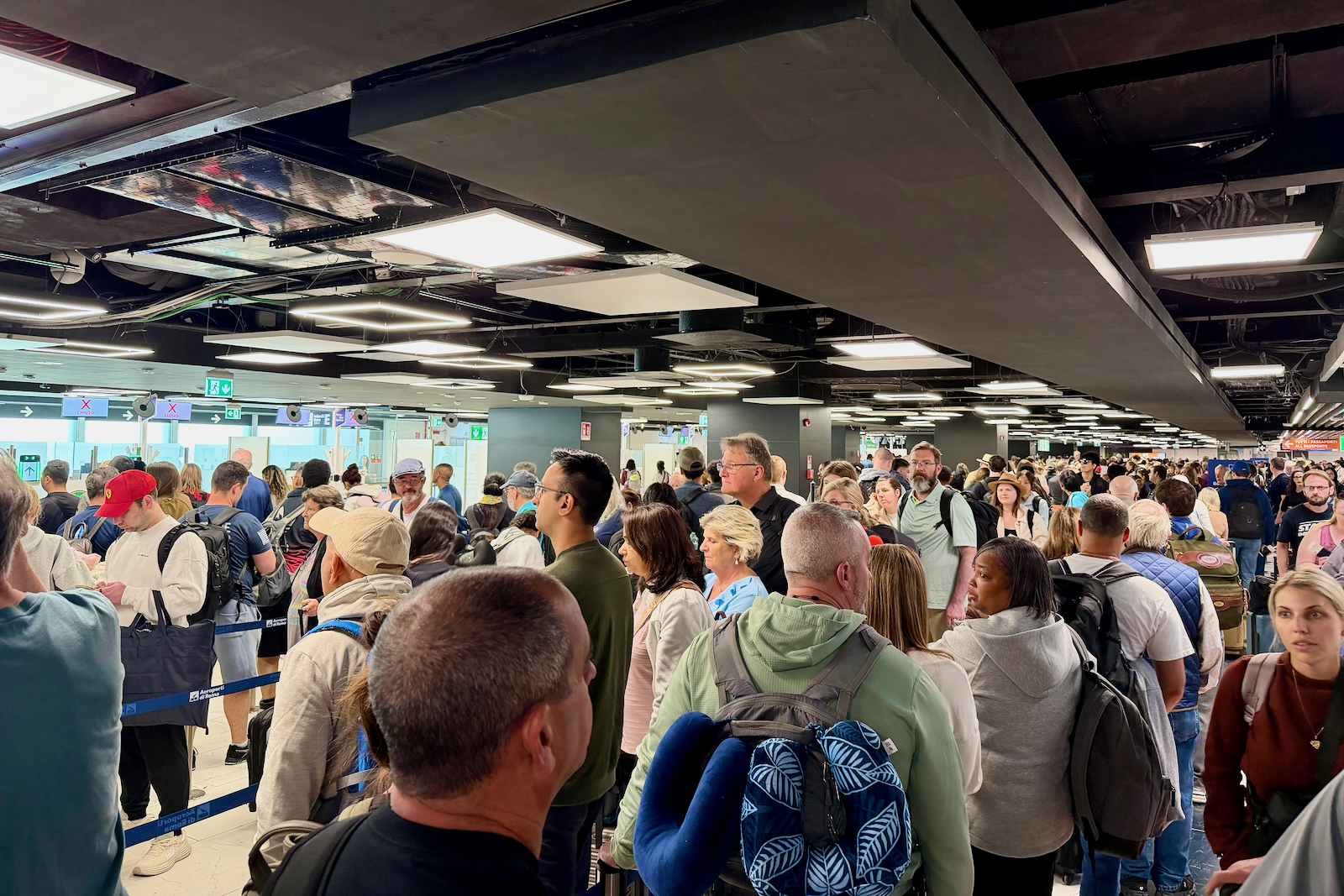
The queue itself was noticeably longer than I'd experienced before, primarily because many travelers ahead of me were going through the EES registration for the first time and weren't sure what to expect. Border staff were on hand to assist, which helped move things along, but the added processing time was real and worth factoring into your travel plans.
On subsequent crossings within the same trip, the process is reportedly faster since your biometrics are already stored in the system. The border officer can verify your identity quickly using the existing data rather than collecting everything again from scratch.
How to Prepare Before You Travel
The best thing you can do before your trip is simply know what to expect. Here are some practical steps worth taking:
- Arrive early at the border. Whether you're arriving by air, land, or sea, expect longer processing times — especially at busy entry points — until the system becomes fully routine for travelers and officers alike.
- Have your travel documents ready. Make sure your passport is valid for the full duration of your stay and is in good physical condition, as worn or damaged documents can cause scanning issues.
- Know your 90-day limit. The EES is specifically designed to enforce Schengen's 90-in-180-day rule. If you overstay, the system will flag it — unlike the old stamp-based approach, which was easier to lose track of or dispute.
- Don't expect a paper stamp. If you've kept a travel journal or liked collecting passport stamps as souvenirs, those days are numbered at EES-enabled borders.
Why the EU Is Making This Change
The EU has framed the EES as a significant upgrade in both security and efficiency. Traditional passport stamps offered only a rough record of border crossings and were prone to human error. The digital system creates a reliable, searchable record of every registered traveler's movements, making it far easier to identify overstays, flag persons of interest, and coordinate between member states on border security matters.
From a policy perspective, the EES is also closely tied to the upcoming ETIAS (European Travel Information and Authorisation System), which will require pre-travel authorization for visa-exempt travelers — similar to the US ESTA or the UK ETA. ETIAS is expected to launch separately and will work in conjunction with EES once operational.
Final Thoughts: What This Means for Your Next European Trip
The EES is a significant shift in how Europe manages its external borders, and for most travelers the adjustment will be manageable once the initial rollout settles. The technology is relatively straightforward, border staff are being trained to assist, and after your first registration the subsequent crossings should be noticeably smoother.
That said, the transition period is real. If you're planning a trip to Europe that involves crossing a Schengen border, add extra time to your airport or land crossing schedule, brush up on your remaining 90-day allowance if you're a frequent visitor, and don't be caught off guard by the biometric collection step. The era of the passport stamp may be fading — but with a little preparation, the new system doesn't have to slow you down.