
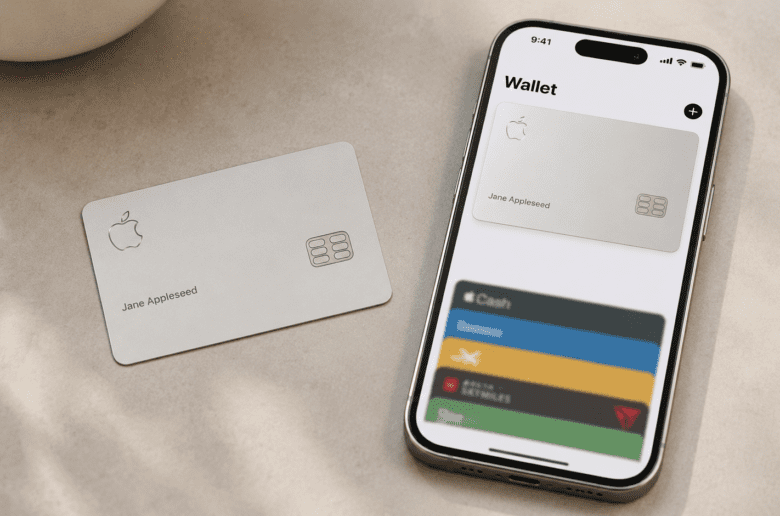
The Apple Card Was Never Really About the Card
When Apple unveiled the Apple Card back in 2019, the world took notice — not just because a tech giant was entering the financial services space, but because of how strikingly different the product looked and felt. The physical card, laser-etched titanium with no visible card number, expiration date, or CVV, was a design marvel. It looked like something out of a science fiction film. People wanted to own it just to show it off.
But here's the thing: that beautiful piece of metal may have always been more of a marketing object than a practical payment tool. When you look closely at how Apple Card is structured — its rewards system, its interface, its entire philosophy — a clear pattern emerges. Apple doesn't really want you reaching for that titanium card. It wants you reaching for your iPhone.
How Apple Card's Rewards System Quietly Discourages Physical Use
One of the most telling signs that Apple is nudging users away from the physical card is the Daily Cash rewards structure. Apple Card offers different cashback rates depending on how you pay, and the gap is hard to ignore.
- When you use Apple Pay with your Apple Card, you earn 2% Daily Cash on every purchase.
- When you use the physical titanium card for purchases, you only earn 1% Daily Cash.
- Purchases made directly with Apple — through the App Store, Apple Music, or Apple.com — earn a full 3% Daily Cash.
That tiered system is not accidental. It is a deliberate financial incentive designed to steer cardholders toward Apple Pay at every opportunity. For a consumer who is even remotely rewards-conscious, the math is simple: use your phone, get double the cash back. Use the card, leave money on the table.
Over time, those percentage points add up. Someone spending $2,000 per month who consistently uses the physical card instead of Apple Pay is effectively giving up roughly $240 per year in cashback. That's a meaningful amount, and Apple knows it.
The Physical Card Is a Gateway, Not the Destination
It's worth asking: why does the physical Apple Card even exist if Apple so clearly favors digital payments? The answer likely has everything to do with adoption and accessibility. Not every merchant accepts Apple Pay. Older point-of-sale systems, certain online retailers, and international vendors may not support contactless NFC payments. For those situations, having a backup physical card makes Apple Card a viable everyday option rather than a niche one.
But beyond practicality, the physical card serves a powerful psychological and marketing function. Handing someone a sleek, heavy, titanium card with your name engraved on it creates a moment. It sparks conversation. It signals that you are in Apple's ecosystem. The card is essentially a luxury brand artifact that quietly advertises Apple Pay every time it comes out of your wallet.
Think of it less as a payment instrument and more as a recruitment tool — it pulls people into the Apple Card world, and once they're there, the ecosystem does the work of pushing them toward digital-first habits.
Apple Pay and the Bigger Ecosystem Play
To fully understand Apple's strategy here, you have to zoom out and look at what Apple Pay means to the company as a whole. Apple Pay is not just a convenient feature. It is a critical component of Apple's services revenue model, a data-rich platform, and a powerful way to deepen user lock-in across Apple hardware.
Every time someone uses Apple Pay, the transaction flows through Apple's ecosystem. It reinforces the habit of reaching for an iPhone or Apple Watch. It keeps users engaged with the Wallet app. It creates yet another reason to stay within Apple's walled garden rather than migrating to Android or a competing financial product.
In this light, encouraging Apple Card users to pay digitally is not just about rewarding good financial behavior — it's about keeping customers tethered to Apple devices and services for the long haul.
What This Means for Apple Card Users
If you carry an Apple Card, the practical takeaway is straightforward: use Apple Pay whenever possible. The 2% Daily Cash on every purchase is significantly better than the 1% you get from swiping the physical card, and the difference compounds meaningfully over months and years.
Reserve the physical titanium card for situations where Apple Pay genuinely isn't an option — gas stations that don't support tap-to-pay, international travel, or merchants running older card terminals. In every other scenario, your iPhone or Apple Watch is the smarter payment choice, at least in terms of financial return.
It's also worth noting that Apple has continued to expand the 3% Daily Cash category over time, adding merchants like Ace Hardware, Duane Reade, Nike, Panera Bread, and T-Mobile to the list. The message is consistent: the more deeply you engage with Apple's ecosystem and preferred partners, the more you are rewarded.
A Card Designed to Make Itself Obsolete
There is something quietly fascinating about a company that designs a physical product with the primary goal of making you not use it. The Apple Card titanium is iconic, instantly recognizable, and genuinely beautiful — but its highest purpose may simply be to get it into your hands so that Apple Pay can take over from there.
It's a masterclass in ecosystem design. Apple gives you something you want to own, then builds a system that rewards you for putting it away. The physical Apple Card isn't the product. It's the invitation. Apple Pay is the product — and Apple has been quietly making that clear from day one.