
Porter Airlines Is on One of the Most Aggressive Growth Streaks in Canadian Aviation History
Not long ago, Porter Airlines was the kind of carrier that frequent flyers described with a certain quiet fondness — a boutique regional airline doing one thing exceptionally well. Flying turboprop aircraft from Toronto's intimate Billy Bishop Toronto City Airport (YTZ), it offered a level of comfort and civility that stood in sharp contrast to the chaos of Pearson International. For nearly two decades, that was enough.
But then, in 2023, everything changed. Porter introduced its first Embraer E195-E2 jet, and with it came an entirely new chapter in the airline's story — one defined not by quiet reliability but by breathtaking expansion. In the span of just three years, Porter has nearly tripled its seat capacity, extended its routes into Central America and the western United States, and repositioned itself as a genuine competitor in the North American aviation market.
The question now on every aviation analyst's lips is a simple one: can it last?
The Numbers Behind Porter's Explosive Expansion
To understand just how dramatic this transformation has been, consider the hard data. According to schedule analytics from aviation intelligence firm Cirium, Porter Airlines offered 183% more seats in 2025 than it did in 2022 — the year before its E-jet fleet arrived. That isn't incremental growth. That is a near-tripling of the airline's entire operational footprint in roughly 36 months.
And it isn't slowing down entirely. Porter is on track to grow seat capacity by an additional 16% in the current year compared to the last, suggesting that while the hyper-growth phase may be moderating, the carrier is still expanding at a rate most established airlines would consider aggressive.
For context, the legacy carriers that dominate Canadian aviation — Air Canada and WestJet — took decades to reach the scale Porter is now chasing. Porter is attempting to compress that timeline dramatically, and so far, it appears to be doing exactly that.
How the Embraer E195-E2 Unlocked a New World of Routes
The single most important catalyst for Porter's growth has been the arrival of the Embraer E195-E2 jet. With 132 seats and a range capable of reaching destinations well beyond the turboprop's roughly 1,000-mile ceiling, the E2 gave Porter access to an entirely new tier of city pairs.
Almost immediately, the airline leveraged that range to launch service to Western Canada, the United States — including a handful of routes to the West Coast — and international leisure markets in Mexico and Costa Rica. These aren't marginal additions to a regional network. They represent a fundamental redefinition of what Porter Airlines is as a business.
Alongside the new jets came a new hub. Porter established a significant presence at Toronto Pearson International Airport (YYZ), the country's largest and busiest airport, giving the carrier access to the connecting passenger flows and corporate travel markets that Billy Bishop, for all its charms, simply cannot serve at scale.
Loyalty Partnerships and the Push for Market Credibility
Growth in seat capacity means little without the passengers to fill those seats, and Porter has moved strategically to build the commercial infrastructure needed to attract them. The airline has entered into loyalty partnerships with two U.S. carriers, a move that signals its intent to compete for the frequent flyer — a passenger segment that drives disproportionate revenue for any airline.
These partnerships expand Porter's appeal to American travelers who want their miles to work harder across a broader network, and they also give Porter's own passengers more reasons to stay loyal rather than defaulting to Air Canada's Aeroplan ecosystem or WestJet Rewards. In the airline industry, loyalty isn't just a marketing program — it is a structural competitive moat, and Porter is actively working to build one.
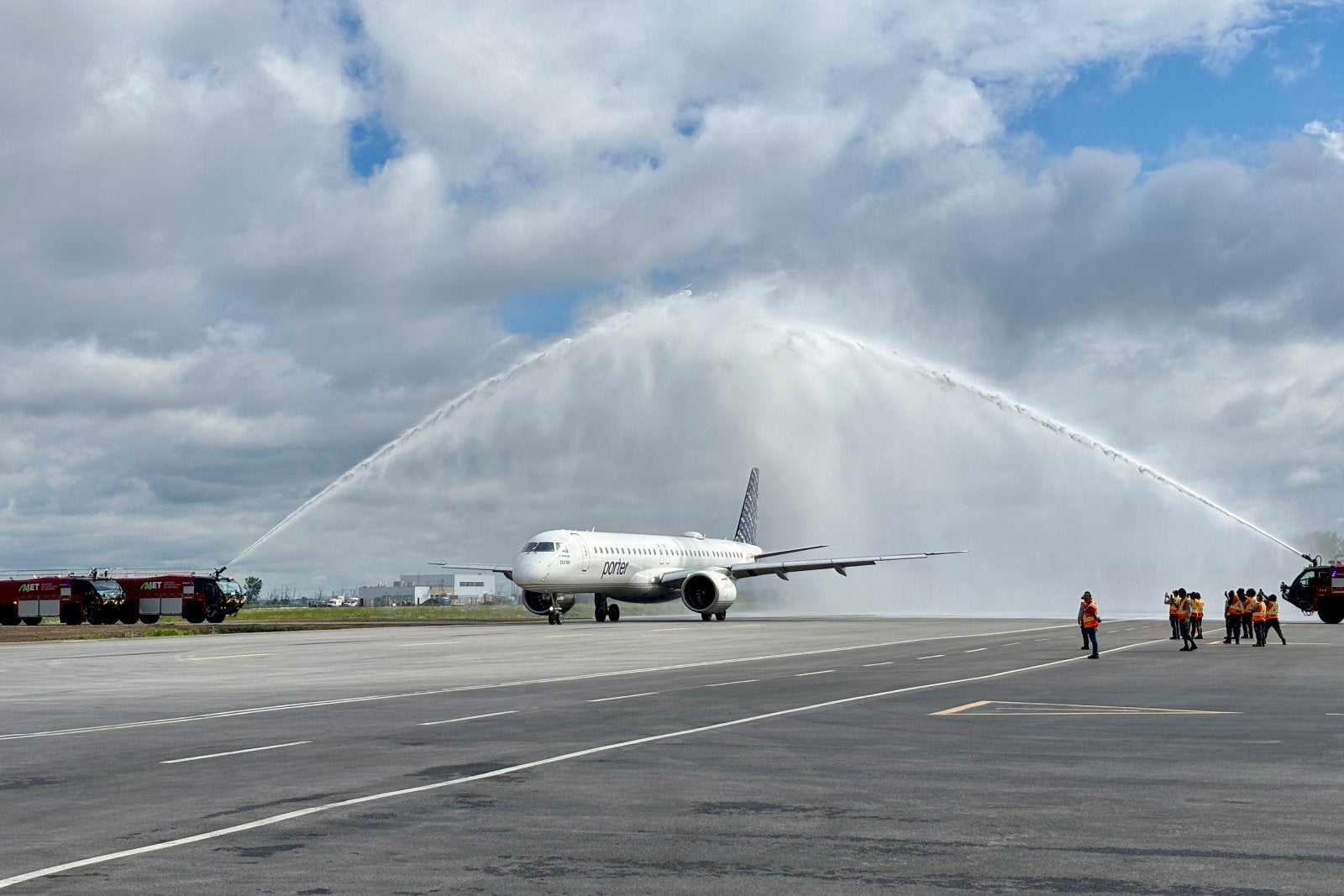
The recent opening of the new MET-Montreal Metropolitan Airport (YHU) further illustrates the carrier's ambition. Porter CEO Michael Deluce was visibly enthusiastic at the launch event, describing the moment as emblematic of where the airline now stands.
From Hyper-Growth to Sustainable Expansion — What Deluce Is Saying
To his credit, Deluce isn't pretending that the pace of the last three years can or should continue indefinitely. Speaking at the Montreal airport opening, he was candid about the shift in strategy.
"We're now going from hyper growth to something that's more a sustained pace," Deluce said. "That is a much more manageable pace of growth."
This kind of language matters in aviation. The graveyard of airline history is littered with carriers that grew too fast, stretched their operational infrastructure beyond its limits, and collapsed under the weight of their own ambition. Porter appears aware of this risk and is signaling to investors, partners, and employees alike that the next phase will prioritize stability alongside scale.
Can Porter Airlines Sustain Its Growth in a Competitive Market?
Sustainability in the airline industry depends on several converging factors: unit cost discipline, network coherence, brand differentiation, and the ability to fill new capacity with profitable passengers. Porter has clear advantages in brand differentiation — its reputation for a more pleasant in-flight experience remains a genuine selling point — but the competitive pressures it now faces are considerably more intense than those it encountered as a niche turboprop operator.
- Air Canada and WestJet will defend their most profitable routes aggressively, particularly in leisure markets like Mexico and the U.S. West Coast.
- Operating jets from Pearson exposes Porter to the full complexity and cost of competing at a major international hub.
- Loyalty programs take years and significant investment to build into a meaningful competitive advantage.
- The 16% capacity growth planned for this year still requires robust demand across both new and existing markets.
None of these challenges are insurmountable. Porter has demonstrated strategic clarity and operational discipline that many upstart carriers lack. Its decision to move deliberately into the E-jet era, rather than chasing growth for its own sake, suggests a management team that understands the business.
The Bottom Line on Porter Airlines' Remarkable Rise
Porter Airlines has pulled off something genuinely remarkable in a short period of time. By embracing new aircraft technology, expanding its geographic reach, and building commercial partnerships that give it credibility with the frequent flyer segment, it has transformed from a beloved regional niche player into a legitimate national carrier with international ambitions.
Whether the growth is truly sustainable will depend on execution in the years ahead. But if the last three years are any indication, Porter's leadership has the vision and the operational discipline to navigate the transition from hyper-growth to mature, profitable expansion. For Canadian travelers — and for anyone watching the evolution of North American aviation — Porter Airlines is one of the most compelling stories in the sky right now.