
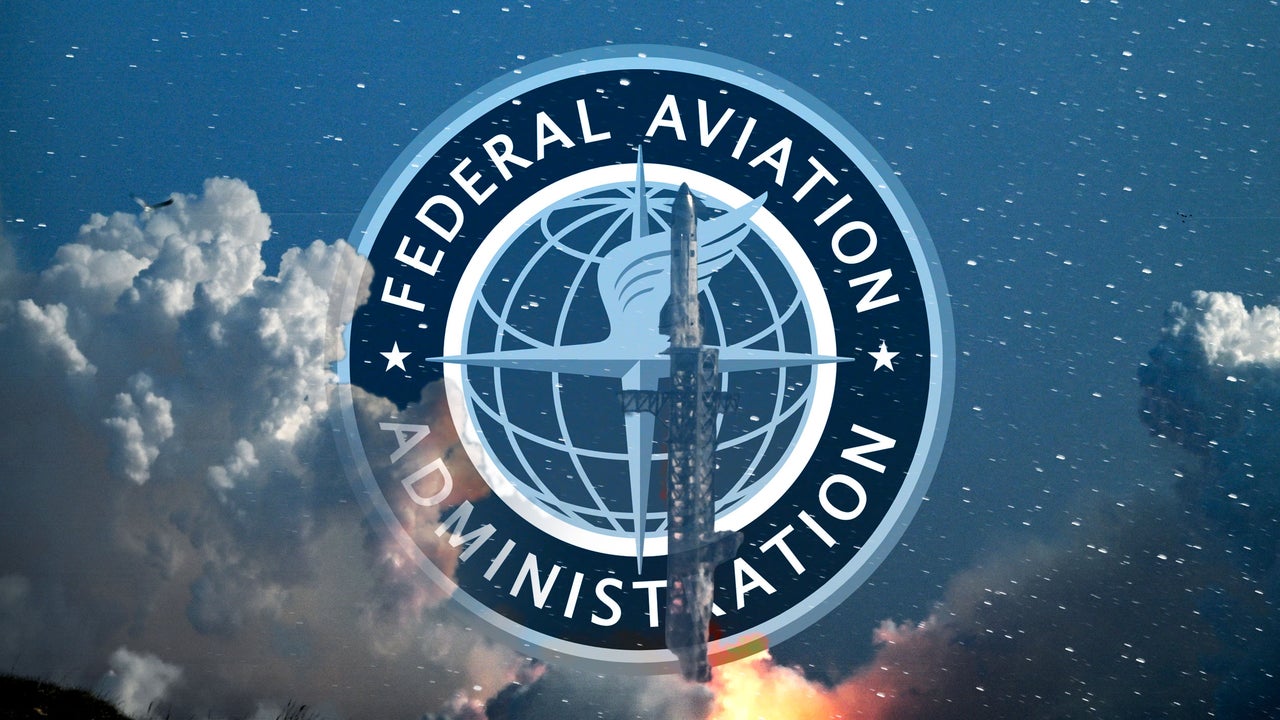
SpaceX's Rockets Are Creating a New Air Traffic Headache for the FAA
The modern space race has transformed the skies above us — and not just for astronauts. As private aerospace companies like SpaceX and Blue Origin push the boundaries of what rockets can do, a very terrestrial problem has emerged: managing commercial air traffic around increasingly frequent and ambitious rocket launches. The Federal Aviation Administration, long the authority on what flies in U.S. skies, is now grappling with a challenge that extends well beyond American borders.
The FAA's Expanding Role in the New Space Age
Traditionally, the FAA's mandate has been clear — regulate civil aviation and ensure the safety of passengers and crews flying through U.S. airspace. But the explosion of commercial spaceflight has added a complex new layer to that mission. When SpaceX launches a Starship rocket from Boca Chica, Texas, or a Falcon 9 lifts off from Cape Canaveral, the FAA must clear a massive corridor of airspace to protect commercial aircraft from the rocket's trajectory — and from any debris that might fall if something goes wrong.
These so-called Temporary Flight Restrictions, or TFRs, can ground or redirect dozens of commercial flights at a time, causing delays that ripple across airline networks. But the challenge doesn't end at the U.S. border. As rockets grow more powerful and their trajectories more ambitious, the airspace affected by launches increasingly overlaps with international territory — creating a web of diplomatic and operational complexity that the FAA was never originally designed to manage.
When Rockets Cross Borders: The International Airspace Problem
While the FAA issues launch licenses to American aerospace companies, it has no direct authority over airspace managed by foreign governments. Yet the physics of a rocket launch don't respect national boundaries. Vehicles traveling at hypersonic speeds pass through, or risk shedding debris over, airspace monitored by Canada, Mexico, the Caribbean, and potentially beyond.
This creates a situation where a single SpaceX launch from the Texas coast can simultaneously affect air traffic controllers in Houston, Mexico City, and Havana. The challenge is not merely logistical — it is fundamentally a matter of international aviation safety coordination, and it is growing more urgent as launch frequency increases year over year.
Documents recently obtained by Fast Company — specifically, letters of agreement between the FAA and relevant parties — shed important light on how these cross-border safety arrangements actually work, and, critically, where the gaps remain.
What FAA Letters of Agreement Reveal
These letters of agreement detail exactly what SpaceX is required to communicate to FAA air traffic control prior to a launch. They outline notification timelines, abort and debris contingency procedures, and how FAA controllers are expected to manage airspace in the event of a mishap. They also illustrate something that many outside the industry may not have appreciated: not every affected country is brought into the conversation on equal terms.
For example, the FAA letter of agreement governing SpaceX Starship launches from Boca Chica, Texas — situated near the mouth of the Rio Grande and just miles from the Mexican border — explicitly includes Mexico as a formal party to the agreement. Multiple Mexican air navigation officials are referenced in the document, suggesting a meaningful, if still developing, bilateral coordination framework between the two countries.
This inclusion makes geographic sense. Starship's launch trajectory takes it over, or close to, Mexican airspace almost immediately after liftoff. Mexican aviation authorities need to be ready to act, and their controllers need real-time information.
Caribbean Nations Left Out of the Loop
However, the picture becomes more complicated when looking at the broader region. Despite documented evidence that debris from Starship launches has reached the Caribbean — with rocket parts washing ashore on beaches across the region — no Caribbean nation is formally included in the same coordination agreements. This disparity raises serious questions about equitable safety practices in global aviation and spaceflight governance.
Residents and governments in Caribbean countries have already raised concerns about the environmental and physical impacts of commercial space launches originating in the United States. Reports of damage to local fish populations and debris washing onto local shorelines have drawn public attention and diplomatic frustration. Yet these nations apparently lack the same formal seat at the table that Mexico holds when it comes to pre-launch safety notifications and coordination protocols.
Broader Concerns Beyond Air Traffic
The air traffic dimension of commercial spaceflight is just one thread in a larger tapestry of concerns. Environmental advocates and coastal communities near launch sites have pointed to disruptions to marine ecosystems. The sonic booms and exhaust plumes generated by next-generation rockets like Starship have triggered scrutiny from environmental regulators. And the sheer volume of orbital debris created by an ever-busier launch schedule raises long-term concerns about the sustainability of low Earth orbit itself.
For neighboring countries, these issues compound one another. A community in the Bahamas or Jamaica may simultaneously be dealing with debris washing ashore, disrupted fishing, and rerouted commercial flights — all stemming from launches they had no role in approving and, in some cases, no formal notification about in advance.
What Needs to Change
As SpaceX, Blue Origin, and other commercial space companies continue to scale their operations, the existing framework for managing international airspace impacts is straining to keep up. Several areas demand urgent attention from policymakers and aviation regulators:
- Expanded international agreements: The FAA should work with the International Civil Aviation Organization (ICAO) to develop standardized coordination protocols that include all countries whose airspace or coastlines could be affected by U.S. commercial launches — not just immediate neighbors.
- Real-time information sharing: Air traffic controllers in affected countries need timely, accurate launch status updates to protect their aircraft. Current arrangements are inconsistent and, in some regions, nonexistent.
- Debris mitigation and accountability: Commercial space companies must be held to higher standards of accountability for debris that lands in foreign territory, both in terms of compensation and prevention.
- Regulatory capacity building: Smaller nations, particularly in the Caribbean, may lack the technical expertise or resources to engage meaningfully with U.S. launch operators. International support for building that capacity would create safer, more equitable outcomes for everyone.
The Bottom Line
The new space race is a triumph of engineering, ambition, and private enterprise. But it is also generating a new class of international challenges that neither the FAA nor the broader global aviation community has fully solved. SpaceX's rockets are reshaping what it means to manage a crowded sky — and the regulatory frameworks designed to keep passengers safe must evolve just as quickly as the rockets themselves. The conversations happening behind the scenes, in letters of agreement and bilateral negotiations, will define how equitably and safely that evolution unfolds for every nation beneath the flight path.