
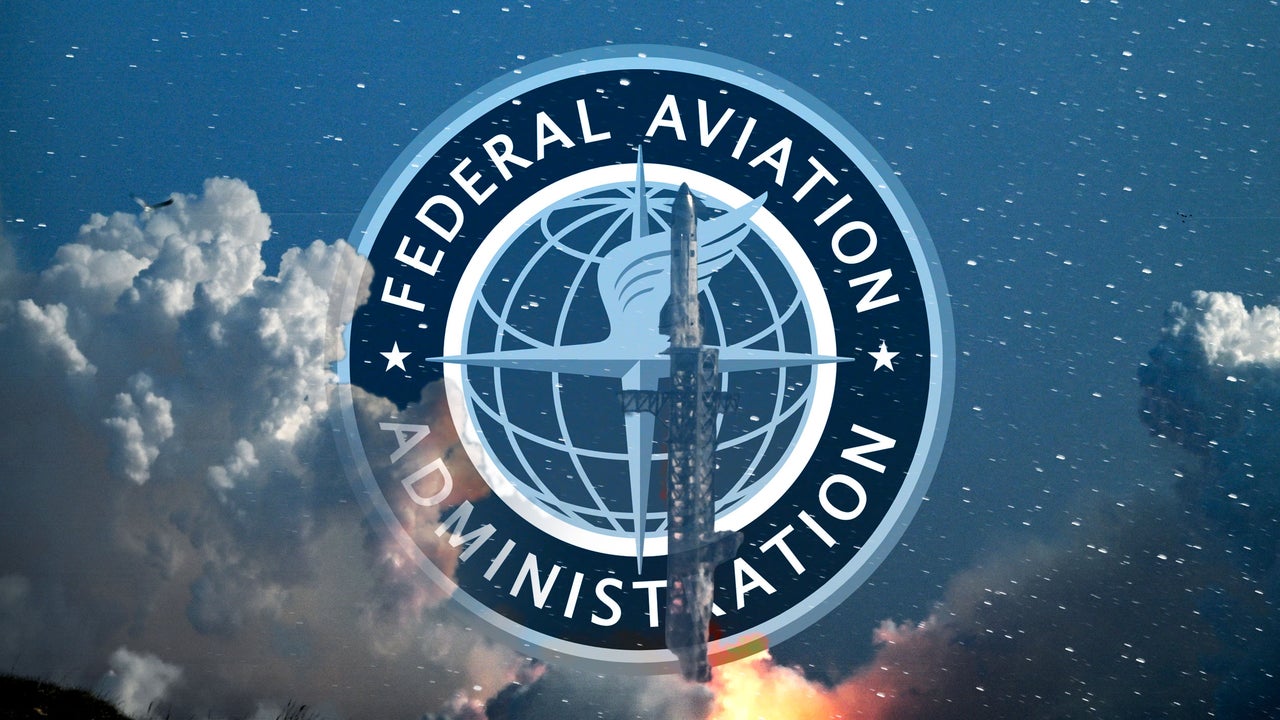
SpaceX Rockets Are Giving the FAA a Next-Generation Air Traffic Problem
The modern space race has delivered enormous technological milestones — reusable rockets, orbital test flights, and a renewed public fascination with humanity's reach beyond Earth. But for the Federal Aviation Administration (FAA), the rapid rise of commercial spaceflight has brought something far less glamorous: an increasingly complex, high-stakes juggling act between rockets and the commercial aircraft sharing the same skies. As SpaceX and other private launch companies push the boundaries of what's possible, the FAA is being forced to rewrite the rules of airspace management in real time — and those rules now extend well beyond U.S. borders.
When Rockets and Airplanes Share the Same Sky
Every time SpaceX prepares to launch a Starship or Falcon 9 rocket, the FAA must do something it never anticipated doing at scale just a decade ago: clear commercial airplanes out of the way. Rocket launches require temporary flight restrictions (TFRs) that can stretch across enormous swaths of airspace, delaying and rerouting hundreds of flights at a time. As launches have grown more ambitious in scale and more frequent in cadence, these disruptions have become a routine — and growing — source of frustration for airlines, passengers, and air traffic controllers alike.
The FAA's challenge is not simply logistical. It is also regulatory and diplomatic. While the agency issues launch licenses to American companies like SpaceX and Blue Origin, the physical reality of rocketry does not respect national borders. Rockets launched from U.S. soil can travel through airspace managed by foreign governments, and debris — whether from a planned separation or an unexpected anomaly — can fall over international waters or onto foreign territory. That transforms what might seem like a domestic air traffic problem into an international coordination challenge with real consequences.
The International Dimension: Mexico, Canada, and the Caribbean
Nowhere is the cross-border complexity more apparent than at SpaceX's Starbase facility in Boca Chica, Texas. Situated at the mouth of the Rio Grande, just miles from the Mexican border, this launch site sends vehicles on trajectories that inevitably interact with Mexican airspace and air navigation systems. Letters of agreement recently obtained by Fast Company reveal that Mexico is formally included as a party in FAA agreements governing Starship launches, with numerous Mexican air navigation officials named in the documentation.
This inclusion reflects the seriousness with which the FAA and its international counterparts must treat rocket-related airspace coordination. Before a launch, SpaceX is required to communicate specific information to FAA air traffic control, which in turn coordinates with foreign counterparts. The letters also offer a window into how the FAA communicates about potential mishaps — a critical element of safety planning when vehicles the size of office buildings are hurtling through shared airspace.
However, the same documents reveal an uneven playing field. Despite well-documented incidents of SpaceX rocket debris washing ashore in the Bahamas and other Caribbean nations, no Caribbean country is mentioned in the FAA's letters of agreement for Starship launches. This gap raises serious questions about whether affected nations are receiving adequate notice and whether their residents and aircraft are being protected to the same standard as those in countries formally included in the agreements.
A Pattern of Growing Consequences
The air traffic dimension of commercial launches is just one part of a broader set of concerns that neighboring countries have been raising about U.S. rocket activity. In Mexico, residents and environmentalists have pointed to damage to local fish populations near Boca Chica, attributed in part to the acoustic and physical impact of Starship test flights. Across the Caribbean, rocket components — likely from SpaceX missions — have been found on beaches, raising environmental and safety concerns for coastal communities.
These issues collectively paint a picture of an industry that has outpaced the regulatory and diplomatic frameworks designed to manage it. The FAA was built for an era of commercial aviation, not routine commercial spaceflight. The agency has been working to modernize its approach, but critics argue that the pace of regulatory adaptation has not kept up with the pace of rocket launches. SpaceX alone now conducts dozens of launches per year from multiple sites, each one demanding a fresh round of airspace coordination, safety evaluation, and international communication.
What Needs to Change
Addressing the FAA's growing space-launch air traffic challenge will likely require action on several fronts:
- Expanded international agreements: Countries currently excluded from formal coordination frameworks — particularly in the Caribbean — need to be brought into the process, especially given documented incidents of debris reaching their shores and airspace.
- Improved launch scheduling transparency: Airlines and airport operators need better advance notice of planned launches and potential airspace impacts, reducing last-minute disruptions to flight schedules.
- Dedicated regulatory resources: The FAA's Office of Commercial Space Transportation needs sustained investment and staffing to keep pace with an industry that is growing exponentially in both ambition and launch frequency.
- Clearer debris accountability standards: As rocket components increasingly land in foreign jurisdictions, there needs to be a clearer international framework governing liability, environmental remediation, and safety reporting.
The Bigger Picture for Commercial Spaceflight
The tensions emerging around SpaceX launches and FAA airspace management are a microcosm of a larger challenge facing governments worldwide: how to regulate an industry that is simultaneously a source of national pride, economic growth, and geopolitical competition, while ensuring that the costs of that industry are not unfairly borne by those with the least power to push back. Caribbean nations with limited diplomatic leverage are in a very different position than Mexico when it comes to demanding inclusion in launch coordination agreements — and that disparity matters.
As the commercial space industry continues its rapid expansion, the FAA and U.S. policymakers will need to reckon with the full scope of the country's responsibility to neighbors who share the skies overhead and the coastlines below. Rocket launches may be triumphs of American engineering, but their consequences are decidedly multinational. Getting the regulatory framework right — fairly and thoroughly — is not just good policy. It is a matter of international trust.