
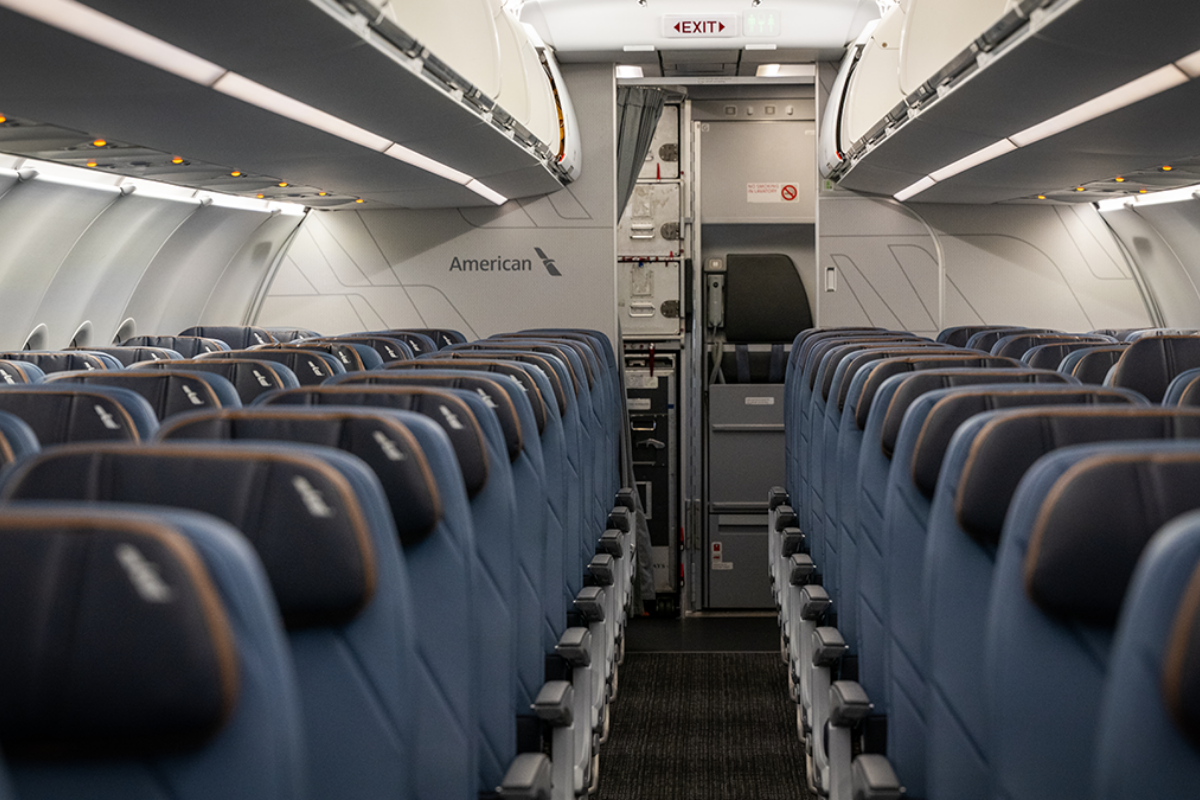
American Airlines Is Accelerating Its A319 and A320 Cabin Retrofit Program
American Airlines is ramping up the pace of its interior retrofit program for its legacy Airbus A319 and A320 narrowbody fleet, a sweeping overhaul that promises a fresher passenger experience while introducing a handful of trade-offs that frequent flyers will want to understand before they board. The carrier is pressing forward with modernized cabin configurations that include updated seating, redesigned galley spaces, and a noticeably absent feature many travelers have grown accustomed to: seatback entertainment screens.
The program gained early momentum when the first retrofitted Airbus A319, a 12-year-old aircraft bearing registration N9002U, returned to commercial passenger service in February following an extensive cabin overhaul completed at a maintenance facility in San Salvador, El Salvador. That aircraft served as the prototype for the broader cabin reconfiguration initiative, setting the template that American Airlines intends to roll out across a significant portion of its narrowbody fleet in the months ahead.
What Is Changing Inside the Cabin?
The retrofit program touches nearly every aspect of the cabin environment, from the seats passengers sit in to the way the aircraft's interior space is organized and utilized. American Airlines has made a series of deliberate design choices aimed at modernizing the look and feel of these aging jets while simultaneously extracting more commercial value from each aircraft in the fleet.
New First Class Seats
One of the headline changes is the introduction of new domestic First Class seats across the retrofitted aircraft. The updated seating product is designed to offer a more contemporary aesthetic and improved comfort compared to the older seats that have been in service for years on these narrowbody jets. Passengers who regularly fly in the premium cabin will notice a meaningfully refreshed experience, with seat designs that align more closely with the interiors already found on American's newer Airbus A321 and Boeing 737 MAX aircraft.
More Seats in the Economy Cabin
One of the most significant operational changes introduced through the retrofit is an increase in total seat count. American Airlines is adding seats to the economy cabin as part of the reconfiguration, a move that reflects the airline's broader strategy to maximize revenue per departure across its domestic network. For passengers, this means slightly tighter pitch in some configurations, so checking your specific aircraft assignment before booking is more important than ever if legroom is a priority for you.
Miniature Galleys
To accommodate the additional seating, American Airlines has redesigned the galley spaces on the retrofitted A319 and A320 aircraft, shrinking them down into what can best be described as miniature galleys. These compact service areas take up considerably less floor space than their predecessors, freeing up room for extra seat rows. While this allows the airline to carry more paying passengers, it does present logistical challenges for cabin crew tasked with preparing and distributing service on busy flights.
The Big Trade-Off: No Seatback Screens
Perhaps the most talked-about aspect of the retrofit is the decision to remove seatback in-flight entertainment screens from the cabin entirely. This puts American's retrofitted A319 and A320 fleet in line with a growing industry trend, particularly among U.S. carriers, toward screen-free narrowbody cabins that rely instead on passengers streaming content to their own personal devices via the aircraft's onboard Wi-Fi system.
American Airlines offers its Viasat-powered Wi-Fi connectivity service on these aircraft, and passengers can access the airline's streaming entertainment portal through their smartphones, tablets, or laptops. However, the removal of seatback screens is a tangible downgrade for travelers who prefer the convenience of built-in entertainment, do not own a personal device, forget to download content before departure, or find themselves on a flight where Wi-Fi connectivity is inconsistent or unavailable.
Critics of the move argue that eliminating seatback screens is a cost-cutting measure dressed up as a modernization effort. Supporters counter that the technology infrastructure required to maintain hundreds of individual seat-mounted screens is expensive and maintenance-intensive, and that the vast majority of passengers today travel with a personal device capable of delivering a superior entertainment experience.
Why Is American Airlines Doing This Now?
The timing of the accelerated retrofit program is no coincidence. American Airlines has been working to bring greater consistency across its domestic narrowbody fleet, which currently operates a patchwork of different cabin configurations inherited from years of fleet growth and merger activity. Standardizing the interior layout across its A319 and A320 jets simplifies crew training, streamlines maintenance, and improves the overall predictability of the passenger experience, regardless of which specific aircraft a traveler ends up on.
There is also a revenue motivation at play. By adding seats and reducing galley footprint, American is able to increase the number of fare-paying passengers on each departure, directly improving unit economics on routes where these aircraft operate. In a competitive domestic market where margins remain thin, even a handful of additional seats per flight can translate into meaningful revenue gains at scale.
What Should Passengers Expect Going Forward?
As the retrofit program accelerates, travelers flying American Airlines on domestic routes should increasingly expect to encounter the new cabin configuration when they board an A319 or A320. Before your next flight, it is worth checking whether your aircraft has already been retrofitted, particularly if you were counting on a seatback screen for entertainment. Downloading content to your device in advance, ensuring your battery is fully charged, and bringing a portable charger are all smart habits to adopt for screen-free flying.
- Check your flight's aircraft type and cabin configuration when booking or shortly before departure.
- Download movies, shows, or podcasts to your personal device before you leave home or the airport gate.
- Carry a portable charging device, as streaming content can drain your device battery significantly during longer domestic flights.
- If extra legroom is a priority, review seat maps carefully given the increased seat count in the economy cabin.
- Take advantage of American's onboard Wi-Fi to access the airline's streaming entertainment portal directly from your device.
American Airlines' decision to accelerate the A319 and A320 retrofit program reflects both the commercial pressures facing legacy carriers and the broader evolution of the narrowbody passenger experience in the United States. The new interiors bring a welcome visual refresh and product consistency to an aging fleet, but the removal of seatback screens and the addition of more seats serve as a reminder that modernization and passenger comfort do not always move in exactly the same direction. For frequent American Airlines travelers, understanding what is changing on these aircraft is the first step toward planning a more comfortable and well-prepared journey.