
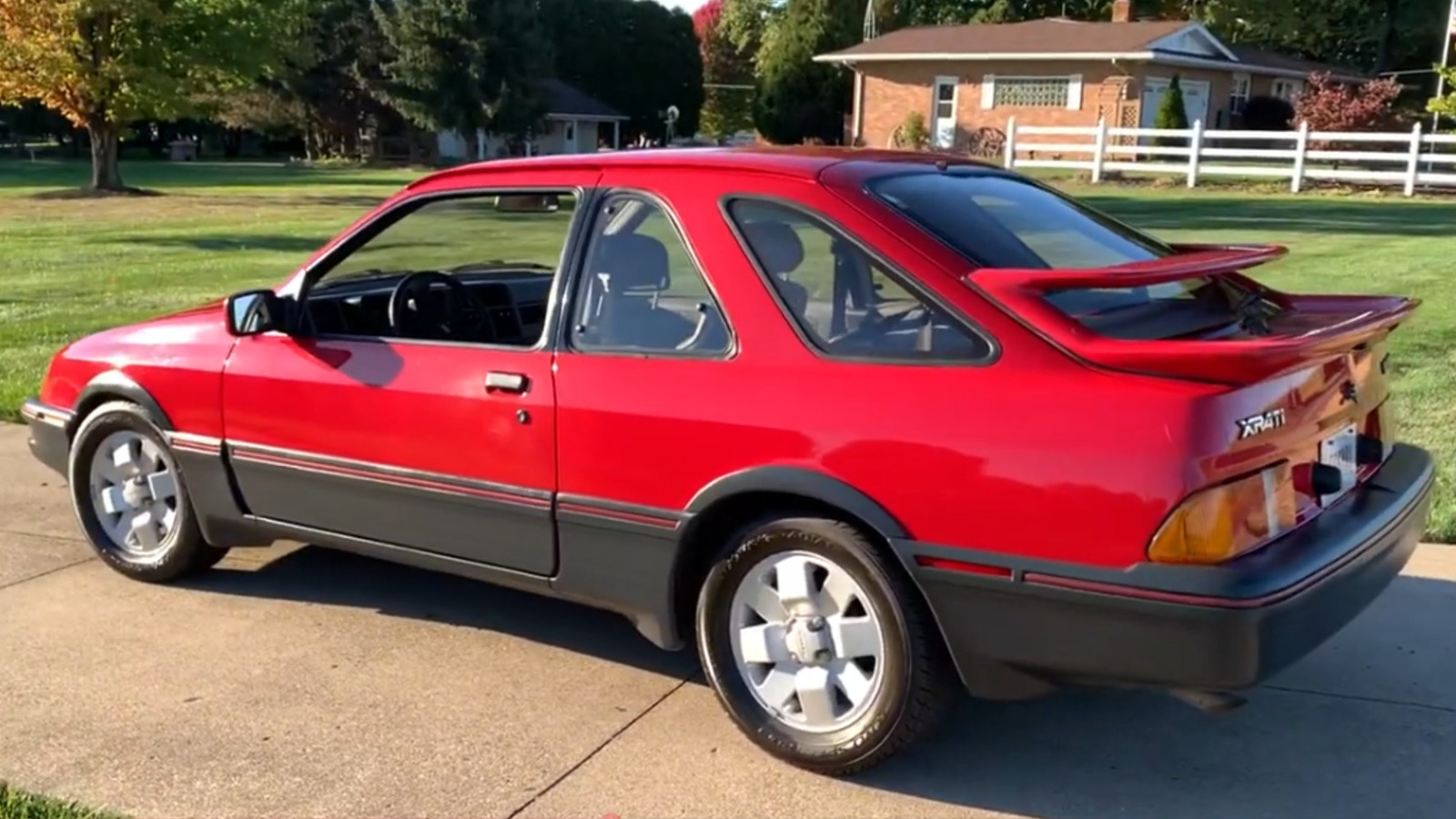
The Merkur XR4Ti: Ford's Federalized Sierra That Deserved Better
The 1980s were a fascinating time in the American automotive market. Japanese imports were reshaping buyer expectations around reliability and efficiency, European brands were carving out a premium niche, and domestic automakers were scrambling to respond. Ford's answer to one particular challenge — the growing dominance of the BMW 3 Series — came in the form of a sleek, turbocharged European transplant wearing an unfamiliar badge: the Merkur XR4Ti. It was a bold gamble, and in many ways, it was a brilliant car. But brilliance alone was never going to be enough.
What Exactly Was the Merkur XR4Ti?
To understand the XR4Ti, you have to understand its origins. Ford of Europe had developed the Sierra in the early 1980s as a replacement for the long-running Cortina. Sleek, aerodynamic, and modern, the Sierra was a significant departure from the boxy European family cars of the era. One of its most striking variants was the Sierra XR4i — a sporty, twin-spoilered hatchback that turned heads across the continent.
Ford saw an opportunity to bring this European flair to the American market, but doing so required considerable effort. The car needed to meet U.S. federal safety and emissions standards, which meant significant re-engineering. Ford replaced the European fuel-injected inline-four with a 2.3-liter turbocharged four-cylinder engine — the same unit found in the Mustang SVO — producing around 175 horsepower. Suspension tuning was revised, the interior was updated for American tastes, and the left-hand-drive configuration was, of course, retained. The result was officially sold not under the Ford name, but through Lincoln-Mercury dealers under the newly created Merkur sub-brand, which Ford launched in 1985 specifically for this purpose.
A Car Built to Take On the BMW 3 Series
Ford's ambitions for the XR4Ti were not modest. The car was explicitly positioned as a competitor to the BMW 3 Series, particularly the 325i, which had become the aspirational benchmark for driving enthusiasts in America. The Merkur offered a compelling argument on paper: European design credentials, genuine performance from the turbocharged engine, sharp handling, and a price point that undercut most of its German rivals.
Automotive journalists who drove the XR4Ti generally came away impressed. The turbo engine delivered strong mid-range punch, the suspension felt planted and communicative, and the distinctive biplane rear spoiler gave the car a visual drama that few sedans could match. Road and Track and Car and Driver both praised its European character and driving dynamics, and it earned a reputation as a car that rewarded skilled drivers who were willing to explore its limits.
The Strengths Were Real — and So Were the Problems
For all its virtues, the XR4Ti carried a number of burdens that no amount of driving excitement could overcome. The most damaging of these was reliability. Early turbocharged engines of the era were not known for bulletproof longevity, and the XR4Ti was no exception. Turbo lag, heat-related issues, and mechanical gremlins frustrated owners and generated negative word-of-mouth that proved difficult to shake.
Then there was the dealer network. Because Merkur was a brand-new sub-brand sold exclusively through Lincoln-Mercury dealers, service quality varied wildly. Mechanics unfamiliar with the car's European underpinnings sometimes struggled with repairs, and sourcing parts could be an exercise in frustration. For a car competing in a segment where the ownership experience was as important as the driving experience, this was a serious weakness.
The marketing strategy also raised eyebrows. The Merkur name itself — chosen to evoke a pan-European sophistication — was difficult for American consumers to pronounce and even harder to connect with any clear brand identity. Ford spent money promoting it, but the message never quite landed. Buyers looking at European sport sedans were often willing to stretch their budgets for an established marque like BMW or Mercedes-Benz, and those shopping on price could find capable domestic alternatives.
The Legacy of a Car That Arrived at the Wrong Time
Ford produced the XR4Ti from 1985 through 1989, and over that period, sales never reached the volumes necessary to justify the enterprise. The Merkur brand itself folded in 1989, taking the XR4Ti with it. The companion model, the Merkur Scorpio, fared even worse and did little to bolster the brand's credibility before the plug was pulled.
In hindsight, the XR4Ti feels like a car that deserved a different fate. The bones were excellent — a well-sorted European performance platform with genuine driver appeal and a character that stood apart from anything else on American roads at the time. Had Ford invested more heavily in dealer training, resolved the early reliability issues more aggressively, and given the brand more time to build its identity, the story might have ended differently.
Why the XR4Ti Still Matters Today
Today, surviving Merkur XR4Tis occupy a warm place in the hearts of automotive enthusiasts who value the road less traveled. They remain relatively affordable as collector cars, parts availability has improved through a dedicated community of owners and specialists, and the performance potential of the turbocharged platform makes them popular candidates for light modification.
More broadly, the XR4Ti stands as a reminder that great products don't always succeed on merit alone. Context matters. Timing matters. Brand trust, dealer experience, and long-term reliability all matter enormously in the automotive world. Ford had a legitimately impressive machine on its hands — it simply couldn't control enough of the variables that determined whether American buyers would embrace it.
The Merkur XR4Ti was, in every meaningful sense, ahead of its time and behind the eight ball simultaneously. That contradiction is precisely what makes it one of the most fascinating footnotes in American automotive history.