
India Deploys Military-Level Security to Restore Trust in National Exam System
India is taking extraordinary and unprecedented steps to rebuild public confidence in its national student examination framework following a string of high-profile scandals that have rocked the country's education system. The measures, which include the deployment of military personnel and strict logistical protocols, come in direct response to widespread anger among young people and mounting political pressure on Prime Minister Narendra Modi's government. For a country where a single examination can define the entire trajectory of a young person's life, the stakes could not be higher.
The Exam Scandals That Shook India
India's national examinations are among the most competitive and consequential in the world. Tests such as NEET (National Eligibility cum Entrance Test) for medical admissions and NET (National Eligibility Test) for academic positions attract millions of candidates every year. The sheer scale of these exams, combined with the enormous social and economic rewards they unlock, has long made them targets for fraud, paper leaks, and organized cheating networks.
In 2024, a series of damaging revelations brought these vulnerabilities into sharp relief. Allegations of question paper leaks, impersonation fraud, and corruption within examination bodies surfaced across multiple states. Students who had spent years preparing for these tests found themselves caught in a system they could no longer trust. Many discovered that peers who had obtained leaked papers had gained an unfair edge, rendering their own legitimate efforts meaningless.
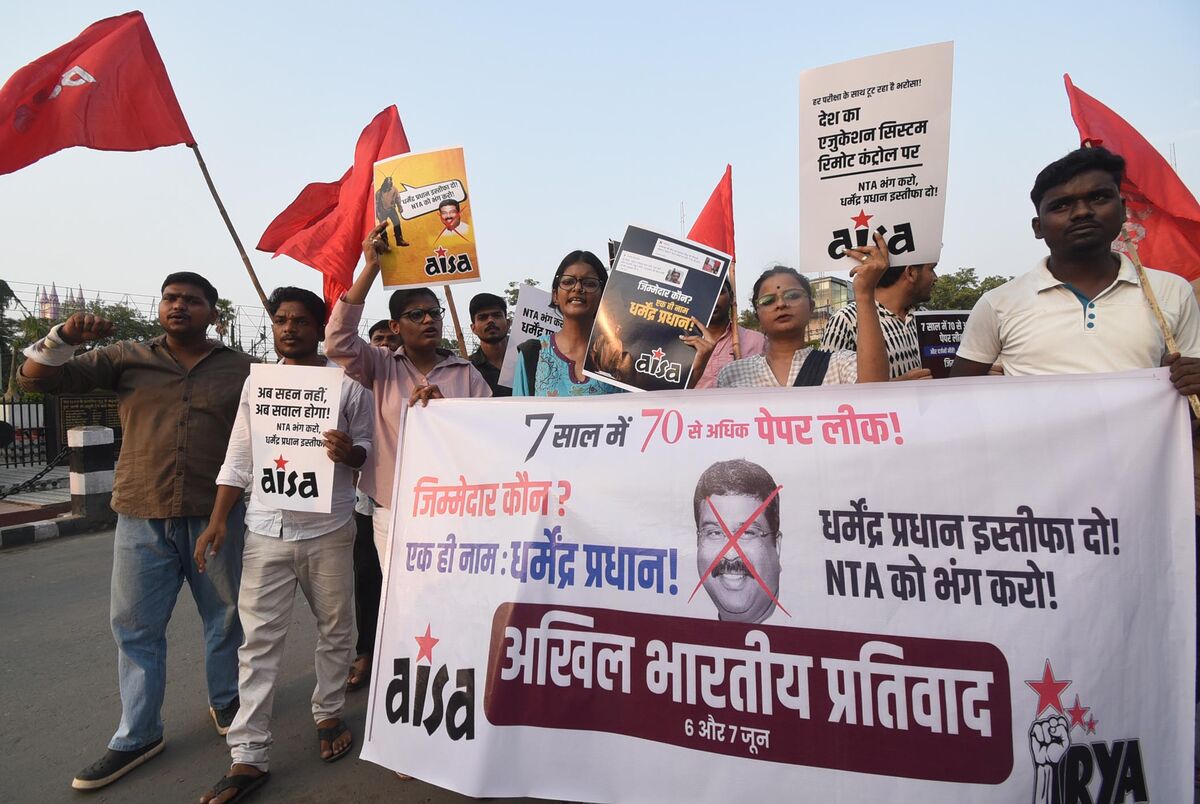
The fallout was swift and furious. Students took to the streets in cities across India, demanding accountability, transparency, and immediate reform. Social media amplified their voices, and the controversy quickly became a national political issue. Opposition parties seized on the chaos to challenge the credibility of the Modi administration's handling of education policy, intensifying the pressure on New Delhi to act decisively.
Why This Crisis Matters So Much to Young Indians
To understand the depth of public anger, it is important to appreciate what these examinations represent to millions of Indian families. Competition for seats in top medical colleges, engineering institutions, and government positions is fierce beyond measure. For many students — particularly those from lower-income or rural backgrounds — a single exam result can mean the difference between upward mobility and stagnation. Families often sacrifice enormously, spending years of savings on coaching classes and preparation materials.
When that system is perceived as corrupt or rigged, it does not merely disappoint candidates. It destroys trust in the fundamental promise of meritocracy that modern India has been built upon. Young people who have done everything right feel betrayed not just by an institution, but by the state itself. That emotional weight is what transformed exam grievances into street protests and political crises.
India's Unprecedented Response: Bringing in the Military
Facing public fury and reputational damage, the Indian government announced a sweeping overhaul of examination security protocols. At the center of this response is an unprecedented decision to involve military and paramilitary personnel in the logistics of conducting national exams. This marks a dramatic escalation from previous security arrangements, which largely relied on civilian administrative staff and local police.
Under the new framework, the government has outlined several key measures:
- Military and paramilitary units are being assigned to escort and secure examination materials from printing facilities to distribution centers and individual exam venues, significantly reducing the windows during which paper leaks could occur.
- Examination centers are being subjected to enhanced surveillance, including CCTV monitoring and electronic jamming equipment to prevent the use of unauthorized devices during tests.
- Stricter verification processes are being introduced for candidates at entry points, including biometric authentication in select locations, to combat impersonation fraud.
- The National Testing Agency (NTA), the body responsible for conducting major national exams, has come under review, with calls for structural reforms and greater accountability mechanisms.
- Investigations have been launched into alleged criminal networks responsible for orchestrating paper leaks, with arrests made in several states.
The central government has also signaled its willingness to explore technological solutions, including encrypted digital delivery of exam papers to reduce physical handling and the associated risk of leaks at the source.
Political Implications for Prime Minister Modi
The exam scandal crisis has arrived at a politically sensitive moment. Prime Minister Modi's Bharatiya Janata Party (BJP) had positioned education and youth empowerment as central pillars of its governance agenda. The perception that the examination system — a gateway for millions of young Indians — had been compromised under the central government's watch created a significant vulnerability.
Opposition parties, including the Indian National Congress, were quick to frame the controversy as evidence of institutional decay and administrative negligence. The government's decision to deploy military-level security can therefore be read not only as a practical reform but also as a political signal: an unambiguous message that the administration takes the crisis seriously and is prepared to use every resource at its disposal to fix it.
The Road Ahead: Rebuilding Trust in India's Examination System
Security measures alone, however impressive, will not be sufficient to fully restore public confidence. Experts in education policy have noted that the deeper problems lie in systemic issues: understaffed examination bodies, inadequate oversight mechanisms, the enormous black market value created by high-stakes competitive exams, and a culture in which corruption has at times been normalized at various administrative levels.
Long-term reform will likely require a combination of structural changes to how national examinations are designed and administered, stronger legal deterrents for those who engage in fraud, and potentially a broader rethinking of whether single high-stakes exams should carry such overwhelming weight in determining a student's future.
For now, India's decision to turn to its military to protect the integrity of student examinations stands as a remarkable symbol of how seriously this crisis has been taken — and how much work remains to ensure that every young Indian can compete on a genuinely level playing field.