
From Regional Underdog to Continental Contender: The Porter Airlines Story
Not long ago, Porter Airlines was a niche player — a quietly reliable regional carrier best known for its turboprop flights out of Toronto's downtown-adjacent Billy Bishop Toronto City Airport (YTZ). Passengers appreciated the boutique experience and the convenient location, but few would have predicted that within a few short years, Porter would be competing with the likes of Air Canada and WestJet on transcontinental and even international routes.
Fast-forward to 2025, and the airline has nearly tripled in size compared to where it stood just three years ago. With a fleet of sleek Embraer E195-E2 jets, new bases, new international destinations, and fresh loyalty partnerships, Porter Airlines has staged one of the most dramatic transformations in recent North American aviation history. But the big question on every aviation analyst's mind is this: can it last?
By the Numbers: Just How Fast Has Porter Grown?
The scale of Porter's expansion is staggering when you look at the raw data. According to schedule analytics from aviation intelligence firm Cirium, Porter Airlines offered 183% more seats in 2025 than it did in 2022 — the year before its first Embraer E195-E2 jet entered service. To put that in perspective, nearly tripling your seat capacity in three years is a feat most legacy carriers would struggle to replicate even over a decade.
And the airline isn't hitting the brakes. Porter is on track to increase its total seat capacity by another 16% in 2025 compared to the prior year. That's a moderation from its earlier hypergrowth phase, but it still represents meaningful, aggressive expansion by any industry standard.
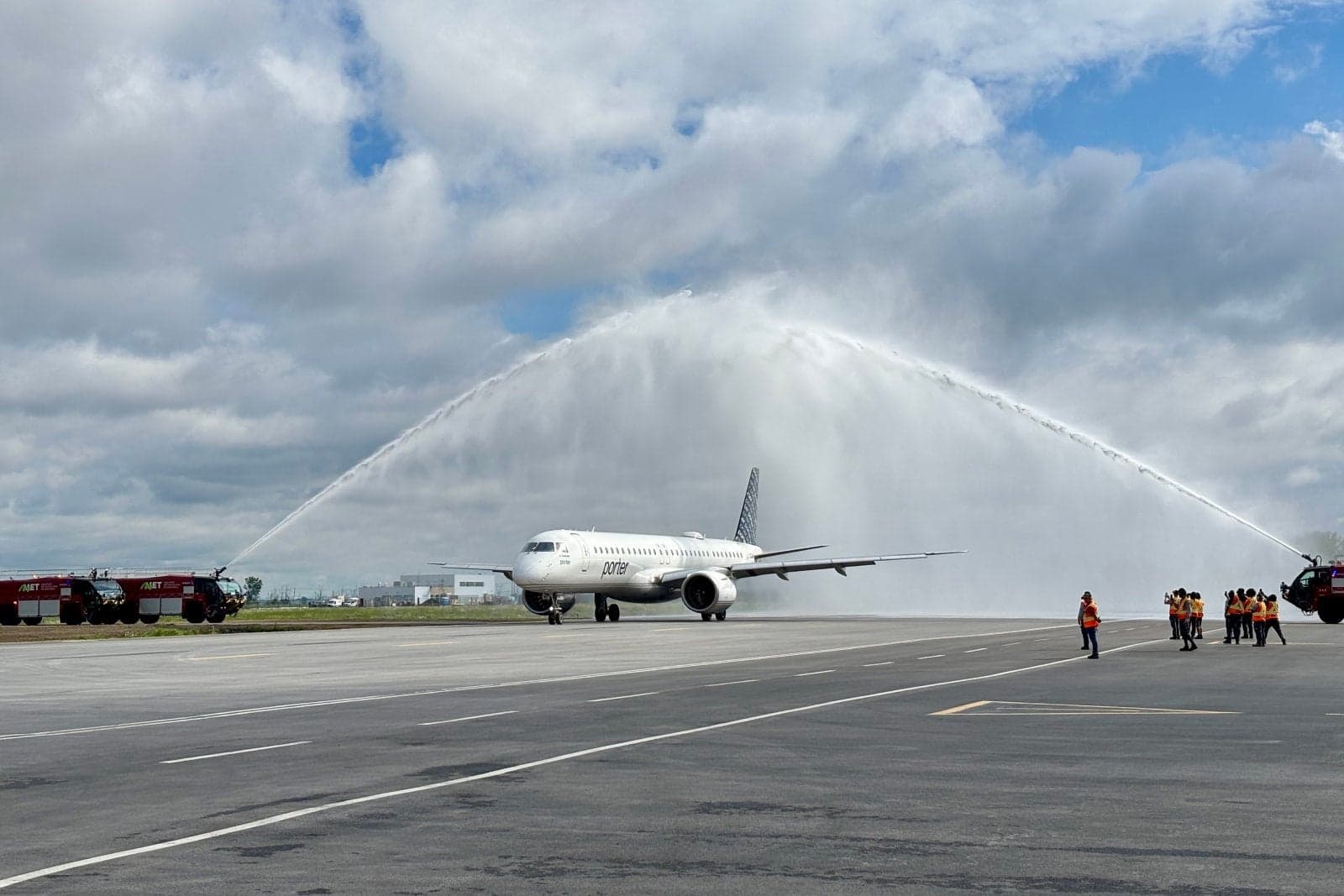
Porter CEO Michael Deluce acknowledged this shift in tone at the recent opening of the new MET-Montreal Metropolitan Airport (YHU), saying: "We're now going from hyper growth to something that's more a sustained pace. That is a much more manageable pace of growth." It's a carefully chosen phrase — one that signals maturity without surrendering ambition.
The Jet That Changed Everything: The Embraer E195-E2
The single most transformative moment in Porter's recent history was the introduction of the Embraer E195-E2 in 2023. With 132 seats and the range to reach destinations well beyond the airline's traditional 1,000-mile turboprop network, the E2 jet gave Porter an entirely new strategic identity.
Before the E-Jets arrived, Porter's world was defined by the de Havilland Dash 8-Q400 — a workhorse turboprop perfectly suited for short hops between eastern Canadian cities and select U.S. destinations. The aircraft served the airline well for nearly two decades, and it remains in the fleet today. But the E195-E2 opened doors that were simply impossible before.
With the new jets, Porter launched service from a second major base at Toronto Pearson International Airport (YYZ), unlocking a far broader catchment area and connecting the airline to Pearson's extensive international transfer network. The move was a strategic masterstroke that placed Porter in direct competition with the country's dominant carriers on their home turf.
New Destinations, New Markets, New Ambitions
The destination map Porter has built since launching jet service reads like the wish list of a carrier twice its size. The airline has pushed into Western Canada, bringing competition to markets that had long been dominated by Air Canada and WestJet. It has ventured south into Mexico and Costa Rica, giving leisure travelers affordable alternatives during peak vacation seasons. And it has expanded meaningfully into the United States, including a handful of routes reaching all the way to the West Coast.
Each of these market entries carries its own set of competitive challenges. Western Canada routes mean going head-to-head with entrenched incumbents on high-frequency, price-sensitive corridors. U.S. cross-border flying requires regulatory compliance, competitive pricing, and enough brand recognition to win over American travelers who may never have heard of Porter. International leisure routes to Mexico and Central America pit the airline against both Canadian majors and low-cost carriers that have operated those routes for years.
Yet Porter has navigated each of these challenges with a consistent brand promise: a premium economy-style experience without the premium price tag. Free snacks, no middle seats on turboprops, and a generally more relaxed travel atmosphere have become Porter's calling cards, and the airline has worked hard to replicate that feel aboard its E2 jets.
Loyalty Partnerships and the Path to Long-Term Viability
One of the clearest signs of Porter's growing ambitions is its decision to enter into loyalty partnerships with a pair of U.S. carriers. For an airline without its own full-scale frequent flyer program, these agreements are critical. They allow Porter to offer reciprocal benefits to travelers who already hold status with partner airlines, effectively expanding its appeal to a broader, more travel-loyal customer base without the enormous overhead of building a points ecosystem from scratch.
These partnerships also serve as a hedge against the volatility of building an entirely new customer base from zero. By aligning with established U.S. carriers, Porter gains credibility, distribution reach, and a built-in audience of frequent flyers who may be looking for alternatives on routes where Porter now competes.
Is Porter's Growth Sustainable? What the Experts and Evidence Say
The airline industry is littered with cautionary tales of carriers that grew too fast, stretched their operational infrastructure beyond its limits, and collapsed under the weight of their own ambition. So the sustainability question is not a trivial one when applied to Porter.
On the positive side, Porter's leadership appears to be aware of the risks. The deliberate shift in language from "hyper growth" to "sustained pace" suggests that the executive team has internalized the lessons of past airline failures. Growing seat capacity by 16% annually — while still aggressive — is far more digestible than the 50% or 60% jumps that characterized the airline's earliest jet expansion years.
The opening of MET-Montreal Metropolitan Airport is another encouraging signal. A new base in Canada's second-largest city gives Porter a geographic anchor for future growth in Quebec and the broader eastern Canadian market, reducing the airline's dependence on Toronto as its sole major hub.
Challenges remain, of course. Fuel costs, labor agreements, aircraft maintenance scaling, and intensifying competition from well-capitalized rivals all represent real headwinds. But Porter's trajectory over the past three years suggests it has the operational discipline and strategic clarity to keep building — one route, one jet, and one satisfied passenger at a time.
The Bottom Line
Porter Airlines' near-tripling in size over just three years is one of the most compelling airline growth stories in North America right now. Fueled by the Embraer E195-E2, a savvy network expansion strategy, and a brand identity built on accessible premium service, the carrier has transformed from a regional curiosity into a genuine national and international competitor. With management signaling a more measured growth pace ahead, Porter looks well-positioned to turn its remarkable expansion into something even more valuable: a durable, profitable airline that Canadians — and travelers across the continent — will rely on for years to come.