
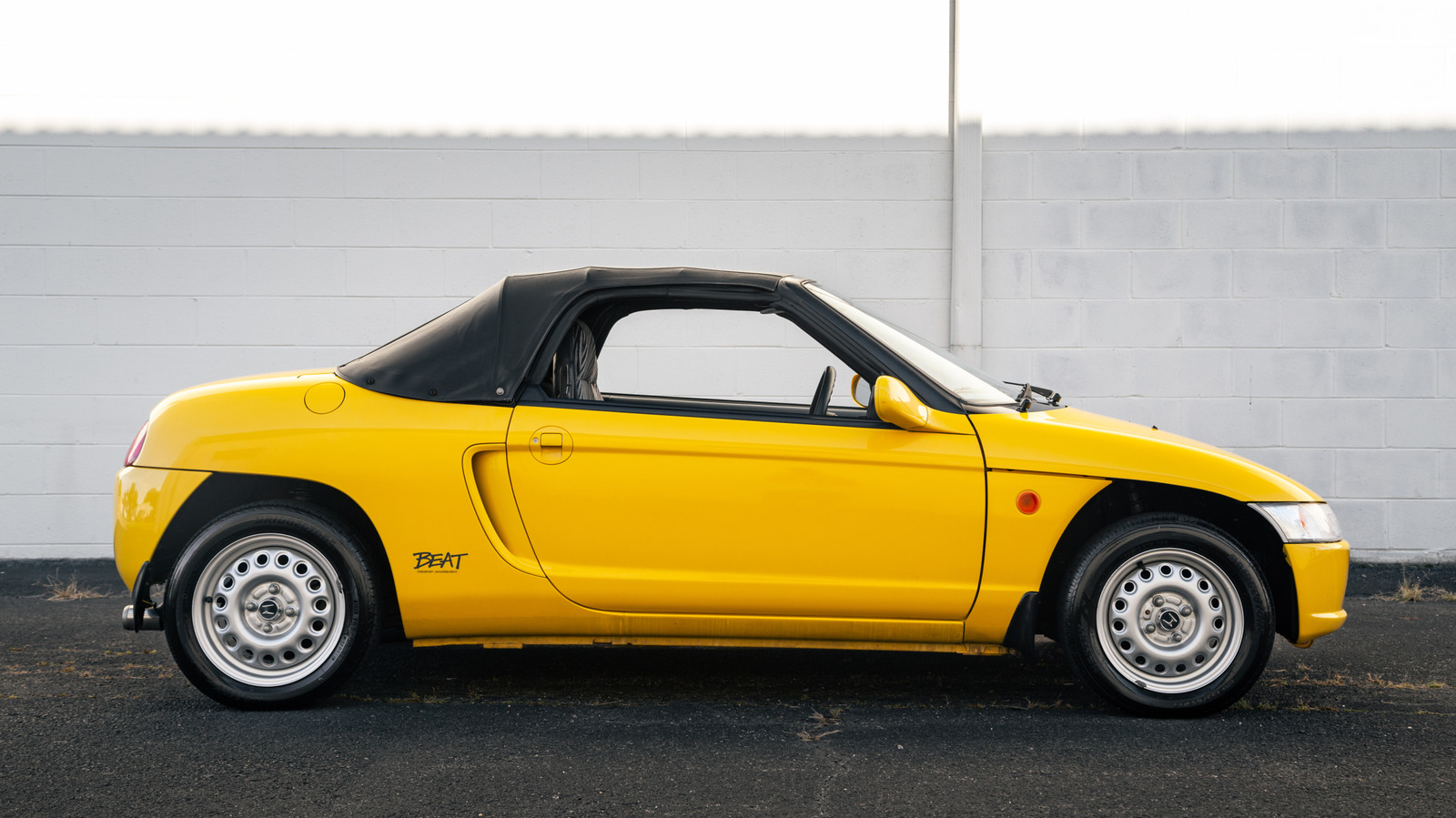
The Golden Age of Japanese Automotive Excess
Few chapters in automotive history are as fascinating — or as gloriously over-the-top — as the era produced by Japan's economic bubble of the late 1980s and early 1990s. While the bubble economy ultimately ended in financial turmoil for Japan, it left behind a staggering legacy of automobiles that continue to be revered by car enthusiasts around the world. Japanese automakers, flush with investment capital and riding a wave of national economic confidence, threw convention to the wind and built machines that were bold, fast, technologically audacious, and luxurious beyond any reasonable expectation.
For gearheads and collectors, the Japanese Bubble Era was nothing short of a golden age. The cars that rolled out of factories during this period were not merely transportation — they were statements. They represented what happens when engineering talent, generous budgets, and a genuine desire to compete with Europe's finest all converge at the same moment in time. Decades later, these vehicles are fetching record prices at auctions, starring in video games, and inspiring passionate debates in online forums. So what made them so special? Let's take a deep dive into why Japanese bubble cars remain the beloved icons they are today.
What Exactly Was the Japanese Bubble Economy?
To understand these cars, you need to understand the era that produced them. Japan's bubble economy refers to the period roughly between 1986 and 1991, during which asset prices — particularly in real estate and stock markets — inflated to extraordinary levels. Japan was the world's second-largest economy, corporate profits were booming, and consumer confidence was sky-high. Money flowed freely, and the nation's automakers used that financial freedom to pursue engineering and design ambitions that would have been considered unrealistic in more conservative times.
Japanese manufacturers were no longer content to be known simply for reliable, affordable economy cars. They wanted prestige. They wanted performance. They wanted to prove that Japan could build machines capable of challenging Ferrari, BMW, and Mercedes-Benz on equal footing. The result was a decade of automotive brilliance that gave the world some of the most celebrated nameplates in JDM history.
Iconic Japanese Bubble Era Cars That Defined a Generation
When enthusiasts talk about their favorite bubble-era machines, a handful of names come up again and again. These are the cars that not only defined the era but continue to command deep loyalty from collectors and drivers alike.
Honda NSX
Arguably the crown jewel of the bubble era, the Honda NSX arrived in 1990 as a genuine supercar rival built with everyday usability in mind. Developed with input from Ayrton Senna, it featured an all-aluminum mid-engine layout, a naturally aspirated V6, and a chassis so confidence-inspiring that it redefined what a sports car could be. The NSX proved that Japan could build a supercar with soul, and its influence on every performance Honda since is undeniable.
Nissan Skyline GT-R (R32)
The R32 GT-R, introduced in 1989, was so dominant on the racetrack that it earned the nickname "Godzilla." With its twin-turbocharged RB26DETT inline-six engine, sophisticated ATTESA all-wheel-drive system, and Super-HICAS rear-wheel steering, the R32 was a technological tour de force. It demolished the competition in Japanese touring car racing and became one of the most iconic performance cars ever produced, period.
Toyota Supra (A80) and its Predecessor
While the legendary fourth-generation Supra arrived just as the bubble was deflating, its development was very much a product of that era's ambitions. The 2JZ-GTE engine, twin-turbocharged and seemingly limitless in its tuning potential, became the stuff of automotive legend. The Supra embodied everything the bubble era stood for: extravagance, engineering ambition, and a complete refusal to compromise.
Mazda Eunos Cosmo
If you want a car that truly captures the excess and technological bravado of the bubble era, look no further than the Eunos Cosmo. It featured a triple-rotor Wankel engine — the only production car ever to do so — and came loaded with a touchscreen navigation system and twin-turbocharging. It was Mazda's personal moon shot, a luxury grand tourer that pushed every boundary it could find.
Mitsubishi GTO / 3000GT
Big, heavy, and bristling with technology, the Mitsubishi GTO packed active aerodynamics, four-wheel steering, electronically adjustable suspension, and all-wheel drive into one dramatically styled package. It was perhaps the most gadget-laden car of its time, a rolling showcase of what Mitsubishi's engineers could accomplish when budget was not an obstacle.
Why Do We Still Love These Cars So Much?
The enduring appeal of Japanese bubble cars comes down to a few key factors. First, they represent a kind of fearless engineering optimism that feels rare in today's world of regulatory constraints and corporate risk aversion. Second, they were built with extraordinary attention to quality and detail, which means that well-maintained examples have aged remarkably well. Third — and perhaps most importantly — they are genuinely thrilling to drive.
There is also a strong cultural dimension to their appeal. For many enthusiasts who grew up in the 1990s, these cars were the poster vehicles pinned to bedroom walls, the machines that appeared in beloved video game franchises, and the heroes of underground racing culture. That emotional connection runs deep and shows no sign of fading.
The Collector Market for Bubble Era JDM Cars
In recent years, the collector market for Japanese bubble cars has exploded. The 25-year import rule in the United States has opened the floodgates for R32 GT-Rs, Eunos Cosmos, and other previously restricted models, driving prices upward and stoking enthusiasm among a new generation of buyers. Clean examples of the NSX, GT-R, and Supra now regularly sell for six-figure sums, a far cry from the bargain-bin prices they commanded just a decade ago.
This surge in value reflects a broader cultural recognition of what these cars actually represent: a singular, unrepeatable moment when one nation's automakers reached for the stars and largely got there. Whether you are a longtime JDM devotee or a newcomer just discovering the magic of the bubble era, one thing is certain — these cars deserve every bit of the reverence they receive.