
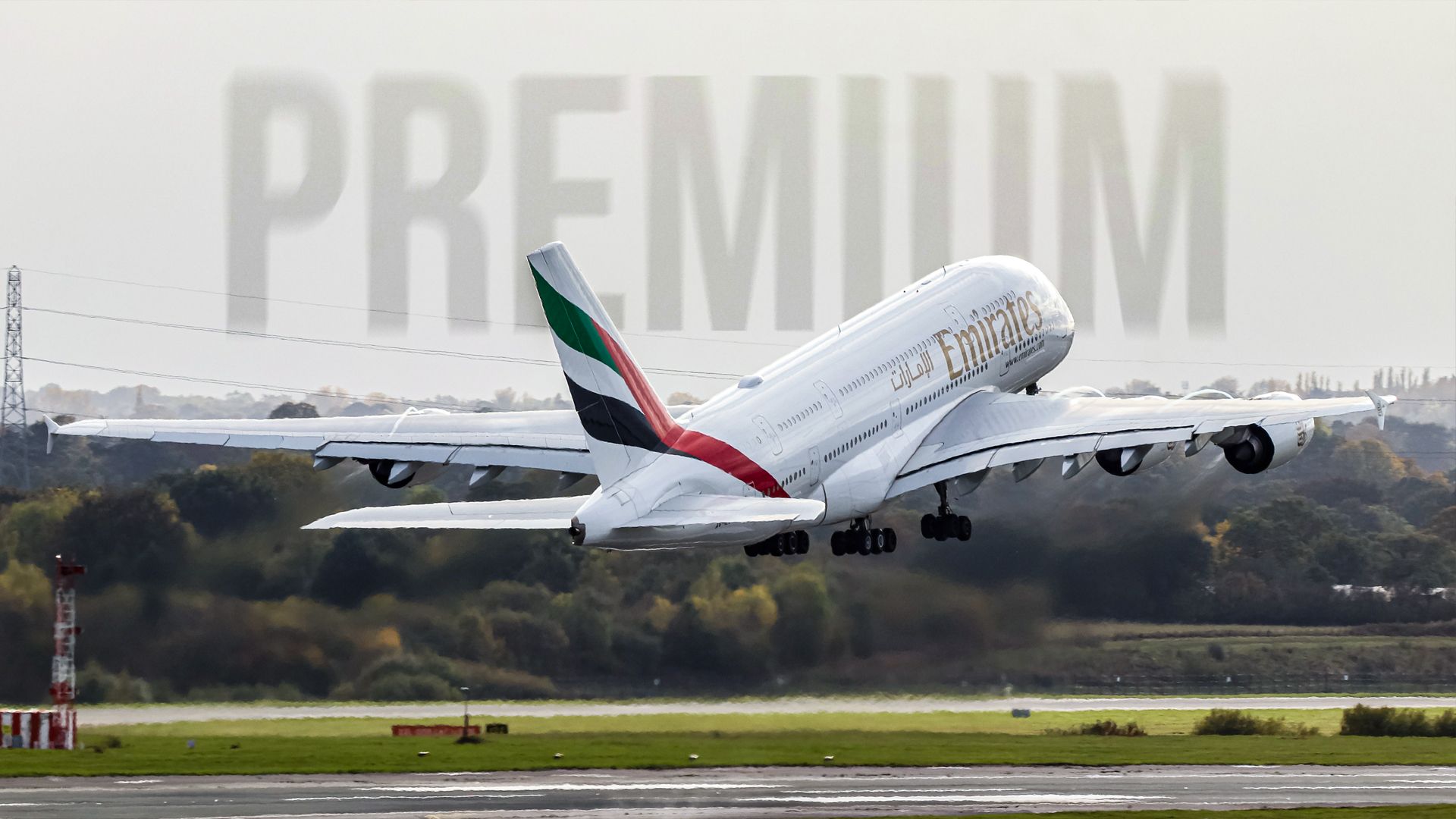
The Unmatched Bond Between Emirates and the Airbus A380
In the world of commercial aviation, it is extraordinarily rare for a single aircraft type to become so deeply synonymous with one airline. Yet the Airbus A380 and Emirates have forged exactly that kind of relationship — one built over decades of strategic investment, bold commercial vision, and an almost singular commitment to premium travel at scale. With 116 A380s in its active fleet, Emirates operates roughly 60% of all in-service A380s worldwide, making it not just the largest operator of the type, but effectively the aircraft's only true champion in global aviation today.
This dominance is not accidental. It is the product of deliberate decisions made at every level of the airline's leadership, underpinned by the unique economic and geographic position of Dubai as a global aviation hub. And crucially, it is a position that no other carrier can meaningfully replicate — not for at least another decade and a half.
What Makes the A380 Special — and Difficult
The Airbus A380 is, by almost any measure, an extraordinary piece of engineering. The world's largest commercial passenger aircraft, it offers more cabin space, more passenger capacity, and more potential for on-board amenity than any other plane in service. Its sheer size creates the physical canvas upon which Emirates has painted its most ambitious product offerings — from private suites with closing doors in First Class to a full-sized onboard lounge and bar that has become one of the most recognizable symbols of luxury air travel.
But for most airlines, the A380 presents as many problems as it does opportunities. The aircraft is expensive to acquire, costly to maintain, and far too large for most commercial routes. Its economics only begin to make sense when an airline can reliably fill upward of 400 to 500 seats across multiple daily flights on high-density, long-haul trunk routes. Few airlines in the world operate at the scale necessary to justify that commitment, and even fewer have the hub infrastructure to funnel the volume of passengers required.
Why Emirates' Strategy Is Unique — and Unrepeatable
Emirates' approach to the A380 goes well beyond simply buying and operating the aircraft. The airline has built its entire premium product identity around the superjumbo. Its onboard bars, shower spas, and enclosed First Class suites are iconic features that have fundamentally shaped passenger expectations of what long-haul luxury can look like. These are not bolt-on features — they represent years of iterative design, cabin engineering, crew training, and brand investment that cannot be quickly transferred or duplicated.
The airline's geographic position reinforces this advantage considerably. Dubai International Airport serves as one of the world's most efficiently positioned connecting hubs, sitting within an eight-hour flight of roughly two-thirds of the world's population. This allows Emirates to aggregate passengers from dozens of origin markets and fill the A380's enormous capacity with a degree of consistency that would be logistically impossible for carriers operating from less centrally located hubs. An airline based in a smaller, less strategically positioned city simply cannot generate the same passenger volumes across the same range of routes.
The 2041 Barrier: Why Rivals Are Locked Out
The most significant structural reason why no competing airline can copy Emirates' A380 premium strategy before 2041 comes down to aircraft availability itself. Airbus officially ended A380 production in 2021, following a period of dwindling orders that made continuation of the program commercially unviable. The last delivery was made in December 2021, and no new A380s will roll off the production line for the foreseeable future.
This creates an insurmountable barrier to entry for any airline looking to build a comparable fleet-based premium strategy around the type. The used A380 market is thin, with most operators holding onto their aircraft. Even where secondary market opportunities exist, acquiring enough frames to build the kind of fleet density Emirates enjoys — and doing so at a commercially viable price — is simply not realistic.
Industry analysts have pointed to 2041 as a meaningful horizon because that is roughly when the current generation of A380s operated by various carriers will begin reaching end-of-life or major structural inspection milestones. Only at that point might a meaningful number of aircraft become available for redistribution or repurposing — and even then, the maintenance ecosystem, crew training infrastructure, and brand equity that Emirates has built around the type will remain far ahead of any new entrant.
What Other Airlines Use the A380 For
For the handful of other carriers that do operate A380s — including British Airways, Lufthansa, Qatar Airways, and Singapore Airlines — the aircraft typically functions in a very different capacity to how Emirates deploys it. Rather than anchoring an entire premium brand identity, these carriers tend to use the A380 as a network optimization tool on their busiest routes.
- At slot-constrained airports like London Heathrow, the A380 allows airlines to carry more passengers per movement, maximizing revenue within fixed slot allocations.
- On high-demand leisure or business routes, it provides capacity relief without requiring additional frequencies.
- Displaced smaller aircraft can then be redeployed to thinner routes, enabling cautious network expansion without significant additional investment.
These are legitimate and often highly effective commercial strategies. But they are fundamentally different from what Emirates has built. Using the A380 as an optimization tool is not the same as making it the centerpiece of a globally recognized premium travel proposition.
The Legacy Emirates Is Building
What Emirates has achieved with the A380 is arguably the most successful aircraft-brand integration in commercial aviation history. The superjumbo is not just a vehicle for moving passengers — it is a marketing asset, a loyalty driver, and a physical embodiment of the airline's values. Travelers plan trips specifically to fly on Emirates' A380, often seeking out routes served by the type even when alternatives exist.
That kind of brand association takes decades to build, enormous capital investment to sustain, and a very specific set of circumstances to maintain. With Airbus production closed, no new entrants possible, and the used market effectively locked up, Emirates' A380 premium strategy is not just leading the industry — it is, for the foreseeable future, a category of one.