
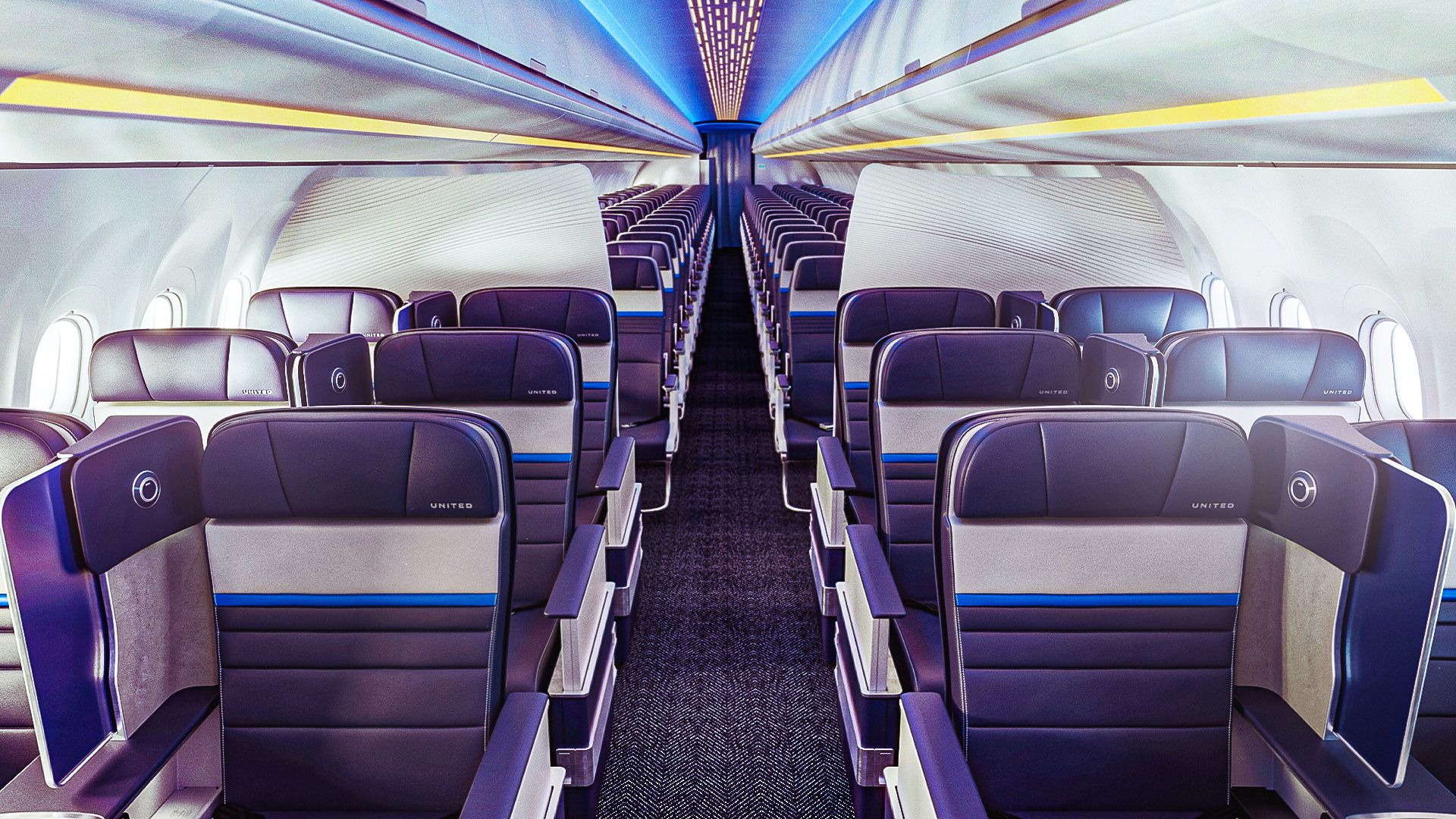
United Airlines Takes Delivery of Its First Airbus A321XLR
A new era of narrowbody premium travel has arrived. United Airlines recently took delivery of its first Airbus A321XLR, a milestone that signals a significant shift in how the carrier approaches its medium- and long-range routes. More than just a fleet upgrade, this new aircraft fundamentally changes the onboard experience for passengers — particularly those flying in premium cabins. With twice as many premium seats as the Boeing 757 it replaces, the A321XLR is poised to redefine expectations for narrowbody travel.
Breaking Down the A321XLR's Premium Cabin Configuration
United Airlines has configured its new Airbus A321XLR with a total of 150 seats. Of those, 32 are designated as premium — a figure that immediately stands out when compared to the aircraft it is replacing. The premium offering is split between two distinct products, each catering to a different tier of the travel market.
Polaris Lie-Flat Business Class Suites
Twenty of the 32 premium seats are Polaris lie-flat suites, United's flagship business class product. Polaris has long been associated with long-haul widebody flights on aircraft like the Boeing 767 or 777, making its introduction on a narrowbody aircraft a genuine game-changer. Passengers who previously had to book a widebody route to access lie-flat seating can now enjoy the same premium experience on select narrowbody routes. This is especially meaningful for transatlantic routes and longer domestic segments where a proper night's sleep or a comfortable workday in the air can make a real difference.
Premium Plus Seating
The remaining 12 of the 32 premium seats fall under United's Premium Plus product, which sits between Economy and Polaris in terms of price and comfort. Premium Plus offers wider seats, more legroom, enhanced meal service, and additional amenities compared to standard economy. Its inclusion on the A321XLR gives travelers a mid-tier option that didn't previously exist at this scale on United's narrowbody fleet, providing greater flexibility in how passengers choose to spend their travel budget.
How Does This Compare to the Boeing 757?
To fully appreciate the significance of the A321XLR's premium cabin, it helps to look at what United's Boeing 757 offered. United configured its 757 with roughly half as many premium seats — meaning where passengers previously had limited access to elevated travel options, they now have a significantly broader selection. The jump from approximately 16 premium seats to 32 represents not just a doubling in number but a qualitative leap in the type of product available. The 757 never offered lie-flat seating, so the introduction of Polaris suites on the A321XLR is a wholly new proposition on the routes this aircraft will serve.
The Boeing 757 has been a workhorse for United and many other carriers for decades. Its narrow cabin and aging interior, while serviceable, were never designed with today's premium passenger expectations in mind. As airlines compete fiercely for high-yield business and premium leisure travelers, the ability to offer a compelling onboard product has become a critical differentiator. The A321XLR gives United a sharp new competitive tool.
Beyond Premium Seating: Range and Fuel Efficiency
The premium cabin upgrade is the headline, but the Airbus A321XLR brings a host of additional advantages that make it a compelling replacement for the 757 and other legacy narrowbody aircraft.
Extended Range Capability
The "XLR" in the aircraft's name stands for Extra Long Range, and it earns that designation. The A321XLR is capable of flying routes that were previously impractical or impossible for single-aisle jets. With a range of approximately 4,700 nautical miles, the aircraft opens up new transatlantic possibilities — think routes between secondary U.S. cities and European destinations that couldn't justify the economics of a widebody aircraft. For United, this translates into the ability to serve new markets and offer nonstop options where travelers previously had to connect.
Superior Fuel Efficiency
Operating cost is a constant concern for airlines, and fuel efficiency is one of the most powerful levers available. The A321XLR is substantially more fuel-efficient than the aging Boeing 757, benefiting from modern CFM LEAP-1A engines and Airbus's latest aerodynamic refinements. Lower fuel burn per seat means United can operate these routes more profitably, which in turn supports investment in the premium products and amenities that attract high-value passengers. It also aligns with the airline industry's broader push toward reducing carbon emissions per passenger kilometer — a consideration that is increasingly important to both regulators and environmentally conscious travelers.
What This Means for Passengers and the Competitive Landscape
For travelers, the arrival of the A321XLR in United's fleet is straightforwardly good news. Access to lie-flat business class and Premium Plus seating on routes that were previously served by a less capable narrowbody opens up real new possibilities — particularly for premium leisure travelers who want comfort without necessarily booking a widebody-only route.
From a competitive standpoint, United's move puts pressure on rivals operating older narrowbody equipment. Airlines that continue relying on aging 757s or A321ceos without premium cabins will find it harder to justify premium pricing when United can offer a genuinely superior product on comparable routes.
The Bottom Line
United Airlines' new Airbus A321XLR represents a meaningful evolution in what passengers can expect from a narrowbody flight. By doubling the number of premium seats compared to the Boeing 757 it replaces, introducing Polaris lie-flat suites to the single-aisle fleet, and bringing greater range and fuel efficiency to the table, the A321XLR is far more than an incremental upgrade. It is a statement about where premium narrowbody travel is headed — and United is positioning itself at the front of that movement.
- 150 total seats, including 32 premium seats on United's A321XLR configuration
- 20 Polaris lie-flat business class suites — a first for United's narrowbody fleet
- 12 Premium Plus seats offering enhanced comfort between economy and business
- Approximately double the premium seats of the Boeing 757 it replaces
- Extended range of roughly 4,700 nautical miles, enabling new transatlantic routes
- Significantly improved fuel efficiency over legacy narrowbody aircraft