
Could Doug Parker Really Come Back to Save American Airlines?
A striking rumor has begun circulating in airline industry circles: former American Airlines CEO Doug Parker could be brought back to replace current chief executive Robert Isom. At first glance, the idea might sound far-fetched — even absurd. Why would any corporate board reach backward rather than forward when a company desperately needs a new direction? But the more you examine American Airlines' troubled recent history, the more the speculation starts to feel uncomfortably plausible. Here's a deep dive into what's driving the chatter, what it would mean for the airline, and whether a Parker comeback could actually fix what's broken.
American Airlines Is Falling Behind — Fast
To understand why boardroom whispers about Doug Parker are gaining traction, you first need to understand just how badly American Airlines has been underperforming relative to its major competitors. Over the past several years, American has slipped further and further behind both Delta Air Lines and United Airlines in terms of financial performance, customer satisfaction, and strategic clarity. Delta remains the gold standard of the industry, while United has been aggressively closing the gap — largely at American's expense. The dynamics increasingly resemble a zero-sum game, and American keeps ending up on the wrong side of it.
The root of the problem isn't difficult to identify. American Airlines has lacked a coherent, sustained vision for years. The carrier has oscillated between premium and non-premium strategies with a frequency that has left investors, employees, and customers confused. One quarter the airline talks up its premium cabin investments; the next, it pivots to cost-cutting and basic economy. This strategic whiplash has made it nearly impossible to build a loyal premium customer base — the very segment that Delta and United have been cultivating with remarkable success.
The Premium Pivot: Too Little, Too Late?
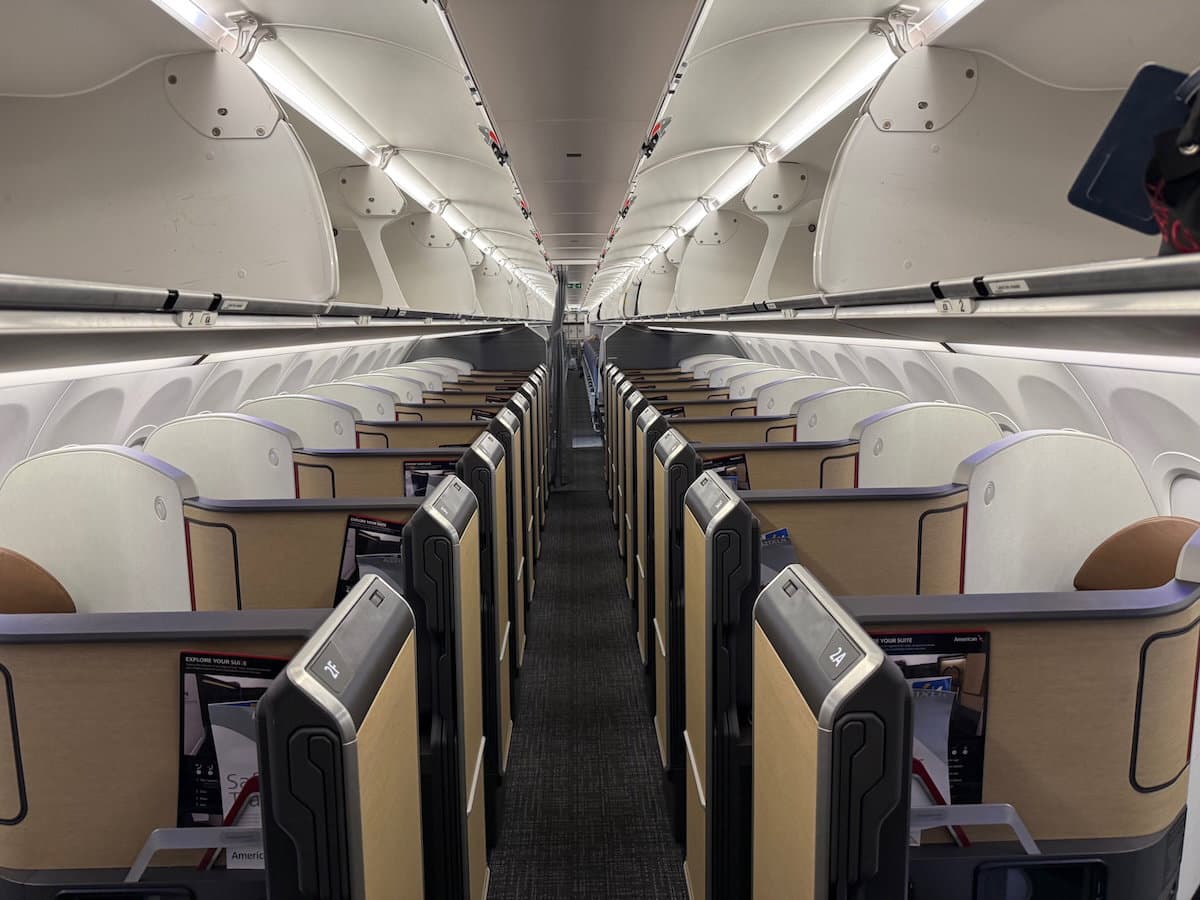
Management at American Airlines has recently acknowledged the need to invest more meaningfully in customer experience and product quality. On paper, this sounds like the right diagnosis. But timing matters enormously in business, and one has to wonder whether American's newfound commitment to premium travel is arriving too late to make a real difference.
Both Delta and United are not standing still. They are pouring billions into new aircraft, renovated lounges, enhanced in-flight entertainment, and improved service training. When American finally decides to make similar investments, it won't be entering a vacuum — it will be fighting uphill against two deeply entrenched competitors who already enjoy superior reputations with high-value travelers. Closing that gap is not a matter of spending money; it requires time, consistency, and trust — all of which American has squandered over the past decade.
Who Will Fix American Airlines? The CEO Question
The question of when and how American Airlines will replace CEO Robert Isom has been simmering for some time among industry analysts and frequent flyers alike. Isom took the reins with considerable goodwill, but that goodwill has eroded steadily as financial results have disappointed and strategic missteps have mounted. The airline's stock performance, its shrinking corporate travel market share, and its inability to articulate a clear competitive identity have all contributed to growing pressure on the top job.
What makes the situation particularly complicated is the role of the board of directors. A competent, proactive board would likely have initiated a management change well before now. The fact that it hasn't suggests either a troubling lack of urgency or, perhaps worse, a board that is too deeply invested in defending past decisions to objectively assess the present reality. Several board members are widely believed to be doubling down on their existing commitments — reluctant to admit that the leadership and strategic choices they championed have not delivered results.
Why Doug Parker's Name Keeps Coming Up
Against this backdrop, the emergence of Doug Parker's name as a potential savior is equal parts logical and alarming. Parker served as American Airlines' CEO from 2013 until 2022, having engineered the merger between American and US Airways that created the world's largest airline by fleet size. His tenure produced real achievements in terms of scale and labor relations, but it also laid the foundation for many of the strategic ambiguities that plague the airline today.
- Parker presided over a period during which American consistently under-invested in its product relative to Delta and United.
- His leadership style was often criticized for prioritizing financial engineering over operational excellence and customer experience.
- The culture he helped shape left the airline poorly positioned for the post-pandemic recovery that United and Delta capitalized on so effectively.
Yet the board's apparent comfort with Parker, and his continued proximity to the airline's power structure, makes his return a genuine possibility rather than a fantasy. Boards in crisis often reach for the familiar rather than the transformational — and that tendency may be exactly what defines American's next move.
What a Parker Return Would Signal
If Doug Parker were indeed brought back as CEO, the move would send a powerful and largely negative signal to the market. It would suggest that the board lacks either the vision or the courage to pursue genuinely new leadership — someone untethered from the decisions that created the current mess. A Parker return would likely be framed publicly as experienced, stabilizing leadership, but analysts and investors would almost certainly read it as an admission that the board itself does not know how to fix American Airlines.
For the airline to truly compete with Delta and United, what is needed is not a familiar face from the past but a clear-eyed, courageous strategy executed by a leader with fresh credibility and an unambiguous mandate for change. Whether American's board is capable of making that kind of decision remains, unfortunately, very much in doubt.
The Bottom Line
The rumor of Doug Parker's potential return to American Airlines is more than gossip — it is a symptom of a deeper governance problem at one of the world's largest carriers. Until the board demonstrates genuine accountability and the willingness to pursue bold, forward-looking leadership, American Airlines will continue its slide. The real question is not whether Parker can save the airline. The real question is whether the people in charge have the self-awareness to recognize that saving American Airlines may require admitting just how much they themselves have contributed to its decline.