
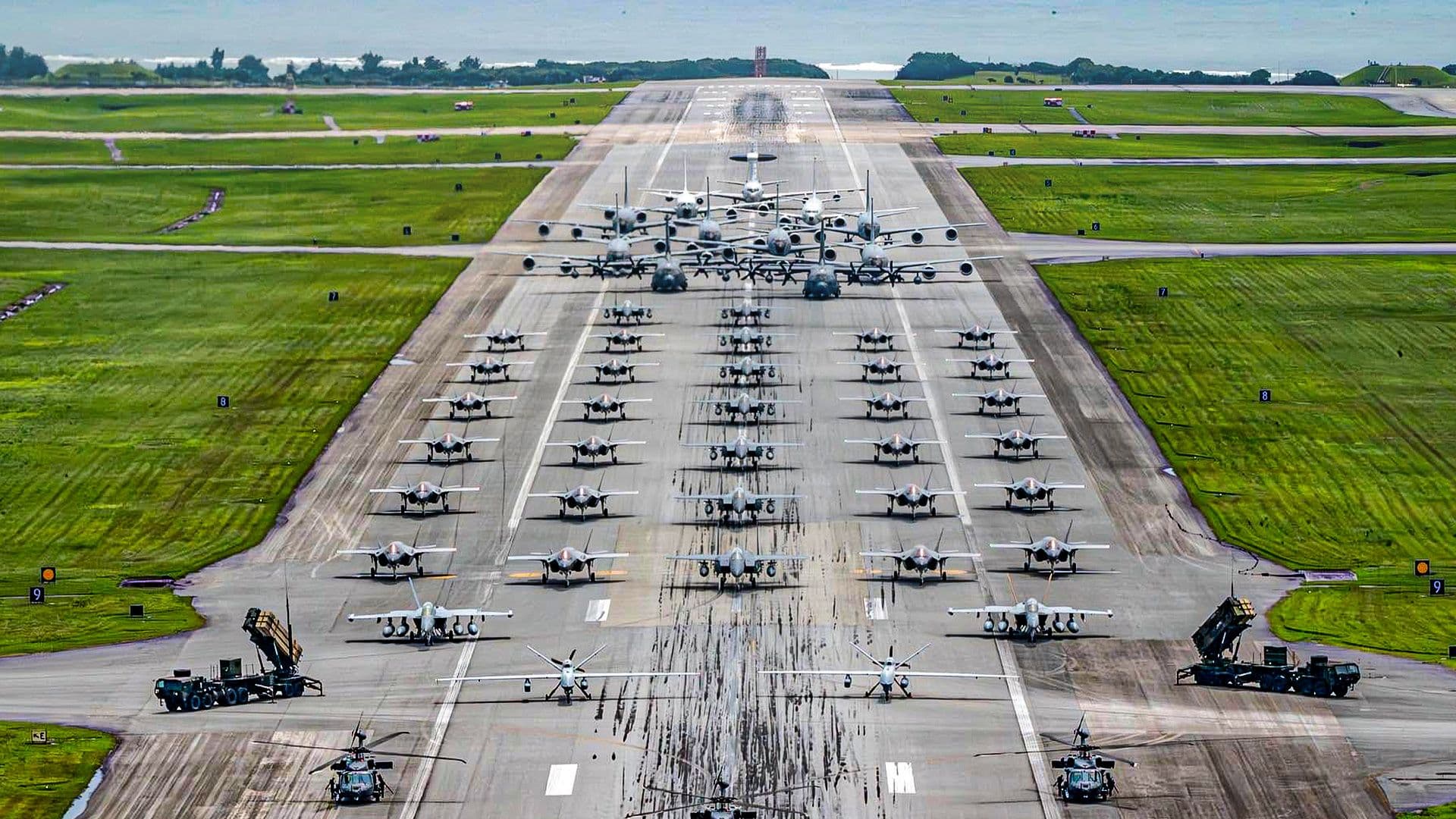
Boeing's 2025 Strike Is Stalling the F-15EX Eagle II Program
When labor tensions boil over at one of America's most critical defense manufacturing hubs, the ripple effects can reach far beyond the factory floor — all the way to the western Pacific. That is precisely what is happening right now. A worker strike at Boeing's Air Dominance Division in St. Louis, Missouri, has sent shockwaves through the United States Air Force's modernization timeline, most acutely felt at Kadena Air Base in Okinawa, Japan. The eagerly anticipated F-15EX Eagle II, the most advanced variant of the legendary F-15 fighter series, will now not arrive at Kadena until 2027 at the earliest.
What Is the F-15EX Eagle II and Why Does It Matter?
The F-15EX Eagle II represents the pinnacle of a fighter lineage that has dominated the skies since the 1970s. While fifth-generation stealth aircraft like the F-22 Raptor and F-35 Lightning II often steal the headlines, the F-15EX is no relic. Boeing engineered it as a thoroughly modern platform, packing in next-generation avionics, an open mission systems architecture, and an unprecedented weapons payload capacity. The aircraft can carry up to 22 air-to-air missiles — a figure that no other US fighter can currently match — making it an exceptionally potent air superiority and multi-role asset.
Beyond raw firepower, the F-15EX features a new fly-by-wire flight control system, advanced radar capabilities, and a digital backbone that allows rapid integration of emerging weapons and sensors. For a US Air Force stretched thin across global commitments, the F-15EX is intended to serve as a high-capacity workhorse alongside stealth platforms, ensuring that American airpower can overwhelm adversaries through both quality and quantity of munitions deployed per sortie.
The program has been years in the making, and units across the Air Force have been counting the days until their new jets arrive. That wait, unfortunately, just got significantly longer.
The Boeing Strike: What Happened in St. Louis?
Boeing's Air Dominance Division, headquartered in St. Louis, is the birthplace of the F-15EX. It is here that skilled aerospace workers assemble, test, and prepare the jets for delivery to the Air Force. When those workers walked off the job in 2025, the consequences for the production line were immediate and severe.
Labor strikes in complex aerospace manufacturing are not simple disruptions that can be undone by bringing in replacement workers. The assembly of a modern fighter jet requires highly trained technicians who understand intricate systems integration processes that take years to master. Every day the line sits idle translates directly into delayed deliveries, cascading scheduling conflicts, and mounting costs — both for Boeing and, ultimately, for the defense programs that depend on a reliable supply of new aircraft.
The strike has interrupted Boeing's ability to maintain the delivery cadence promised to the Air Force, pushing multiple squadrons back in the queue and forcing defense planners to reconfigure their readiness timelines. Among all affected units, Kadena Air Base has emerged as one of the most acutely impacted.
Why Kadena Air Base Is Especially Vulnerable to This Delay
Kadena Air Base, located on the island of Okinawa in Japan, is one of the most strategically significant military installations in the entire Indo-Pacific region. It sits within striking distance of potential flashpoints including the Taiwan Strait and the South China Sea, and it serves as a forward-deployed hub for American airpower projection in a part of the world that grows more contested by the year.
Unlike some domestic Air Force bases that can manage temporary capability gaps with greater flexibility, Kadena maintains a permanent cadre of fighter aircraft on site at all times. Its mission demands constant readiness. The base was already counting on receiving a fresh batch of F-15EX Eagle IIs as soon as the jets became available from Boeing's St. Louis production line. That plan has now been thrown into uncertainty, with deliveries pushed back to 2027.
The delay leaves defense planners in a difficult position. Kadena's current fighter inventory, while capable, is aging. Every month that new jets are delayed is another month that older airframes accumulate flight hours, require more intensive maintenance, and potentially degrade the base's overall readiness posture at a time when regional security demands are only increasing.
The Broader Impact on US Air Force Modernization
Kadena is far from the only unit feeling the pinch. Multiple US Air Force squadrons across different commands have been counting on F-15EX deliveries according to previously established schedules. The Boeing strike has disrupted those plans across the board, forcing a broad reassessment of when and where new aircraft will become available.
This kind of delay carries strategic consequences. Fighter jet deliveries are not simply about equipping pilots with new hardware — they feed into training pipelines, maintenance workforce planning, basing infrastructure investments, and operational deployment schedules. When deliveries slip by a year or more, every one of those downstream activities is thrown out of alignment.
The situation also raises broader questions about supply chain resilience and labor relations in the defense industrial base. Boeing is not the only major defense contractor that has faced workforce disruptions in recent years, and the F-15EX delay serves as a stark reminder that even the most advanced military programs are vulnerable to the very human realities of labor disputes.
What Comes Next for the F-15EX Program?
As of now, the path forward depends heavily on how quickly Boeing's Air Dominance Division can restore full production capacity following the resolution of the strike. Once workers return and the assembly line resumes normal operations, Boeing will need to work through a backlog of partially completed aircraft while simultaneously meeting ongoing contractual obligations — a challenging but not insurmountable task for an organization of its scale and experience.
For Kadena Air Base and the other affected units, the 2027 delivery horizon means making the best of what they currently have while planning for a future that, despite the current setback, still includes the formidable F-15EX Eagle II. When those jets finally arrive, they will bring with them a generational leap in capability that no amount of delay can diminish.
In the meantime, the Boeing strike in St. Louis stands as a powerful illustration of how events far from the front lines — labor negotiations in a Missouri city — can directly shape America's military readiness on the other side of the world.