
Airbus Explores Lie-Flat Seats for the A220: Could This Narrowbody Redefine Premium Travel?
Airbus is actively studying whether its A220 family could take a significant step upmarket by incorporating lie-flat premium seats into its cabin configuration. If the concept moves forward, the smallest aircraft in the Airbus lineup could become a far more compelling option for airlines looking to squeeze higher-yield revenue from so-called long-and-thin routes — those thinner, point-to-point services where demand doesn't justify a widebody but passengers still expect a quality experience. It is a bold idea, but given the A220's existing passenger-friendly credentials, it may not be as far-fetched as it first sounds.
What Makes the A220 a Surprisingly Strong Candidate?
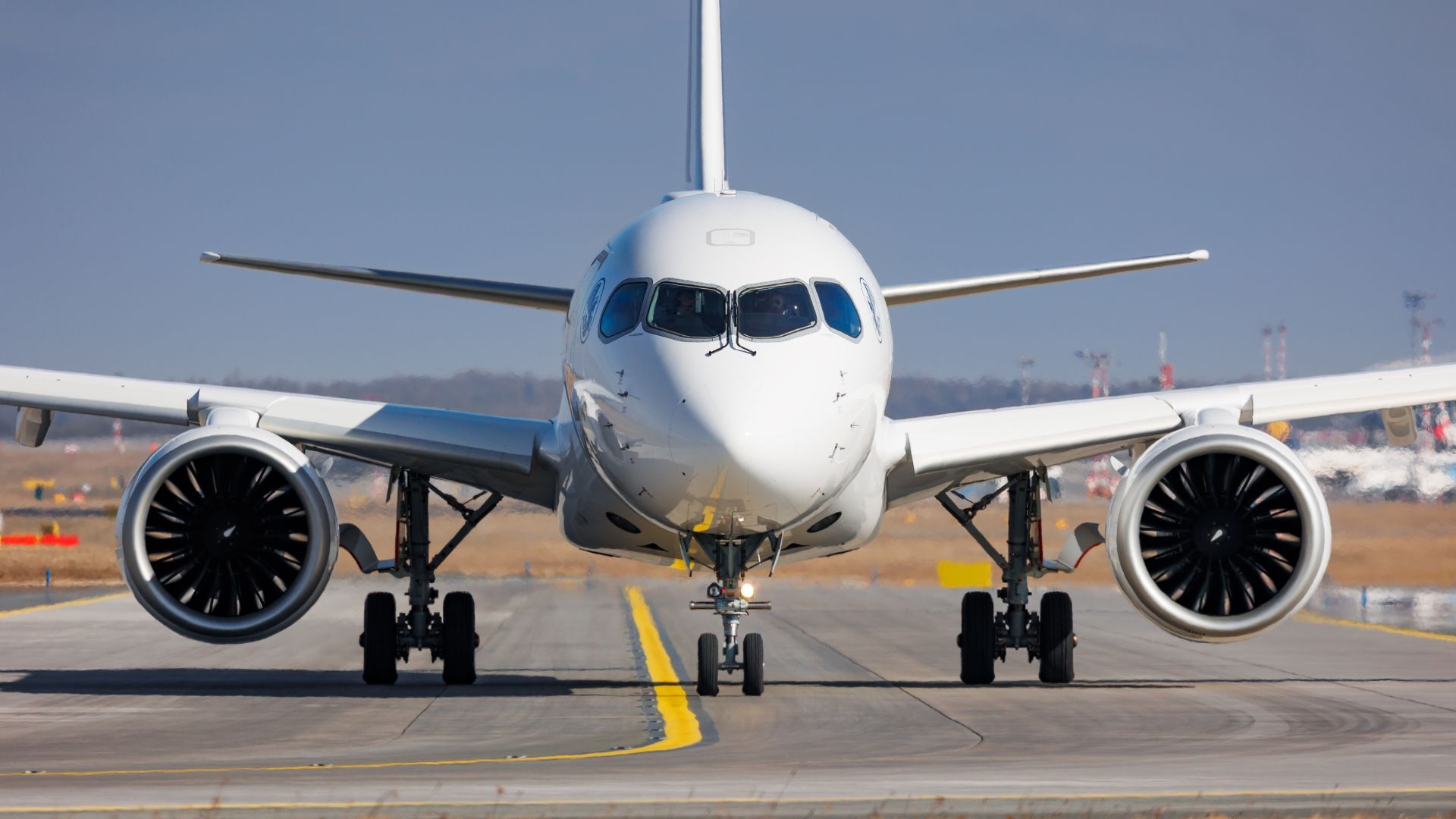
The Airbus A220 was originally developed by Bombardier as the C Series before Airbus took over the program in 2018. Since then, it has built a strong reputation among passengers and airlines alike for reasons that go well beyond its operating economics. The aircraft features a notably quiet cabin compared to competing narrowbodies, oversized windows that rival those found on some widebody jets, and a five-abreast seating layout — two seats on one side of the aisle, three on the other — that eliminates the dreaded middle seat in economy class.
That five-abreast layout is precisely what makes the lie-flat concept intriguing. In a standard narrowbody like the Boeing 737 or the Airbus A320 family, the cabin is arranged six-abreast, making it genuinely difficult to offer a lie-flat business class product without dramatically cutting capacity. The A220's wider cross-section and narrower row count give engineers more flexibility to design a premium product that doesn't require an entirely new aircraft. A true lie-flat seat in a one-and-one or a staggered configuration becomes considerably more viable in a five-abreast environment.
The Business Case: Long-and-Thin Routes Are Growing
The airline industry has been quietly witnessing a structural shift in how premium passengers travel. Point-to-point routes that bypass major hub airports are growing in popularity, driven by travelers who value time savings and convenience over the range of connections a major hub might offer. Many of these routes do not generate enough total passenger demand to justify deploying a widebody aircraft like the Airbus A330 or Boeing 787, but they absolutely include a meaningful number of business and premium leisure travelers willing to pay for a flat bed.
This is where a lie-flat-equipped A220 would fit perfectly. Airlines could open or maintain thin transatlantic, regional long-haul, or domestic premium routes with a right-sized aircraft that still offers a genuinely competitive business class product. Think of services between secondary European cities and North American regional airports, or niche domestic routes in large markets where premium demand exists but is concentrated. The economics of operating a smaller aircraft on these routes can work very well, provided the revenue per seat is high enough — and lie-flat business class seats are one of the most reliable tools airlines have for pushing yield upward.
Precedents Already Exist in the Narrowbody Space
Airbus and Boeing have both seen airlines push the boundaries of what narrowbody premium cabins can offer. La Compagnie, the French boutique carrier, has long operated an all-business-class service on transatlantic routes using narrowbody jets. Norse Atlantic and various charter operators have explored similar models. Meanwhile, airlines like Air France, Finnair, and others have installed lie-flat seats on widebody aircraft for medium-haul routes within Europe, demonstrating that passengers will pay a premium for the product even on relatively short journeys.
If Airbus can develop an official, certifiable lie-flat seat option for the A220 — one that fits within the aircraft's structural and regulatory parameters — it would give airlines a plug-and-play premium solution rather than requiring each carrier to independently engineer and certify a bespoke configuration. That kind of factory-supported, certified cabin product dramatically lowers the barrier to entry for smaller carriers who want to compete in the premium narrowbody space.
Challenges That Airbus Must Overcome
Of course, the idea is not without its engineering and commercial hurdles. Lie-flat seats are physically large and heavy, and fitting them into a narrowbody fuselage while maintaining acceptable capacity in a mixed cabin configuration requires careful trade-offs. The A220 already has a smaller overall passenger count than a 737 or A320, so losing rows to a premium cabin has a proportionally bigger impact on the total seat count available for economy passengers.
There are also certification considerations, galley and lavatory placement challenges, and the question of whether airlines would be willing to commit to a specialized cabin configuration on a relatively small aircraft. Revenue management on a low-capacity premium product requires sophisticated pricing strategies, and not every airline has the tools or the brand positioning to make that work profitably.
What This Could Mean for Airbus's Competitive Position
From a strategic standpoint, adding a credible lie-flat option to the A220's portfolio would meaningfully differentiate the aircraft from its primary narrowbody rivals. Boeing has no comparable aircraft in this size category following the end of the 717 program, and the A220 already holds a strong niche position. Expanding its premium appeal could help Airbus attract orders from airlines that currently look to widebody jets for their premium short- and medium-haul operations.
It could also reinforce the A220's value proposition as aviation continues to evolve toward more flexible, passenger-centric cabin designs. As traveler expectations rise and airlines increasingly compete on experience rather than price alone, the ability to offer a fully flat bed on a nimble, efficient narrowbody could prove to be one of the most compelling product innovations the industry has seen in years.
The Bottom Line
Airbus studying lie-flat seats for the A220 is more than a curiosity — it is a logical extension of everything the aircraft already does well. With its wide cabin, passenger-friendly layout, and strong operating economics, the A220 has the foundations to support a genuine premium product. If Airbus can solve the engineering and certification challenges, the result could be an aircraft that opens entirely new market opportunities for airlines and sets a new standard for what passengers can expect from a narrowbody jet. The aviation world will be watching closely as this study progresses.