
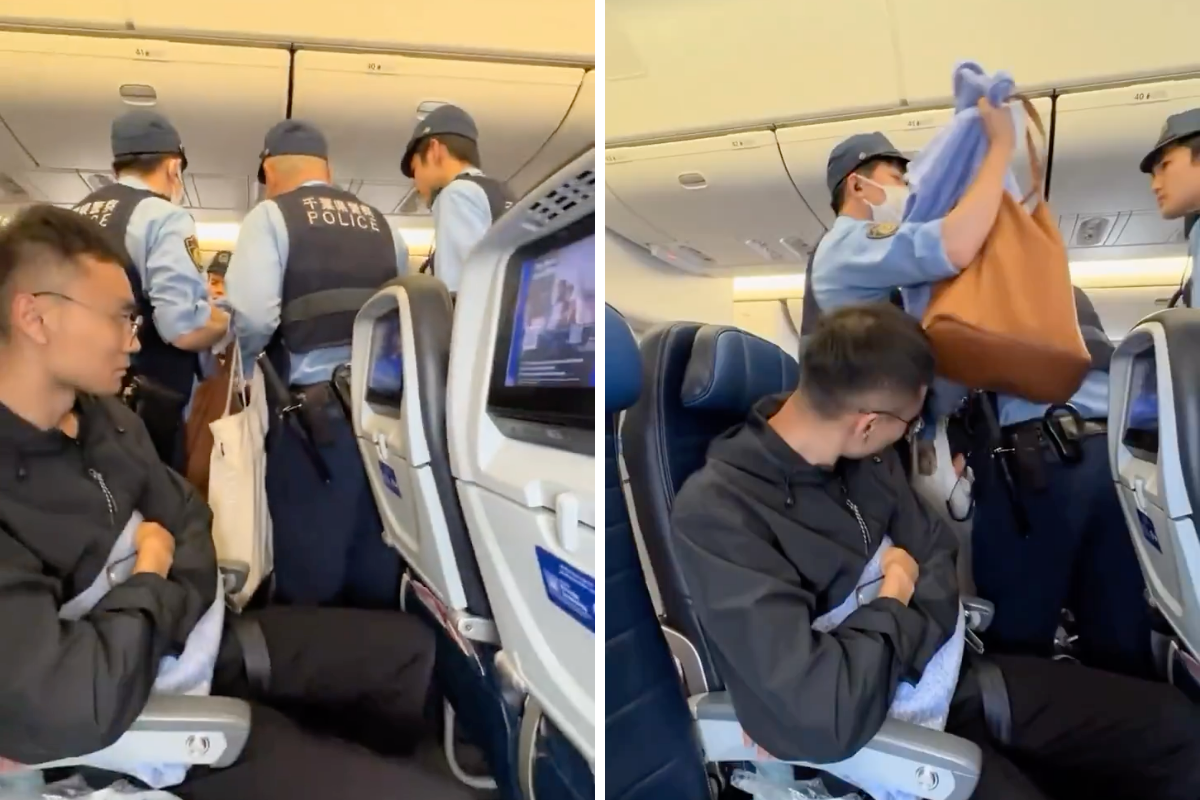
United Airlines Flight From Shanghai Dumps $50,000 in Fuel After Passenger Quarrel Forces Emergency Diversion to Tokyo
A United Airlines flight traveling from Shanghai to San Francisco made headlines after its pilots were forced to dump an estimated $50,000 worth of jet fuel and divert the aircraft to Tokyo Narita International Airport. The dramatic decision was triggered by what witnesses described as a relatively minor altercation — a "small quarrel" between a confused Chinese passenger who did not speak English and a member of the cabin crew. The incident has since sparked widespread debate about airline protocols, passenger management, and the staggering financial cost of in-flight disruptions.
What Happened Aboard the United Airlines Flight?
According to a passenger who witnessed the entire incident unfold, the woman at the center of the controversy appeared to be disoriented and confused about her situation on the aircraft. Unable to communicate effectively in English, she became involved in a dispute with a flight attendant that escalated to the point where the flight crew determined they could no longer safely continue the long-haul journey across the Pacific Ocean.
The flight crew made the decision to divert the aircraft to Tokyo Narita, one of the closest major international airports on the transpacific route, rather than continue the roughly 10-to-12-hour journey to San Francisco. Before landing, the pilots executed a fuel dump — a standard aviation procedure used to reduce an aircraft's weight to a safe landing threshold — reportedly jettisoning fuel valued at up to $50,000.
Why Do Planes Dump Fuel Before an Emergency Landing?
Many passengers are unaware that large commercial aircraft are often physically incapable of safely landing at their maximum takeoff weight. Wide-body jets like those typically used on transpacific routes are loaded with enormous amounts of fuel at departure to sustain flights lasting many hours over open ocean. If a diversion is required before a significant portion of that fuel has been burned off, pilots must either circle the airport for an extended period to burn fuel naturally or, when time is more critical, initiate a fuel jettison procedure.
Fuel dumping involves releasing jet fuel through nozzles in the aircraft's wings at a high altitude, where the fuel atomizes and evaporates before reaching the ground. While it is a safe and approved procedure, it comes at a significant financial cost. In the case of this United Airlines diversion, estimates suggest the fuel jettisoned was worth approximately $50,000 — a figure that does not even account for the additional operational costs associated with the unplanned landing, ground handling, crew adjustments, and passenger rebooking.
The Broader Cost of Disruptive Passenger Incidents
The financial fallout from a single disruptive passenger incident extends far beyond the price of dumped fuel. Airlines routinely absorb costs that include:
- Unscheduled landing fees at diversion airports, which can run into tens of thousands of dollars depending on the airport and aircraft size.
- Hotel accommodations and meal vouchers for passengers delayed by the diversion.
- Crew repositioning and potential overtime costs when crews exceed regulated duty hour limits as a result of the delay.
- Aircraft repositioning to get the plane back on its intended route, burning additional fuel and crew resources.
- Compensation claims from passengers who miss connecting flights or important engagements as a direct result of the diversion.
Industry analysts suggest that a single transpacific diversion can cost an airline anywhere from $200,000 to well over $500,000 when all associated expenses are totaled. In that context, the $50,000 fuel dump figure is arguably the most visible but least significant line item in a far larger financial equation.
Passenger Management at 35,000 Feet: A Growing Challenge
The incident raises important questions about how airlines handle passengers who may be confused, distressed, or non-English-speaking on international flights. United Airlines operates numerous routes between the United States and China, and passengers with limited English proficiency are a routine part of the passenger mix on these services. Critics have asked whether better access to Mandarin-speaking crew members or improved communication tools could have de-escalated the situation before it reached the point of a costly diversion.
Flight attendants are trained to manage a wide spectrum of passenger behavior, from minor anxiety to full-scale medical emergencies. However, language barriers present a unique challenge in cabin management, particularly when a passenger is confused about their circumstances mid-flight with no easy way to verify intentions or calm fears through verbal communication alone.
What Happens to a Disruptive Passenger After Diversion?
When an aircraft diverts due to a passenger incident, the individual in question is typically removed from the flight by local law enforcement or airport security upon landing. Depending on the country of diversion and the nature of the incident, passengers can face questioning, temporary detention, fines, or in more serious cases, criminal charges. Airlines also reserve the right to place disruptive passengers on internal no-fly lists and pursue civil claims for damages caused by the diversion.
In this particular case, details regarding what formal action, if any, was taken against the woman following the Tokyo Narita landing have not been fully confirmed in public reports.
A $50,000 Lesson in Aviation Economics
The United Airlines Shanghai diversion is a striking illustration of how quickly a single in-flight incident can translate into enormous operational and financial consequences for an airline, its crew, and every other passenger on board. For the hundreds of travelers whose journeys were disrupted by what was characterized as a "small quarrel," the experience serves as a reminder of just how interconnected every passenger's behavior is with the safety, comfort, and economics of commercial aviation. As airlines continue expanding their global networks into markets with diverse languages and cultures, investing in multilingual crew capabilities and passenger communication tools may ultimately prove far cheaper than the cost of the next unplanned diversion.