
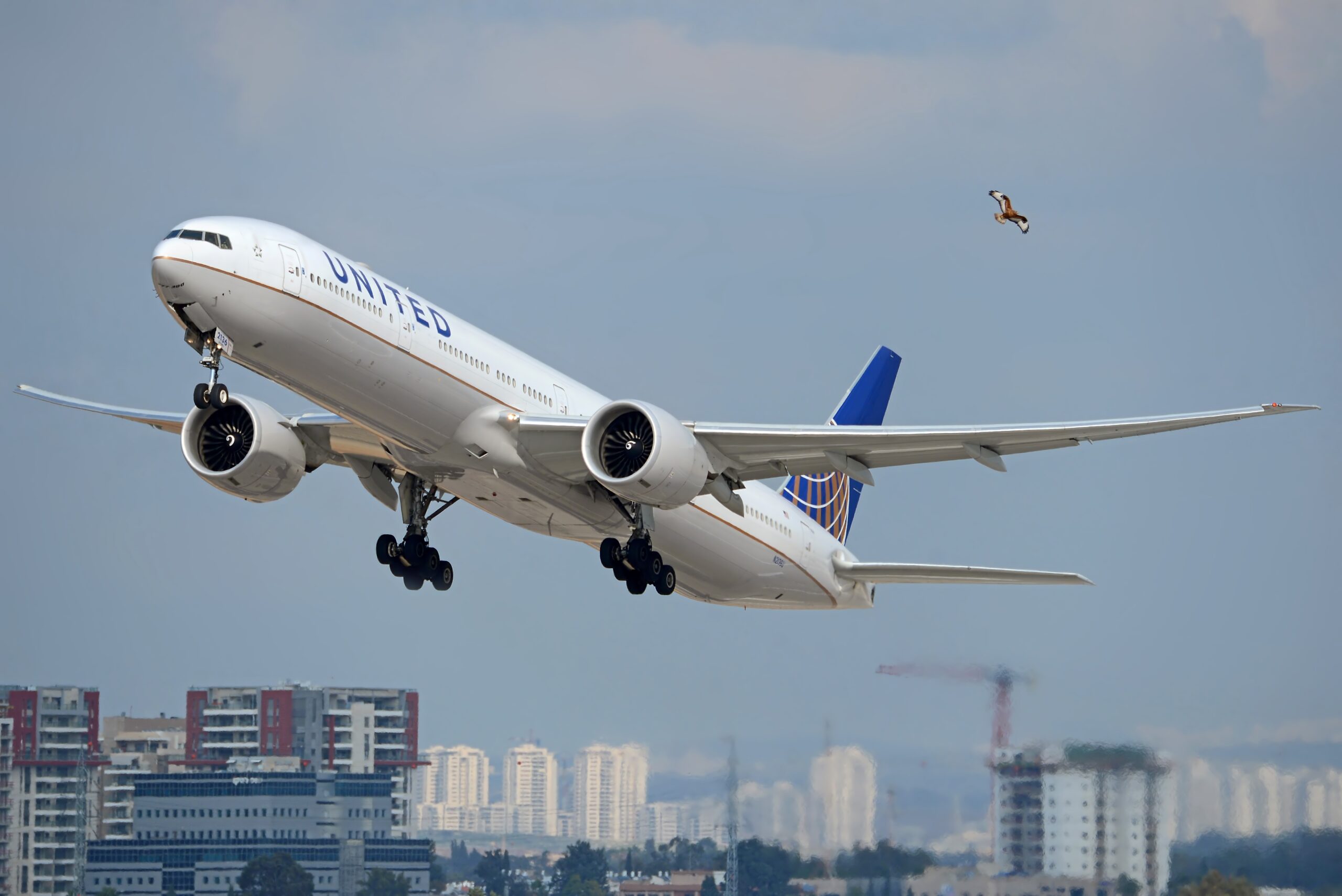
United Airlines Makes History With Free Starlink Wi-Fi on First Widebody Long-Haul Flight
A new era in in-flight connectivity officially began on the evening of June 22, 2025, when United Airlines flight UA-14 departed Newark Liberty International Airport bound for London Heathrow. What made this particular departure stand out from the hundreds of transatlantic crossings that happen every week was something passengers noticed the moment they settled into their seats: free, ultra-fast Starlink Wi-Fi, available on a widebody long-haul aircraft for the very first time in United Airlines history.
For frequent flyers who have long endured sluggish, overpriced in-flight internet, this milestone represents a genuine turning point — not just for United, but for the broader airline industry's approach to passenger connectivity.
Everything You Need to Know About UA-14's Historic Starlink Debut
Flight UA-14 was scheduled to depart Newark at 7:05 pm on June 22, arriving at London Heathrow the following morning at 7:15 am. The roughly seven-hour transatlantic crossing gave passengers their first taste of what it feels like to stream, browse, and work at broadband-quality speeds tens of thousands of feet above the Atlantic Ocean — all at no cost.
One of the most passenger-friendly features of United's Starlink implementation is its simplicity. Travelers can connect with a single click, and the service is available across multiple devices simultaneously. There is no tedious login portal, no per-hour pricing tier to navigate, and no frustrating bandwidth caps that throttle video calls mid-sentence. The experience is designed to mirror what passengers expect from high-speed internet on the ground, and by most early accounts, it delivers exactly that.
Connectivity is also available gate-to-gate, meaning passengers can get online before the aircraft even lifts off and stay connected right up until it pulls into the arrival gate — a meaningful improvement over services that only activate at cruising altitude.
How United Airlines Got Here: The Starlink Rollout Story
United Airlines began its Starlink rollout in Spring 2025, and the speed of the program has been remarkable. Within a matter of months, more than 400 United aircraft had already been equipped with SpaceX's low-Earth orbit satellite internet system.
However, the airline took a methodical, phased approach to the installation process. Rather than attempting to tackle the entire fleet simultaneously, United's engineers began by retrofitting the carrier's regional aircraft — the smaller, shorter-range jets that serve domestic routes across the United States. With that phase largely complete, attention shifted to the airline's narrowbody fleet, covering aircraft like the Boeing 737 and Airbus A320 family, which handle the bulk of United's domestic and short-haul international flying.
The logical next frontier was the widebody fleet: the large, twin-aisle aircraft that operate United's longest and most premium routes across the Atlantic, Pacific, and to destinations in South America. Installing Starlink on these larger aircraft presented unique engineering challenges, and United chose a single aircraft to serve as the prototype — a 24-year-old Boeing 777-200 registered as N37018.
The Boeing 777 That Started It All
To complete the first widebody Starlink installation, United flew the veteran Boeing 777-200 down to one of the airline's largest maintenance facilities, located in Rio de Janeiro, Brazil, on May 18. There, technicians worked to integrate Starlink's hardware into the aircraft's systems — a process that required careful planning given the size and complexity of the 777 airframe.
Alongside the Starlink installation, the aircraft is believed to have undergone routine scheduled maintenance during its time in Rio, a common practice when aircraft are sent to heavy maintenance facilities. After several weeks of work, the jet returned to Newark on Sunday morning ahead of its milestone Monday evening departure.
The successful installation on this prototype 777 has given United's engineering and operations teams the knowledge and confidence they need to roll out Starlink across the rest of the widebody fleet at pace.
What Comes Next: United's Ambitious Expansion Plans
With the widebody learning curve now behind them, United Airlines has set an ambitious target: equipping as many as 1,000 aircraft with Starlink internet by the end of 2025. That figure would represent one of the fastest and most comprehensive in-flight Wi-Fi rollouts in commercial aviation history.
For passengers, this means that free, high-speed Starlink connectivity should become the norm across United's network — whether you're on a short hop between Chicago and Dallas or on a 14-hour flight from San Francisco to Singapore. The implications are significant:
- Business travelers will be able to hold video conferences, access corporate VPNs, and work productively on long-haul routes without paying a premium for a reliable connection.
- Leisure travelers can stream movies, catch up on social media, and stay in touch with family back home — all without the anxiety of a slow or disconnected service.
- Families flying with children will have access to entertainment options across multiple devices, making long journeys considerably more manageable.
Why Starlink Changes the In-Flight Internet Game
Traditional in-flight Wi-Fi systems have largely relied on geostationary satellites positioned approximately 35,000 kilometers above the Earth. While functional, the vast distance between the satellite and the aircraft introduces noticeable latency and speed limitations, particularly when dozens of passengers are sharing bandwidth simultaneously.
Starlink's low-Earth orbit constellation operates at altitudes between roughly 340 and 1,200 kilometers, drastically reducing signal travel time. The result is a latency profile that far more closely resembles ground-based broadband, making real-time applications like video calls and cloud-based tools genuinely usable at 35,000 feet.
For an airline like United — which operates one of the world's largest and most geographically diverse route networks — partnering with SpaceX's Starlink represents a strategic bet on connectivity as a core part of the passenger experience rather than an afterthought.
A New Standard for Air Travel
The departure of UA-14 from Newark on June 22 may have looked like any other transatlantic flight from the outside, but for the passengers on board and for the aviation industry watching closely, it marked the beginning of something genuinely new. Free, fast, reliable internet in the sky is no longer a promise — on United Airlines, it is rapidly becoming a reality. With 1,000 aircraft targeted by year's end, travelers booking United flights in the second half of 2025 can expect the Starlink experience to be waiting for them, wherever in the world they happen to be flying.