
Boeing's 2025 Strike Is Costing the US Air Force Critical Fighter Jet Deliveries
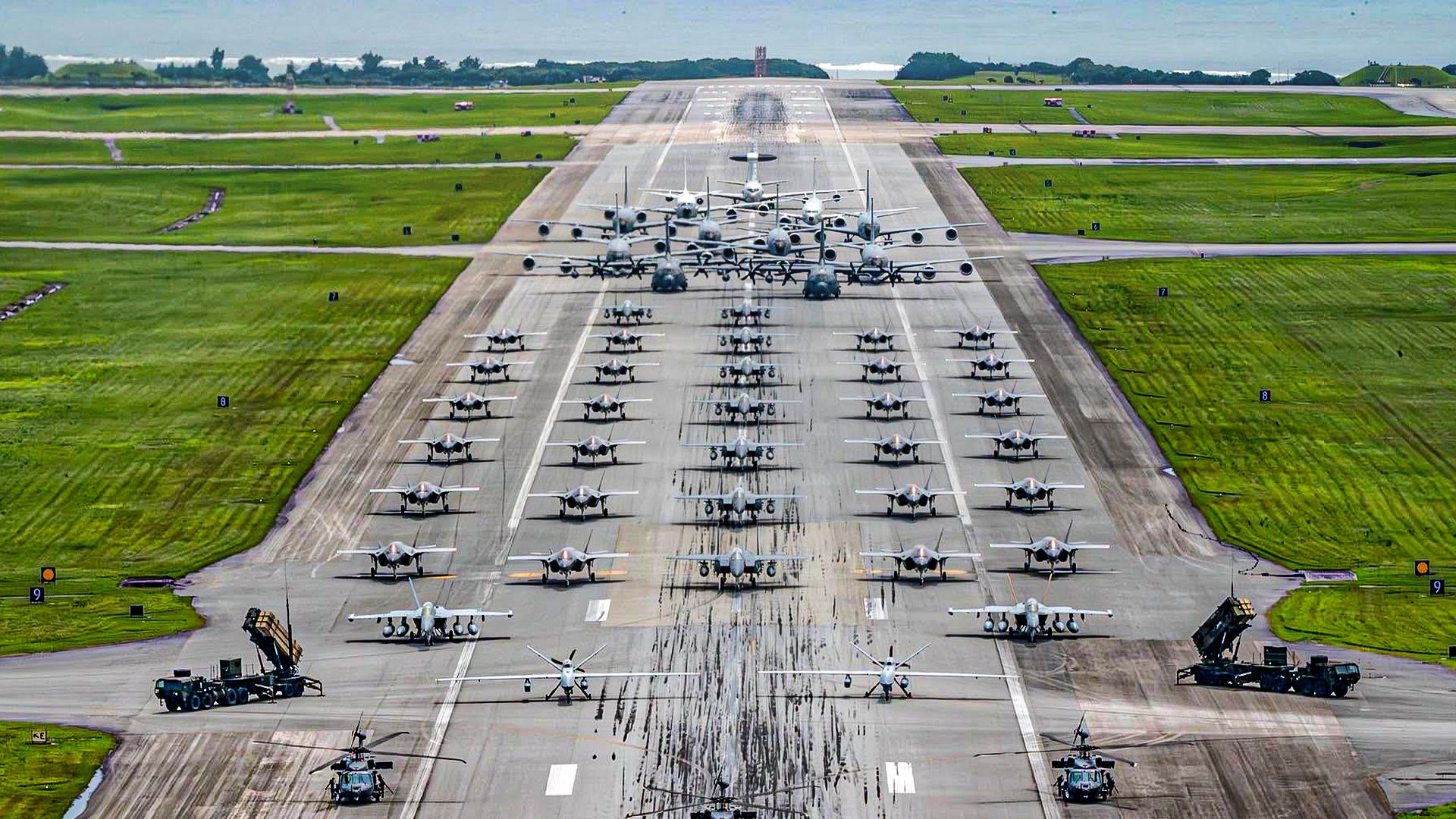
When workers at Boeing's Air Dominance Division in St. Louis, Missouri walked off the job in 2025, the ripple effects were always going to be felt far beyond the factory floor. Now, those effects are being felt all the way across the Pacific Ocean — at one of the United States Air Force's most strategically important installations. Kadena Air Base in Okinawa, Japan, which had been eagerly anticipating the arrival of Boeing's cutting-edge F-15EX Eagle II fighter jets, has seen its delivery timeline pushed back significantly, with new aircraft now not expected until 2027. For a base that depends on maintaining a constant, combat-ready fleet of fighters, that delay carries very real strategic consequences.
What Is the F-15EX Eagle II and Why Does It Matter?
The F-15EX Eagle II is the latest and most advanced iteration of one of the most storied fighter jet lineages in US military aviation history. Since the original F-15 Eagle first flew in 1972, the platform has been continually updated and refined to meet evolving threats. The F-15EX represents the pinnacle of that evolution, incorporating modern avionics, advanced electronic warfare systems, a fly-by-wire flight control system, and the ability to carry a significantly larger weapons payload than any previous version of the aircraft.
Perhaps most notably, the F-15EX is designed to operate alongside fifth-generation stealth fighters like the F-22 Raptor and F-35 Lightning II, serving as a complementary high-capacity weapons truck that can carry missiles and munitions that stealth aircraft simply cannot fit in their internal bays. In a contested environment where adversaries are fielding increasingly sophisticated air defense systems, the F-15EX's blend of speed, range, and payload capacity makes it an invaluable asset.
The US Air Force has placed substantial orders for the F-15EX to modernize and replace aging F-15C and F-15D airframes that have been in service for decades. Multiple Air National Guard and active-duty squadrons are in line to receive the new jets, making any disruption to the production pipeline a serious concern for overall Air Force readiness.
The Boeing St. Louis Strike: What Happened and Why
Boeing's Air Dominance Division facility in St. Louis is the birthplace of the F-15EX. It is there that the airframes are assembled, integrated, and prepared for delivery to the Air Force. When employees at this facility began striking in 2025, production of the F-15EX came to a grinding halt. Labor disputes at major defense contractors are not unheard of, but the timing and duration of this particular work stoppage has proven especially disruptive given the number of units already awaiting delivery across the Air Force inventory.
The strike has created a significant backlog that engineers and production workers will need considerable time to work through, even after normal operations resume. Assembly lines for complex military aircraft are not systems that can simply be switched back on overnight. Re-establishing production momentum, re-qualifying workers, conducting inspections, and completing flight tests all take time — which is why the downstream impact on delivery schedules has stretched well into 2027.
Kadena Air Base: A Strategic Linchpin in the Indo-Pacific
Of all the Air Force units waiting on their F-15EX deliveries, Kadena Air Base arguably has the most acute strategic need. Located on the island of Okinawa in southwestern Japan, Kadena is the largest US Air Force installation in Asia. It sits geographically close to potential flashpoints including the Taiwan Strait and the East China Sea, making it one of the most operationally significant airfields in the entire Indo-Pacific theater.
Kadena has traditionally maintained a permanent on-site fleet of fighter aircraft to ensure immediate response capability in the event of a regional crisis. For years, that fleet consisted of F-15C and F-15D Eagles — airframes that, while formidable in their day, are now aging and increasingly difficult to sustain. The F-15EX was intended to provide Kadena with a modernized replacement that would extend the base's air dominance capability for decades to come.
With those deliveries now pushed to 2027, the Air Force faces the challenge of bridging the gap. This has involved temporary deployments of other aircraft types and rotational units to maintain Kadena's combat readiness in the interim, but these are stopgap measures rather than long-term solutions. In a region where China's People's Liberation Army Air Force continues to modernize at a rapid pace, any delay in US capability upgrades carries tangible strategic weight.
Broader Implications for US Defense Procurement
The Boeing strike and its downstream effects on F-15EX deliveries highlight a broader vulnerability in the US defense industrial base: the fragility of single-source production pipelines for advanced weapons systems. When one factory — even a highly capable one — is disrupted by labor action, natural disaster, or supply chain failure, the consequences for military readiness can be severe and long-lasting.
The situation also places additional pressure on Boeing at a time when the company is already managing scrutiny related to its commercial aviation programs. Maintaining the confidence of the Department of Defense as a reliable defense contractor is critical for Boeing's long-term business prospects, and delays of this nature do not go unnoticed in Pentagon acquisition circles.
What Comes Next for Kadena and the F-15EX Program
Looking ahead, the expectation is that production at Boeing's St. Louis facility will eventually return to full capacity, allowing the company to work through its delivery backlog. For Kadena Air Base, the arrival of the F-15EX — whenever it comes — will represent a meaningful leap forward in the base's capabilities and will reinforce the United States' commitment to maintaining air superiority in the Indo-Pacific region.
- F-15EX deliveries to Kadena Air Base are now expected no earlier than 2027 due to the Boeing production disruption.
- The F-15EX Eagle II offers significantly improved avionics, payload capacity, and electronic warfare capabilities over previous F-15 variants.
- Kadena Air Base in Okinawa, Japan is one of the most strategically important US Air Force installations in the world, positioned near potential Indo-Pacific flashpoints.
- The Boeing strike underscores the vulnerability of single-source production lines in the US defense industrial base.
- Interim rotational aircraft deployments are being used to maintain Kadena's readiness while the F-15EX deliveries remain delayed.
The 2025 Boeing strike in St. Louis may be a labor dispute thousands of miles from Okinawa, but its effects are being felt in one of the world's most strategically sensitive theaters. As both sides work toward resolution and production ramps back up, the US Air Force and its allies will be watching closely — and waiting for the Eagles to arrive.