
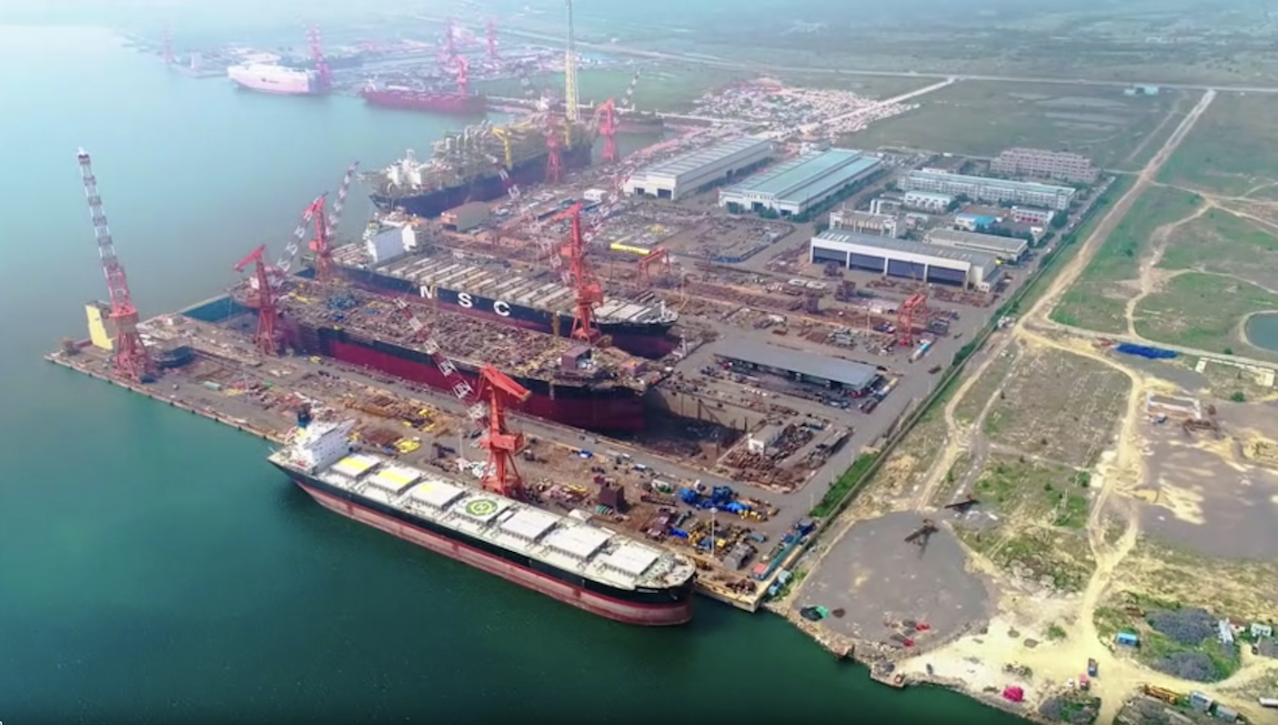
Democrats Call for Reinstatement of China Port Tax After Trump-Xi Trade Suspension
A bipartisan debate over American maritime competitiveness is heating up on Capitol Hill, as leading Democratic senators push the U.S. Trade Representative to reverse a key concession made during the Trump administration's interim trade negotiations with China. At the center of the controversy is a suspended port tax targeting Chinese-built vessels — a policy that supporters argue is essential to reviving the long-struggling U.S. shipbuilding industry.
The call to action comes from Senators Mark Kelly of Arizona and Elizabeth Warren of Massachusetts, who issued a formal statement urging United States Trade Representative Jamieson Greer to reinstate fees on large Chinese-built container and bulk vessels calling at American ports. Their push reflects growing frustration among lawmakers who believe the suspension of these charges gave up too much leverage in exchange for too little in return from Beijing.
What Is the China Port Tax and Why Was It Suspended?
The port charges in question were originally implemented in 2025 following a formal investigation that concluded China had leveraged unfair competitive advantages to establish a dominant position in both global shipping and shipbuilding. The fees were specifically designed to apply to large Chinese-built container ships and bulk carriers entering U.S. ports, with projected annual revenues totaling approximately $3.2 billion.
However, those fees were suspended as part of a broader mutual postponement agreement reached between President Donald Trump and Chinese President Xi Jinping during high-level meetings in Beijing. The suspension, running through November 9, was presented as a good-faith gesture within Trump's interim trade framework with China — one designed to ease trade tensions and open the door for further negotiations.
Critics, including Senators Kelly and Warren, argue that pausing the fees undermines the very policy goals they were meant to achieve. By removing financial pressure on Chinese-built vessels, the suspension inadvertently allows China to continue benefiting from its dominant position in global shipbuilding while American yards remain on the sidelines.
The Case for Reinstatement: Protecting U.S. Maritime Interests
The senators' statement frames the reinstatement of port fees as a matter of national economic and strategic importance. American shipbuilding has been in decline for decades, outpaced by heavily subsidized competitors in China, South Korea, and Japan. By allowing Chinese ships to call at U.S. ports without financial consequence, critics say the U.S. government is effectively subsidizing China's dominance at the expense of American workers and domestic industry.
Senator Kelly has been particularly active on this issue. He authored legislation specifically aimed at reviving the U.S. maritime industry, calling for structural investments and incentives to rebuild shipyard capacity on American shores. His efforts are part of a broader movement in Congress that recognizes maritime infrastructure as both an economic driver and a national security asset.
The argument for reinstatement rests on several pillars:
- Leveling the playing field: China's shipbuilding dominance was built on unfair trade practices, including state subsidies and below-market pricing. Port fees help offset the cost disadvantage faced by American-built vessels.
- Revenue generation: At $3.2 billion annually, the fees represent a significant source of funding that could be directed toward maritime revitalization programs.
- Trade negotiating leverage: Suspending the fees without concrete concessions from China weakens the U.S. bargaining position in ongoing trade discussions.
- Strategic independence: A robust domestic shipbuilding industry reduces American reliance on foreign-built vessels for both commercial and defense purposes.
The Trump Administration's Own Shipbuilding Ambitions
The political backdrop to this debate is more nuanced than it might appear. The Trump administration itself has released its own shipbuilding strategy, signaling that revitalizing American maritime capacity is a shared goal across party lines. However, the approach and the tradeoffs involved are where disagreements emerge.
Industry analysts and maritime observers have noted that rebuilding the U.S. shipbuilding industry from its current state would require tens of billions of dollars in subsidies over several decades. Even with substantial government investment, American-built ships are expected to face significant cost disadvantages when competing against Asian shipyards, where labor costs are lower and production capacity is vastly larger.
This economic reality creates a challenging policy environment. Port fees on Chinese vessels can help protect American interests and generate revenue for reinvestment, but they are not a silver bullet. Rebuilding a competitive maritime industry will require sustained commitment, workforce development, infrastructure upgrades, and a long-term industrial policy that spans multiple administrations.
What Happens Next: The Path Forward for U.S. Maritime Policy
As the November 9 suspension deadline approaches, pressure on the USTR and the White House to make a definitive decision is mounting. The choice is essentially binary: allow the port fees to resume as originally scheduled, or extend the suspension as part of further trade negotiations with China.
For lawmakers like Kelly and Warren, the answer is clear. Reinstating the fees sends a strong signal that the United States is serious about protecting its maritime industry and holding China accountable for unfair trade practices. Allowing the suspension to extend indefinitely, they argue, risks turning a temporary concession into a permanent one.
For the Trump administration, the calculus is more complex. The interim trade deal with China is fragile, and reinstating the fees could inflame tensions and derail broader negotiations on tariffs, technology, and supply chains. Balancing short-term diplomatic goals against long-term industrial policy priorities is never easy — but with American shipbuilding on the line, the stakes could hardly be higher.
The Bigger Picture: U.S.-China Trade and the Future of Global Shipping
The debate over Chinese port fees is a microcosm of the larger U.S.-China trade relationship. For years, China has used state-directed subsidies, preferential financing, and controlled pricing to dominate key industries — from solar panels and semiconductors to steel and now shipping. The U.S. has responded with tariffs, investigations, and targeted fees, but enforcement remains inconsistent and politically sensitive.
The global shipping industry is watching closely. Ocean freight rates, already elevated by ongoing supply chain disruptions, could be affected by any policy shifts that alter the cost structure for vessels calling at American ports. Shippers, importers, and logistics providers all have a stake in the outcome — as does every American worker whose job depends on a competitive and sovereign maritime sector.
Whether the port fees are reinstated or further delayed, one thing is clear: the conversation about American shipbuilding and its place in the global economy is far from over. It is, in fact, just getting started.