
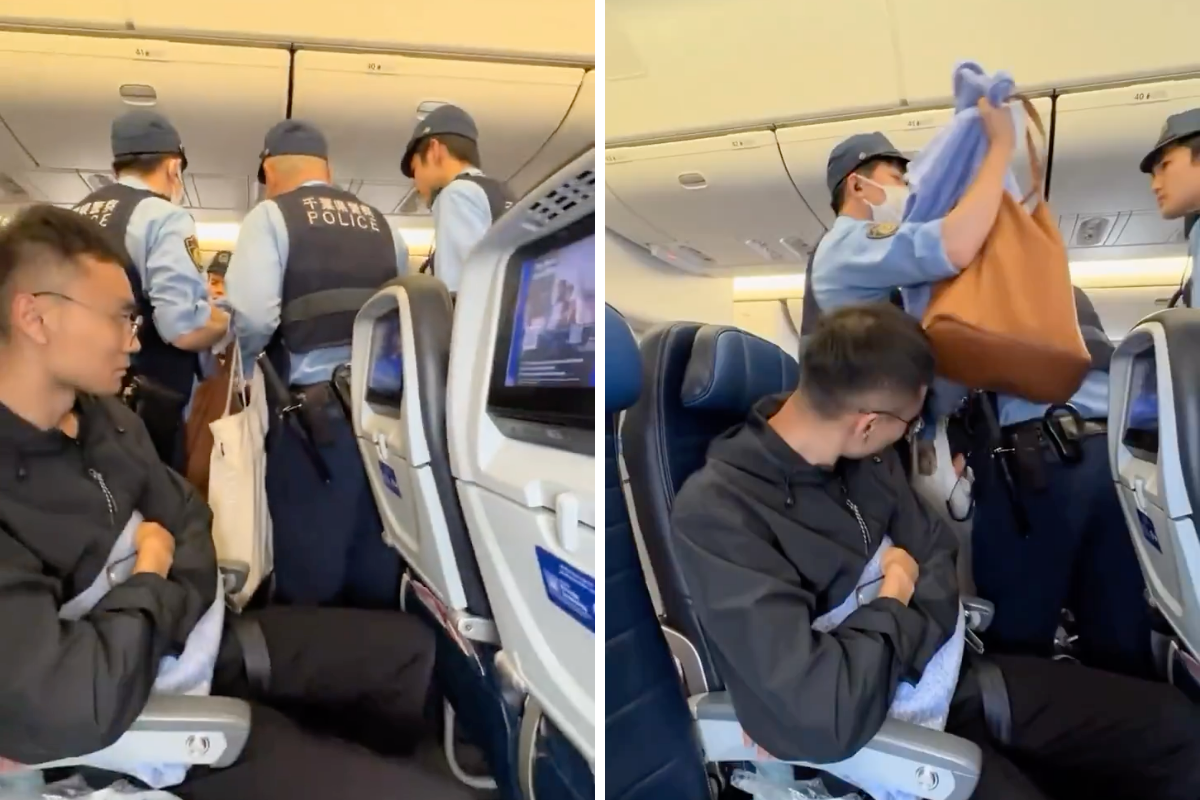
United Airlines Flight Dumps $50,000 Worth of Fuel After Passenger Quarrel Forces Tokyo Diversion
A transpacific United Airlines flight from Shanghai to San Francisco was forced to divert to Tokyo Narita International Airport on Wednesday, June 24, after a passenger described as "confused" became involved in a dispute with a flight attendant. The dramatic mid-flight decision reportedly resulted in the aircraft jettisoning up to $50,000 worth of aviation fuel — a costly consequence of what a fellow passenger described as a seemingly "small quarrel" that quickly escalated out of control.
What Happened on United Airlines Flight UA-858?
United Airlines flight UA-858 departed Shanghai Pudong International Airport (PVG) at approximately 12:43 pm local time on Wednesday, June 24. The flight was scheduled as an 11-hour transpacific journey bound for San Francisco International Airport (SFO), but things took an unexpected turn less than two hours into the flight.
The aircraft involved was a Boeing 777-300, nine years old, carrying 285 passengers and 16 crew members. After departing Shanghai, the plane climbed to a cruising altitude of 31,000 feet and headed eastbound over the North Pacific Ocean as passengers began to settle in for the first meal service of the long haul flight.
However, in the Economy cabin, a situation was already developing that would eventually force the pilots to make a significant and costly decision — turning the plane around and diverting to Tokyo Narita, a major international hub in Japan, rather than continuing on to California.
The Incident: A 'Confused' Passenger and a 'Small Quarrel'
According to an eyewitness seated just across the aisle from the passenger at the center of the incident, the woman in question appeared completely "normal" during the boarding process. She was reportedly polite and composed as she boarded, even engaging with flight attendants in a calm manner to confirm her seat assignment. Nothing suggested what was about to unfold.
However, witnesses say the woman's behavior shifted almost immediately after the aircraft's wheels left the ground. The passenger, described as a Chinese woman who did not speak English, reportedly became involved in what the eyewitness characterized as a "small quarrel" with a flight attendant. The exact nature of the dispute has not been fully disclosed, but the passenger has been described as "confused," raising questions about whether a language barrier, a medical issue, or some other factor may have played a role in the escalation.
The situation apparently reached a point where the flight crew felt that continuing the journey to San Francisco was not a viable option. The pilots made the call to divert the Boeing 777-300 to Tokyo Narita International Airport, which required the aircraft to dump a substantial amount of jet fuel in order to reduce its weight to a safe landing level.
Why Do Aircraft Dump Fuel Before an Emergency Landing?
Fuel jettisoning, while dramatic, is a standard and well-established safety procedure used when a large aircraft needs to land significantly earlier than planned. Wide-body jets like the Boeing 777-300 take off with enormous quantities of fuel for long-haul routes — in this case, enough for an 11-hour transpacific flight. Because these aircraft have a maximum landing weight that is considerably lower than their maximum takeoff weight, landing with a full fuel load can put dangerous stress on the airframe and landing gear.
By dumping fuel at altitude, pilots can bring the aircraft's weight down to a safe threshold before approaching the runway. On a route as long as Shanghai to San Francisco, the amount of fuel on board just two hours into the flight would still be enormous — which is why estimates suggest the diversion cost the airline as much as $50,000 in jettisoned fuel alone, not accounting for the additional operational costs of the unplanned stop.
The Broader Cost of In-Flight Disruptions
The UA-858 incident is a striking illustration of just how expensive in-flight disruptions can be — not only for airlines but for the hundreds of other passengers whose journeys are impacted. With 285 passengers on board, every one of those travelers experienced a significant delay and disruption to their travel plans, likely resulting in missed connections, rebooking costs, and considerable frustration.
- Fuel dumping alone is estimated to have cost approximately $50,000 in jet fuel.
- The diversion added significant operational costs including ground handling, crew hours, and airport fees at Tokyo Narita.
- All 285 passengers faced travel disruptions, potential missed connections, and rebooking headaches.
- The incident occurred less than two hours into what should have been an 11-hour flight.
Airlines have very little tolerance for disruptive passengers precisely because of incidents like this one. Removing a single passenger from a flight can cost carriers tens of thousands of dollars and cause cascading disruptions across an entire network of connecting flights and crews.
United Airlines Has Not Yet Issued an Official Statement
At the time of writing, United Airlines has not released a detailed official statement addressing the specifics of the UA-858 diversion. The account of events comes primarily from an eyewitness passenger who was seated near the individual involved in the incident. It remains unclear whether the passenger faced any formal charges or was simply offloaded at Tokyo Narita before the flight continued to San Francisco.
The incident raises broader questions about how airlines handle passengers who may be experiencing confusion, a medical episode, or who face significant language barriers on international flights — and what protocols exist to de-escalate such situations before they require an expensive and disruptive diversion.
What Passengers Should Know
For frequent flyers and first-time international travelers alike, the UA-858 incident serves as a reminder of several realities of modern air travel. Flight crews carry enormous responsibility and have the authority — backed by international aviation law — to divert aircraft and offload passengers they believe pose a risk to the safety or order of the flight. Those decisions, once made at 31,000 feet, are rarely reversed.
If you are traveling internationally, particularly on long-haul transpacific routes, being aware of airline policies, respecting crew instructions, and ensuring that any special needs — including language assistance — are communicated clearly before or during boarding can go a long way toward ensuring a smooth journey for everyone on board.
The full story of what transpired in the Economy cabin of United Airlines flight UA-858 on June 24 is still emerging, but the $50,000 fuel bill and an unplanned stop in Tokyo are already making it one of the more costly passenger incidents of 2026.