
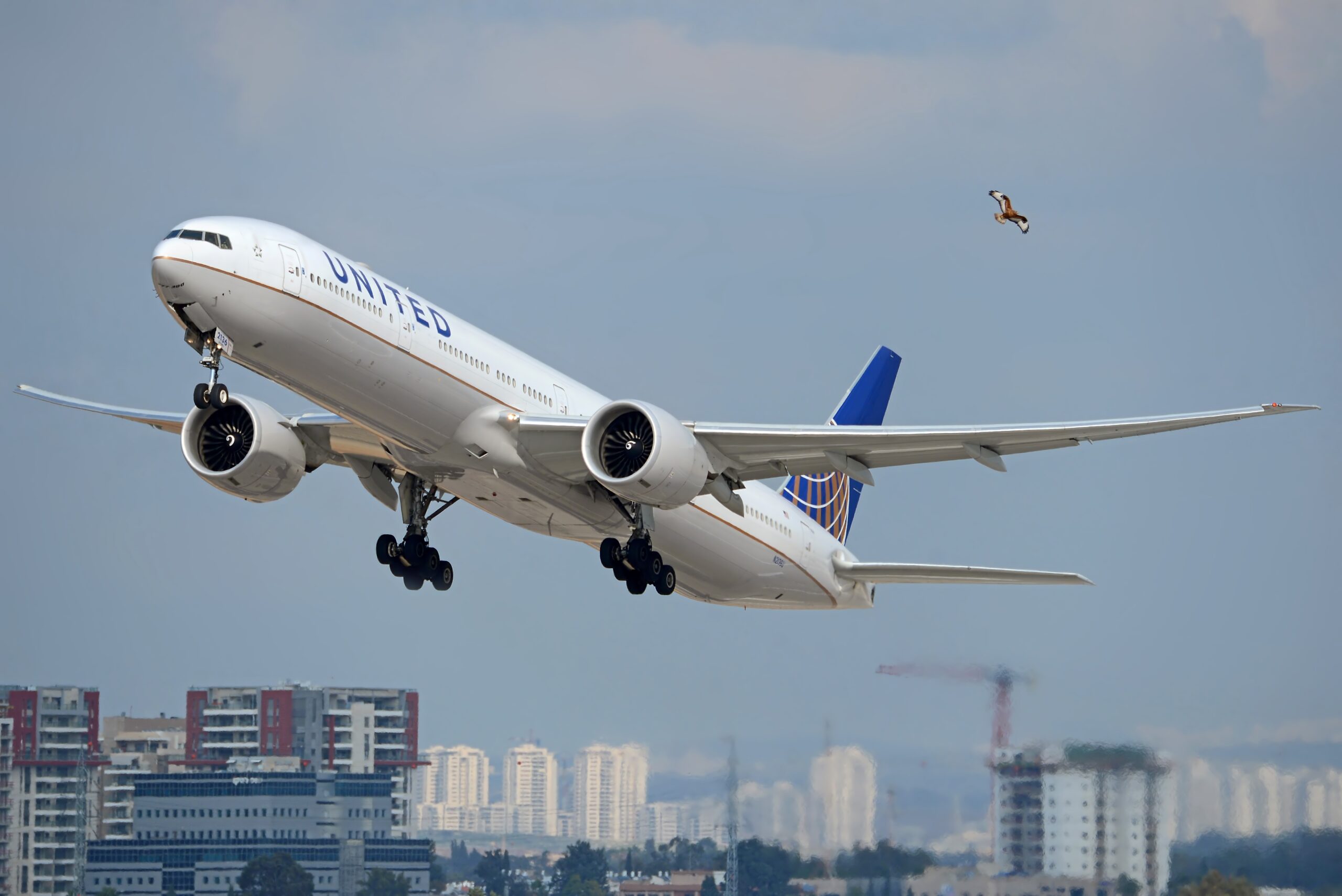
United Airlines Makes History With Free Starlink Wi-Fi on Its First Widebody Long-Haul Flight
A new chapter in the history of in-flight connectivity began on the evening of June 22, 2025, when United Airlines operated the first widebody long-haul flight equipped with free, ultra-fast Starlink internet. The milestone flight, United flight UA-14, departed Newark Liberty International Airport at 7:05 pm and touched down at London Heathrow Airport the following morning at 7:15 am — giving passengers on a transatlantic journey something they have never truly had before: genuinely fast, free, gate-to-gate internet access in the sky.
For travelers who have endured years of slow, expensive, and frustratingly unreliable in-flight Wi-Fi, this development represents a seismic shift. Starlink's satellite-based broadband service has already earned a reputation for delivering speeds that put traditional in-flight internet providers to shame, and now that technology is making its way onto the long-haul routes where passengers need it most.
The Flight That Changed Everything: UA-14 Newark to London Heathrow
Flight UA-14 is a well-traveled transatlantic route, but on June 22 it carried far more significance than usual. Passengers on board were among the first in the world to experience Starlink's broadband-quality internet on a widebody commercial aircraft — a Boeing 777-200 — for free and without the complicated login procedures that have historically plagued in-flight connectivity.
United Airlines confirmed that passengers had access to Starlink's Wi-Fi service from gate to gate, meaning the connection was active before takeoff and remained available through landing. Access was designed to be seamless, requiring just one click to connect across multiple devices simultaneously. Whether passengers wanted to stream video, join a video call, or simply browse the web at normal speeds, the experience was built to mirror what travelers expect from a high-quality home or office internet connection.
The Aircraft Behind the Milestone: A Boeing 777-200 With a New Life
The aircraft at the center of this historic flight is a 24-year-old Boeing 777-200 registered as N37018. While the airframe has been in service for more than two decades, it has now been given a thoroughly modern upgrade. United Airlines flew the 777-200 down to one of its largest maintenance hangars, located in Rio de Janeiro, Brazil, on May 18, 2025, where it became the airline's prototype aircraft for testing and perfecting the Starlink installation process across its entire 777 fleet.
The aircraft spent several weeks in Rio de Janeiro undergoing not only the Starlink hardware installation but also what the airline described as routine maintenance work. It returned to Newark on the Sunday morning before the inaugural flight, giving ground crews time to prepare the aircraft for its landmark departure. The choice of a 777-200 as the prototype makes sense given that the 777 is one of United's primary widebody workhorses, operating long-haul routes across the Atlantic and Pacific where in-flight connectivity matters most to passengers.
How United Airlines Got Here: A Phased Starlink Rollout
United Airlines began its Starlink rollout in the spring of 2025, and the pace of the program has been remarkable. The airline did not simply jump straight to its biggest aircraft. Instead, it took a deliberate, phased approach that prioritized retrofitting its regional aircraft fleet first, then moved on to its narrowbody single-aisle jets. By the time the widebody program kicked off in earnest, United had already equipped more than 400 aircraft with Starlink across its regional and narrowbody fleets.
This strategy allowed the airline's engineering and maintenance teams to build expertise and refine their installation processes before tackling the more complex task of fitting Starlink hardware to large widebody jets. Long-haul aircraft like the Boeing 777 and Boeing 787 Dreamliner present different structural and logistical challenges compared to narrowbody aircraft, making the prototype work in Rio de Janeiro a critical step in the broader rollout plan.
What Comes Next: 1,000 Starlink-Equipped Aircraft by Year's End
Now that United has successfully demonstrated how to install and operate Starlink on a widebody aircraft, the airline is prepared to accelerate its rollout dramatically. The carrier has set an ambitious target of equipping as many as 1,000 aircraft with the Starlink internet service by the end of 2025. That would represent one of the fastest and most comprehensive in-flight Wi-Fi rollouts in commercial aviation history.
The scale of this commitment signals how seriously United Airlines views in-flight connectivity as a competitive differentiator. As airlines compete for premium travelers who are accustomed to being constantly connected, offering genuinely fast and free internet — rather than the slow, paid, and often unreliable services that have defined the category for years — is a powerful way to influence booking decisions and build long-term passenger loyalty.
Why Starlink Changes the In-Flight Wi-Fi Game
Traditional in-flight internet services have relied on older satellite technology or ground-based air-to-ground networks that struggle to deliver consistent speeds, particularly over oceans. Starlink, operated by SpaceX, is built on a constellation of low-Earth orbit satellites that delivers dramatically lower latency and significantly higher bandwidth than legacy in-flight connectivity providers.
The practical difference for passengers is substantial. Where older systems might deliver speeds barely sufficient for checking emails, Starlink can support video streaming, large file transfers, and video conferencing — activities that business and leisure travelers increasingly consider essential, not optional. The fact that United is offering this service for free removes the final friction point that has historically discouraged passengers from using in-flight Wi-Fi even when it was available.
A Turning Point for Transatlantic and Long-Haul Travel
The successful debut of Starlink on United's first widebody flight is more than just a technology story. It reflects a broader transformation in what passengers expect from the flying experience. Long-haul flights that once meant hours of disconnection from work, entertainment, and personal communications are increasingly becoming extensions of the connected environments travelers inhabit on the ground.
With free Starlink Wi-Fi now proven on a transatlantic route, United Airlines has set a new benchmark for the industry. As the airline pushes toward 1,000 equipped aircraft by the close of 2025, millions of passengers on some of the world's longest routes will gain access to a level of in-flight connectivity that was simply not available to them before. For the airline and its customers alike, the flight from Newark to London on June 22 was the beginning of something genuinely new.