
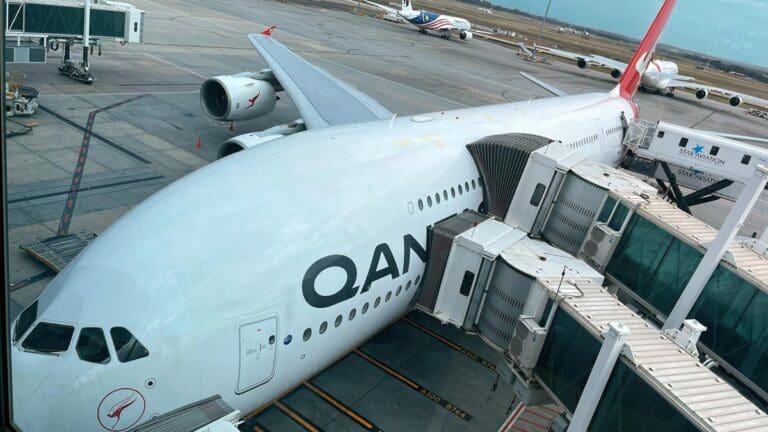
Qantas A380 Caught Up in Urgent Global Wing-Crack Inspection Program
Aviation safety has once again moved to the forefront of public conversation following news that one Qantas Airbus A380 is among 16 superjumbos worldwide caught up in an urgent and wide-reaching inspection program. The inspections were ordered after cracks were discovered in a critical internal wing structure on selected aircraft from the iconic double-decker fleet. Europe's aviation safety regulator, the European Union Aviation Safety Agency (EASA), issued an Emergency Airworthiness Directive on 22 June, triggering immediate action from airlines and regulators across the globe.
For frequent flyers, aviation enthusiasts, and anyone booked on a long-haul Qantas flight, this development naturally raises questions. What does it mean? How serious is it? And what happens next? This article breaks it all down in plain language.
What Is an Emergency Airworthiness Directive?
An Airworthiness Directive (AD) is an official, legally enforceable document issued by an aviation authority that mandates inspections, modifications, or operational restrictions on aircraft. When an AD is classified as an Emergency Airworthiness Directive, it signals that the identified issue requires immediate attention rather than being addressed through the normal scheduled maintenance cycle.
EASA, which holds regulatory authority over Airbus aircraft given the manufacturer's European origins, issued its Emergency Airworthiness Directive covering selected A380 aircraft after cracks were detected in what is described as a critical internal wing structure. The urgency of the directive reflects the structural significance of the affected component — wings are, of course, among the most load-bearing and safety-critical parts of any commercial aircraft.
It is worth noting that the issuance of such directives, while alarming to the general public, is actually a sign that safety systems are working as intended. Regulators monitor fleets continuously, and when potential issues are identified, mandatory inspections are ordered before any risk escalates into a real-world incident.
Which Aircraft Are Affected?
The Emergency Airworthiness Directive covers 16 Airbus A380 aircraft globally. One of those aircraft belongs to Qantas, Australia's flagship carrier and one of the longest-standing operators of the A380 superjumbo. Qantas has been flying the A380 since 2008 and has used the aircraft extensively on its ultra-long-haul routes, including the celebrated Kangaroo Route between Australia and the United Kingdom via Singapore.
The A380 is the world's largest commercial passenger aircraft, capable of carrying more than 500 passengers in a typical two-class configuration, or up to 853 in an all-economy layout. Its sheer size and the complexity of its construction mean that structural integrity monitoring is a constant and critical part of keeping the fleet airworthy. The fact that only 16 of the more than 200 A380s currently in service worldwide are affected by this directive suggests the issue is confined to specific aircraft or production batches rather than being a fleet-wide structural problem.
How Serious Are Wing Cracks on an Aircraft?
The word "crack" in the context of aircraft structures can be alarming, but it is important to understand how aviation engineering and maintenance work before jumping to conclusions. Aircraft are built from materials — including various aluminium alloys, titanium, and composite materials — that are subject to metal fatigue over time. Hairline cracks or micro-fractures in certain components are not uncommon in older or heavily cycled aircraft, and aviation maintenance protocols are specifically designed to detect these issues long before they pose any operational risk.
That said, the internal wing structure is not a trivial component. Wings must withstand enormous aerodynamic loads during every phase of flight, from takeoff and cruise to turbulence encounters and landing. Cracks in a critical structural member of the wing can, if left unaddressed, propagate over time and potentially compromise structural integrity. This is precisely why EASA acted quickly and why the directive carries emergency status.
The inspection process will determine the precise extent of any cracking found and establish whether affected aircraft need repair, part replacement, or whether they can continue flying within defined safety parameters while more permanent solutions are developed.
What Does This Mean for Qantas Passengers?
For passengers booked on Qantas A380 flights, the immediate practical impact will depend on how quickly the inspection of the airline's affected aircraft can be completed and what the results show. Airlines subject to Emergency Airworthiness Directives are typically required to ground the relevant aircraft until inspections are carried out and any required remediation work is completed or approved.
Qantas operates a fleet of several A380 aircraft across its international network. With one aircraft pulled from service for inspection, the airline may need to substitute other aircraft types on certain routes or adjust scheduling. Passengers are encouraged to monitor communications from Qantas directly and check their booking status if they are travelling on long-haul international services where the A380 is commonly deployed.
It is also reassuring to note that Qantas has an exceptional safety record. The airline is widely regarded as one of the world's safest carriers, and its maintenance and engineering teams are among the most experienced in the industry when it comes to operating and servicing the A380.
Airbus and the A380: A History of Structural Vigilance
This is not the first time structural concerns have prompted inspection orders on the A380. In 2012, EASA issued directives related to cracks found in wing rib foot brackets — a different structural location from the current concern — which ultimately required modifications across a significant portion of the global A380 fleet. Airbus developed repair and reinforcement solutions, and the aircraft continued flying safely. That precedent is relevant here: the aviation industry has well-established processes for identifying, addressing, and resolving structural issues on complex aircraft like the A380.
Airbus itself is expected to work closely with EASA and affected operators to develop approved inspection techniques and, where necessary, structural repairs or modifications. The manufacturer has extensive experience supporting the A380 fleet through regulatory compliance requirements.
The Broader Picture: Aviation Safety and Regulatory Oversight
Stories like this one highlight something important about the aviation industry that often gets lost in alarming headlines: commercial aviation is extraordinarily safe precisely because it takes even minor structural anomalies seriously. The global aviation safety framework, maintained by bodies like EASA, the FAA in the United States, and CASA in Australia, is built on the principle that potential risks are identified and mitigated proactively rather than reactively.
Emergency Airworthiness Directives are a core tool in that framework. They exist to ensure that when an issue is identified on one aircraft, every aircraft that might share the same characteristic is inspected without delay. The fact that 16 aircraft out of a global fleet of more than 200 operational A380s have been flagged reflects the precision of modern safety monitoring — not a systemic failure.
Key Takeaways
- One Qantas Airbus A380 is among 16 superjumbos globally affected by an Emergency Airworthiness Directive issued by EASA on 22 June.
- The directive was triggered by the discovery of cracks in a critical internal wing structure on selected A380 aircraft.
- Emergency Airworthiness Directives require immediate compliance and are a standard, well-established tool in the aviation safety toolkit.
- The A380 has faced and resolved structural inspection programs before, most notably in 2012, and the industry has proven processes for addressing such issues.
- Qantas passengers should monitor their bookings and stay updated via official airline communications, though the airline's strong safety culture provides significant reassurance.
- Aviation regulators and Airbus will work together to develop long-term solutions, and the broader A380 fleet is expected to continue operating safely.
Final Word
The Qantas A380 wing-crack inspection story is a reminder of how seriously the aviation industry takes structural safety — and rightly so. While the headlines may prompt concern, the reality is that regulators, airlines, and manufacturers are doing exactly what they are supposed to do: identifying potential issues early, acting decisively, and putting passenger safety above all else. For travellers, that is ultimately the most reassuring news of all.