
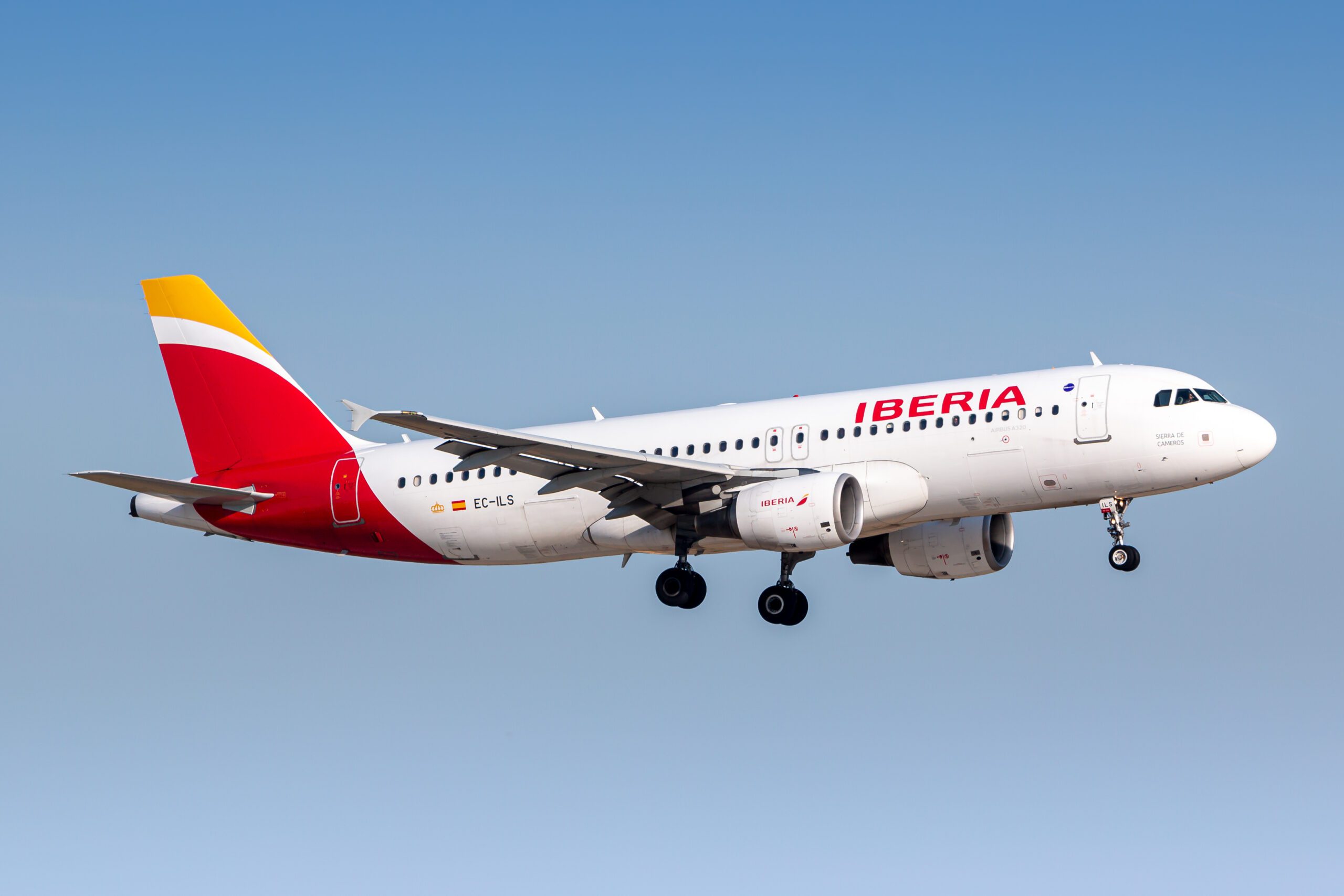
Iberia Becomes One of the First Airlines to Update Baggage Terminology Ahead of New EU Rules
Spanish flag carrier Iberia has wasted little time responding to sweeping changes in European air passenger rights. The Madrid-based airline has already updated its website to reflect new terminology around hand baggage, positioning itself ahead of the curve as the European Union prepares to introduce landmark rules that will guarantee every passenger the right to bring at least one personal item on board a flight completely free of charge.
The move, which took effect on a Tuesday earlier this week, has drawn significant attention from travelers, consumer advocates, and the wider aviation industry alike. For millions of passengers who have grown frustrated with the increasingly complex and often costly baggage policies of European airlines, the regulatory shift represents a meaningful step forward — and Iberia's early compliance signals that the changes are being taken seriously at the carrier level.
What Exactly Has Iberia Changed?
On its updated website, Iberia now draws a clear distinction between two categories of cabin luggage that passengers are permitted to bring on board. The first is described as hand baggage, which refers to the larger trolley-style bags that must be stored in the overhead bin due to their size. The second is a newly defined category called personal luggage, which refers to smaller items — such as handbags, laptop bags, or compact backpacks — that can fit comfortably beneath the seat in front of the passenger.
This distinction mirrors exactly the language and framework laid out in the new EU air passenger rights regulations, which were approved by the Conciliation Committee of the Council of Europe and the European Parliament just days before Iberia made its changes. The alignment is no coincidence. Airlines across Europe are now under pressure to bring their policies, and their language, in line with what lawmakers have decided passengers are legally entitled to.
Understanding the New EU Air Passenger Rights Rules
The newly revised EU rules represent the first time that European lawmakers have formally defined the minimum standards for what luggage passengers are entitled to bring on board a plane. While previous regulations focused heavily on compensation for flight delays, cancellations, and denied boarding, the question of cabin baggage had largely been left to the discretion of individual airlines — with predictably inconsistent and often passenger-unfriendly results.
Under the revised rules, passengers must be allowed to bring one personal item measuring no more than 40x30x15 centimeters on board at no additional cost. This item should be stored beneath the seat in front of the passenger, with exceptions made for bulkhead seats and emergency exit row seats, where under-seat storage is typically unavailable or restricted.
Hand baggage, defined as the larger overhead bin bags, must also be permitted on board, though airlines retain the right to charge for this service and are allowed to manage availability subject to space constraints on the aircraft. This means that while a small personal item is now a guaranteed free entitlement, passengers should not assume that their full-size carry-on trolley will always travel at no cost.
Why This Matters for Passengers
The practical implications of these changes are significant, particularly for budget-conscious travelers who have spent years navigating the fine print of airline baggage policies. In recent years, a number of European carriers — most notably low-cost airlines — have effectively monetized the act of bringing any bag on board beyond the most minimal personal item, pushing passengers to pay fees that can sometimes rival or even exceed the cost of the base fare itself.
By enshrining the right to a free personal item in law, the EU is drawing a line that airlines can no longer cross. Whether the regulation goes far enough is a matter of debate among consumer groups, but the direction of travel is clear: Europe is moving toward treating a basic level of cabin baggage as a passenger right rather than a commercial upsell opportunity.
For frequent flyers and occasional travelers alike, it is worth understanding the size limits now attached to the free personal item allowance. At 40x30x15 centimeters, the permitted dimensions are generous enough to accommodate a standard handbag, a slim backpack, or a laptop bag, but would not cover the kind of cabin bag many passengers routinely try to squeeze into the overhead bin.
What Should Passengers Do Now?
While the regulatory framework has been approved, passengers should bear in mind that the rules will need to be formally implemented across all EU member states and adopted by airlines operating within European airspace. Iberia's early update is a positive signal, but it does not mean that every carrier has already aligned its policies.
Travelers are advised to check the specific baggage policy of their airline before flying, particularly if they are booking with a low-cost carrier that has historically charged for cabin bags. Keep a note of the 40x30x15 centimeter personal item dimensions, and where possible, choose bags that comfortably fall within those measurements to avoid any disputes at the gate.
It is also worth watching for further official implementation announcements from the European Commission and individual national aviation authorities, which will clarify the exact timeline for when airlines must be fully compliant with the new rules.
The Bigger Picture: A Shift in European Aviation Policy
Iberia's prompt response to the new EU baggage terminology is a small but telling indicator of how seriously the aviation sector is treating this regulatory update. The approval of these rules by the Conciliation Committee of the Council of Europe and the European Parliament marks a genuinely new chapter in the relationship between airlines and their customers within Europe.
For too long, baggage policy has been an area where airlines held almost all the cards. The introduction of clearly defined, legally enforceable minimum standards for what passengers can bring on board — free of charge — changes that balance, however modestly. As more carriers follow Iberia's lead in updating their terminology and policies, passengers across the continent stand to benefit from a clearer, fairer, and more transparent set of rules governing one of the most common sources of airport stress: what you are and are not allowed to bring on the plane.
Keep an eye on further developments as airlines across Europe respond to these changes in the months ahead.