
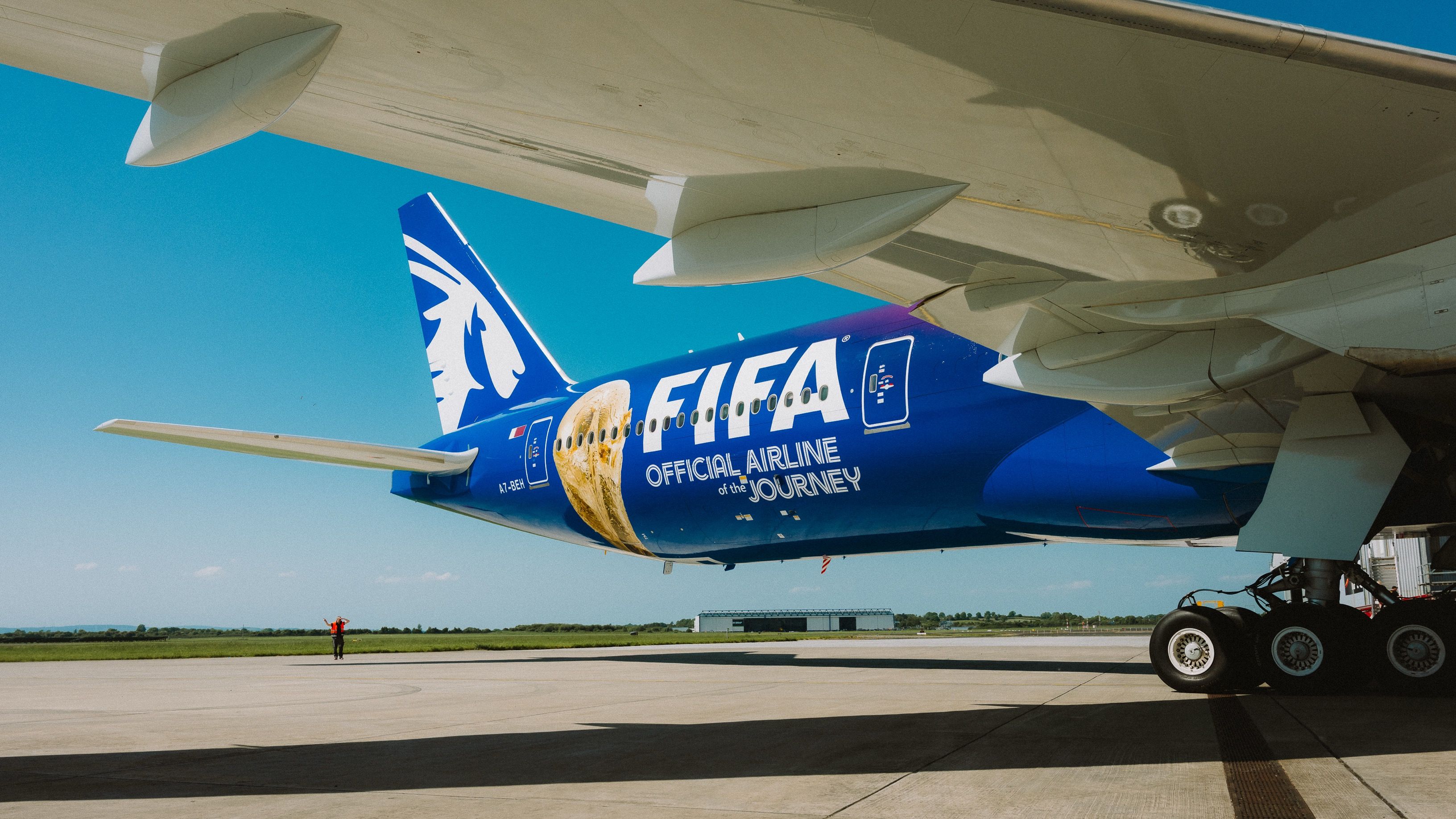
How FIFA World Cup 2026 Teams Are Traveling to North America
The FIFA World Cup is, without question, the most-watched and most celebrated sporting event on the planet. Every four years, the world holds its breath as the greatest national football teams compete for the most coveted trophy in sports. In 2026, the tournament reaches unprecedented scale — for the first time in history, 48 national teams will compete across a tri-nation hosting arrangement spanning Canada, Mexico, and the United States. That logistical ambition raises a fascinating question that aviation enthusiasts and football fans alike are asking: how exactly do these teams get there, and is the era of luxurious private jet travel finally arriving in international football?
The short answer might surprise you. Despite the glamour, the superstar players, and the enormous budgets involved, not a single one of the 48 national teams competing in the 2026 FIFA World Cup has traveled to North America aboard a business jet. The reason is straightforward, practical, and telling about the sheer scale of international football delegation travel.
Why Private Jets Are Simply Too Small for World Cup Teams
It's no secret that many of the world's top footballers are extremely wealthy individuals who own or regularly charter private jets for personal travel. Cristiano Ronaldo, Lionel Messi, Neymar, and a host of other elite players are frequently photographed stepping off sleek business aircraft. For personal trips, a private jet is the ultimate symbol of luxury and convenience. But international tournament travel is an entirely different beast.
A national World Cup squad isn't just 23 or even 26 players. When you factor in head coaches, assistant coaches, fitness staff, medical personnel, nutritionists, psychologists, kit managers, security personnel, communications teams, federation officials, and media liaisons, a traveling party can easily swell to 80 or even 100 people. The largest ultra-long-range business jets — aircraft like the Gulfstream G700, Bombardier Global 7500, or Dassault Falcon 10X — typically accommodate between 10 and 19 passengers in their standard configurations. Even with custom interior layouts, these aircraft max out well below the capacity required to move an entire national football delegation in a single flight.
Chartering multiple business jets for a single squad would be logistically complex, enormously expensive even by football federation standards, and impractical when it comes to keeping an entire delegation together as a cohesive unit. Coordination, team bonding, and tactical confidentiality all matter deeply to coaching staff — arriving piecemeal on a fleet of small jets simply isn't in any federation's playbook.
What Teams Actually Use: Large-Cabin Charter Aircraft
For World Cup travel, national federations turn to wide-body commercial airliners chartered exclusively for their delegation. Aircraft like the Boeing 777, Airbus A330, Airbus A340, and Boeing 787 Dreamliner are the workhorses of international football travel. These planes offer the capacity to accommodate full squads and their extensive entourages comfortably, while still allowing federations to customize the cabin layout, catering, and branding to reflect their national identity.
Charter arrangements at this level are deeply prestigious in their own right. Airlines and charter operators compete fiercely for the contracts to fly World Cup teams, as the exposure and association with high-profile national squads carries significant marketing value. Teams often have their national flag livery applied to the fuselage, turning the aircraft into a flying billboard of national pride. Custom meal services, team-branded headrests, and priority handling at airports all form part of the package.
The Unique Logistical Challenge of a Tri-Nation Tournament
The 2026 FIFA World Cup presents a coordination challenge unlike any previous edition of the tournament. With host cities spread across three countries — including venues as geographically diverse as Vancouver, New York/New Jersey, Los Angeles, Mexico City, Guadalajara, and Toronto — teams may find themselves criss-crossing the continent multiple times during the group stage and knockout rounds.
This creates a rolling charter flight operation that must remain flexible throughout the tournament. A team that opens its campaign in Dallas might play its second group game in Seattle and its third in Monterrey. Federations and their charter partners must be ready to mobilize at short notice, comply with differing aviation regulations across three sovereign nations, and manage crew rest requirements, customs procedures, and ground transportation at each destination.
For smaller federations with tighter budgets, FIFA provides logistical support and travel subsidies to ensure that all 48 participating nations can fulfill their fixtures without commercial travel disadvantaging them relative to wealthier associations.
Player-Owned Jets: Personal Luxury vs. Team Travel
While team travel relies on chartered wide-body jets, the personal aircraft owned by elite footballers tell a different story. Players like Cristiano Ronaldo, who has been associated with a Gulfstream G200 and later larger private aircraft, use their jets for off-season holidays, personal appearances, and short regional hops between club commitments. During a World Cup, however, these personal assets remain largely grounded or are returned to charter availability while their owners travel with the national squad.
This distinction matters because it highlights a broader truth about elite sport: individual wealth and team logistics rarely intersect. Even the richest player on a squad boards the same team charter as everyone else. The collective supersedes the individual — a philosophy that extends, it turns out, all the way to the departure gate.
The Business of World Cup Charter Aviation
The charter aviation market that surrounds a FIFA World Cup is substantial. Beyond the teams themselves, broadcasters, sponsors, FIFA officials, and VIP guests all generate significant demand for both commercial upgrades and true private charter services in and around host cities. Business aviation terminals at airports near major venues see sharp spikes in traffic during tournament windows, as the business elite and football's governing class move between matches, sponsor events, and hospitality engagements in ways that do call for the speed and discretion of smaller jets.
For business aviation operators, a World Cup cycle represents one of the most lucrative short-term demand surges in the global charter calendar. Operators position aircraft in advance, rates climb sharply during the knockout rounds, and demand for same-day availability near final venues can push charter prices to extraordinary levels.
Looking Ahead: Will Business Jets Ever Play a Bigger Role?
As aircraft manufacturers continue to push the boundaries of capacity and range in the business aviation segment, the gap between what a private jet can offer and what a national football delegation needs is slowly narrowing — though it remains wide. Ultra-large business jets are growing in cabin size and passenger capacity with each new generation, and the concept of a purpose-configured "team jet" in the business aviation category is not entirely beyond imagination for the future.
For now, though, the 2026 FIFA World Cup will be served by the same formula that has underpinned international football travel for decades: wide-body charter jets wrapped in national colors, carrying squads of players who may own private jets of their own, but who — for the duration of the world's greatest sporting event — travel together, as one.