
From Regional Turboprop to Continental Contender: Porter Airlines' Remarkable Rise
Not many airlines can say they nearly tripled in size within three years. Canada's Porter Airlines can. Once considered a quiet regional carrier content to shuttle passengers on short hops from Toronto's downtown Billy Bishop Toronto City Airport, Porter has undergone one of the most dramatic transformations in recent North American aviation history. The question on everyone's mind — from passengers to industry analysts — is whether this extraordinary growth can actually be sustained.
How Porter Airlines Got Here: A Brief History of the Carrier
For most of its two-decade existence, Porter Airlines operated as a niche, boutique airline. Its business model was elegantly simple: fly de Havilland Dash 8-Q400 turboprops out of Billy Bishop Toronto City Airport (YTZ), a conveniently located airfield just minutes from downtown Toronto, and offer a passenger experience measurably better than the competition on short regional routes within roughly 1,000 miles. Think complimentary beer and wine, real glassware, and no middle seats — perks that felt almost European in the no-frills world of North American short-haul flying.
It carved out a loyal following, particularly among business travelers who valued proximity to the city core over the sprawling chaos of Toronto Pearson International Airport. But the airline's ambitions were, by its own design, modest. Then 2023 arrived — and everything changed.
The Embraer E195-E2: The Aircraft That Changed Everything
In 2023, Porter introduced its first Embraer E195-E2 jet, a modern, fuel-efficient narrowbody aircraft with 132 seats. The move was not merely an equipment upgrade — it was a strategic reinvention. The E195-E2 is widely regarded as one of the most efficient aircraft in its class, offering airlines the range and economics needed to compete on mid-haul routes that larger narrowbodies often overserve and smaller turboprops can't reach.
With jets in its fleet, Porter could now operate from Toronto Pearson International Airport (YYZ), Canada's largest and most connected hub, and the world — or at least a significant chunk of it — opened up. The airline rapidly pushed its route map into new territory, launching service to destinations in Western Canada, the United States, Mexico, and Costa Rica. What was once a regional player was now a genuine continental airline.
The Numbers Tell a Stunning Story
Aviation analytics firm Cirium's schedule data lays bare just how explosive this growth has been. In 2025, Porter is offering 183% more seats than it did in 2022, the year before the E-Jets arrived. That is not incremental growth — that is a near-tripling of capacity in under three years. Furthermore, the airline is on track to increase its seat capacity by an additional 16% in 2025 compared to 2024, suggesting the expansion is still very much ongoing, even as leadership begins talking about a more measured pace ahead.
For context, most established airlines consider a 5–10% annual capacity increase to be healthy growth. Porter has been lapping that benchmark multiple times over.
New Routes, New Bases, and New Partnerships
The route expansion has been nothing short of aggressive. Porter has extended its U.S. network considerably, including a handful of flights to the West Coast — markets that would have been unthinkable for a turboprop operator just a few years ago. The carrier has also entered into loyalty partnerships with a pair of U.S. airlines, giving its passengers the ability to earn and redeem rewards across a broader network and making Porter a more compelling option for frequent flyers who previously looked past the carrier.
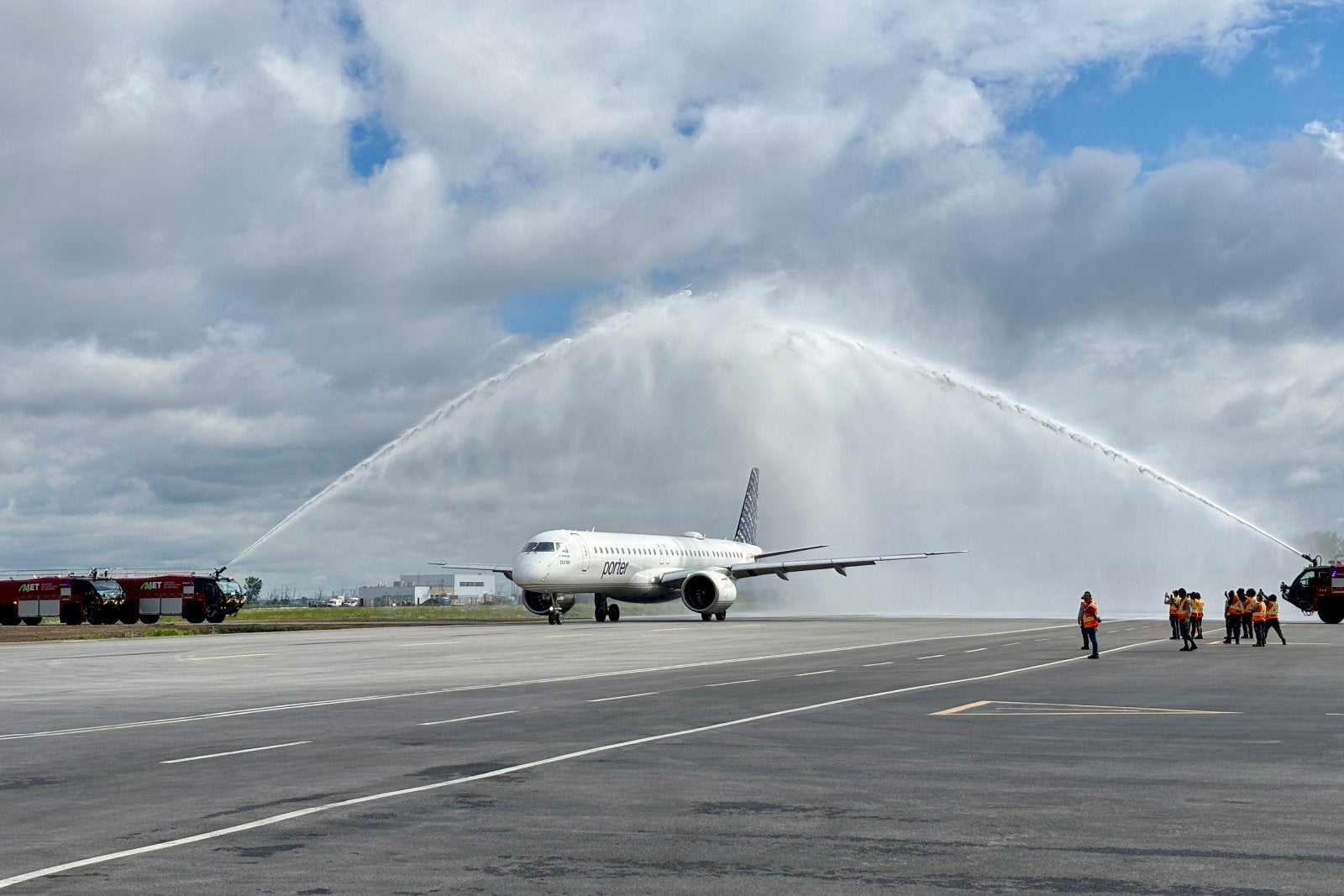
Perhaps most symbolically significant is Porter's involvement in the opening of the new MET-Montreal Metropolitan Airport (YHU). Porter CEO Michael Deluce was on hand to celebrate the occasion, underscoring how central Porter has become to the development of new aviation infrastructure in Canada. Montreal represents another pillar in what is clearly a national and international growth strategy, not just a Toronto story.
What Porter's CEO Is Saying About the Road Ahead
Deluce struck a tone of cautious optimism when speaking about the airline's trajectory. "We're really excited at where we're at," he said, before adding something that will likely reassure investors and industry observers alike: "We're now going from hyper growth to something that's more a sustained pace. That is a much more manageable pace of growth."
That language matters. "Hyper growth" is exciting, but it also carries real risks — operational strain, difficulty maintaining service quality, pressure on crew training pipelines, and the challenge of building a corporate culture fast enough to keep pace with headcount expansion. The shift toward what Deluce calls a "sustained pace" suggests leadership is aware of those pitfalls and is actively trying to manage them before they become problems.
Is Porter Airlines' Growth Sustainable?
There are genuine reasons for optimism. Porter has differentiated itself not just on price but on product, and that matters in a competitive market. Its choice of the Embraer E195-E2 gives it a cost-efficient platform to serve mid-sized routes that larger carriers tend to underserve. Its growing loyalty partnerships increase customer stickiness. And its expansion into leisure markets like Mexico and Costa Rica gives it revenue diversity that pure business-travel carriers typically lack.
That said, sustainability will depend on several factors beyond the airline's control:
- Fuel prices and macroeconomic conditions remain perennial wildcards for any airline's profitability.
- Competition from Air Canada and WestJet on the routes Porter is entering will intensify as the incumbents respond to a new rival taking market share.
- Maintaining the premium service culture that built Porter's reputation will become harder as the airline scales — keeping that boutique feel across a fleet many times its original size is a genuine operational challenge.
- Labor markets in aviation remain tight globally, and pilot and crew availability could constrain capacity growth regardless of how many aircraft are on order.
The Bottom Line: A Canadian Aviation Success Story Still Being Written
Porter Airlines has accomplished something remarkable. In an industry defined by razor-thin margins and brutal competition, it has reinvented itself from the ground up, nearly tripled in size, and done so while largely maintaining the customer loyalty it built over two decades. The transition from turboprop regional carrier to jet-powered continental airline is not a small feat — it requires different aircraft, different crew certifications, different maintenance operations, and a fundamentally different commercial strategy.
Whether the growth is sustainable in the long term will depend on execution, market conditions, and the airline's ability to hold onto what made it special in the first place. But as of mid-2025, the evidence suggests Porter is not just growing — it is growing up. And that might be the most impressive part of the story.