
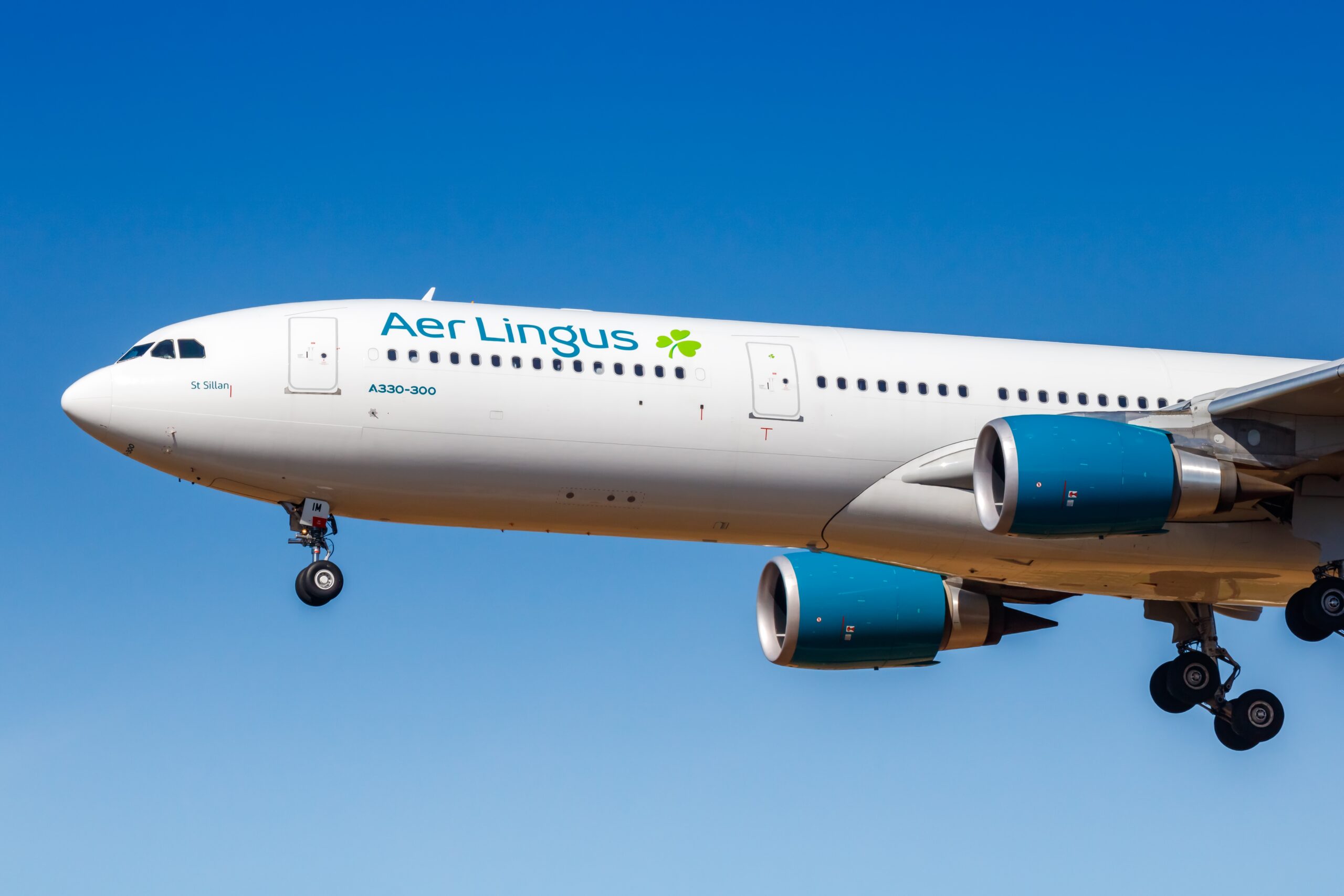
All Seven Aer Lingus Flight Attendants Required to Restrain Violent Passenger Mid-Flight, FBI Affidavit Reveals
A shocking mid-air incident aboard an Aer Lingus transatlantic flight has come to light after newly filed court documents shed disturbing details on what cabin crew were forced to endure at 36,000 feet with no opportunity to divert the aircraft. According to an affidavit filed by the FBI in a Seattle district court, every single one of the seven flight attendants on board Aer Lingus flight EI-53 — the Dublin to Seattle route — was required to physically restrain one allegedly violent passenger for a period of more than two hours. The case has since drawn widespread attention, raising urgent questions about airline security, passenger conduct, and the physical dangers faced by flight crew on long-haul international routes.
Who Is the Suspect? Meet James Bradley Noble
The FBI affidavit identifies the passenger at the center of this alarming incident as James Bradley Noble, a 34-year-old man who was seated in seat 14B during the nine-hour transatlantic flight from Dublin to Seattle-Tacoma International Airport (SeaTac). Noble has been formally charged with interference with flight crew members, a federal offense that carries a maximum penalty of 20 years in federal prison and a fine of up to $250,000.
The severity of these charges reflects just how seriously U.S. federal law treats incidents that compromise the safety and authority of airline crew members. Interfering with flight crew is not a minor misdemeanor — it is a federal crime that prosecutors pursue aggressively, particularly when physical violence is involved at altitude.
How the Incident Unfolded: From Drinks to a Dangerous Confrontation
According to the FBI affidavit, the trouble began gradually after takeoff. Noble allegedly consumed several alcoholic beverages and became increasingly disruptive as the flight progressed. His behavior first became a serious concern when he began harassing the female passenger seated next to him, reportedly making deeply disturbing gestures that simulated forcing pills into the woman's mouth — conduct that caused obvious distress to his seatmate and raised immediate red flags for crew safety.
The harassment continued until Noble spilled soda on his seatmate, at which point she reported the ongoing abuse to flight attendants. The crew responded by relocating the woman to a different seat, removing her from the immediate threat. Noble then apparently fell asleep for approximately 30 minutes — a brief and deceptive calm before the situation escalated dramatically.
The Physical Assault on a Flight Attendant
When Noble woke from his brief sleep, he made his way to the mid-cabin galley area of the aircraft. It was there that the incident crossed a critical line. According to the affidavit, Noble approached a female flight attendant from behind and "aggressively wrapped his arms" around her, locking his hands together in a grip that prevented her from breaking free or escaping his hold.
The senior crew member on board intervened immediately, and Noble was escorted back to his seat. However, the situation was far from over. Once back in his seat, Noble allegedly began violently shaking it and directing threats at female crew members. What followed was an extraordinary physical struggle that would occupy every member of the cabin crew for the remainder of a significant portion of the flight.
A Two-Hour Battle at 36,000 Feet Over Greenland
Perhaps one of the most alarming details in the court filing is the location of the aircraft when the worst of the incident occurred: the plane was flying at 36,000 feet over Greenland. At that point in the flight path, there was simply nowhere to divert. The crew was alone, high above the remote North Atlantic, with no backup, no ability to land quickly, and no option but to manage the crisis themselves until the aircraft could safely reach its destination.
All seven flight attendants on board were ultimately required to participate in physically restraining Noble. The struggle was reportedly so intense and sustained that at one critical point, the restraints used to keep Noble secured to his seat began to fail under the force of his resistance. The crew had to work continuously to maintain control of the situation for well over two hours — a physical and psychological ordeal that few people outside of frontline aviation workers can fully appreciate.
The Broader Problem of In-Flight Violence and Crew Safety
This incident is a stark reminder of the very real dangers that flight attendants face as part of their jobs. While the public often views cabin crew primarily through the lens of service — meals, beverages, safety demonstrations — incidents like this one make plain that flight attendants are, first and foremost, safety professionals trained to manage emergencies in extraordinarily challenging environments.
In-flight passenger disruptions have been a growing concern for airlines around the world, particularly following the COVID-19 pandemic, during which regulatory bodies including the U.S. Federal Aviation Administration (FAA) documented a dramatic spike in unruly passenger reports. While much of that immediate surge has subsided, alcohol-fueled aggression and physical violence against crew remain persistent problems across the industry.
Legal Consequences and What Comes Next for Noble
James Bradley Noble now faces the full weight of U.S. federal law. The charge of interference with flight crew members is prosecuted under federal statute and is taken extremely seriously by both airlines and law enforcement. A conviction could result in up to two decades in federal prison alongside substantial financial penalties.
Airlines like Aer Lingus and aviation industry bodies have consistently lobbied for stronger legal protections for crew members and tougher sentencing for those who assault or interfere with them mid-flight. Cases like Noble's — where documented evidence from an FBI affidavit lays out a detailed and disturbing sequence of events — tend to support those calls for accountability.
What This Means for Passengers and Air Travel Safety
For the traveling public, the Aer Lingus EI-53 incident serves as a sobering reminder that the safety of every passenger on a flight depends in no small part on the professionalism, composure, and physical capability of the crew. When a single disruptive individual manages to monopolize the attention and physical energy of an entire seven-person cabin crew for over two hours, every other passenger on board is placed at greater risk simply by virtue of the crew's attention being diverted.
Airlines continue to invest in de-escalation training, restraint protocols, and coordination with law enforcement agencies at destination airports. However, no amount of training fully eliminates the danger when a passenger becomes violently resistant at cruising altitude, far from any possible emergency landing site.
Final Thoughts
The details emerging from the FBI affidavit in the Aer Lingus flight EI-53 case paint a vivid and troubling picture of what cabin crew can face on any given transatlantic flight. From verbal harassment and physical assault to a two-hour-long restraint battle over the remote expanse of Greenland, this incident represents one of the more dramatic and well-documented examples of in-flight passenger violence in recent memory. As the legal proceedings against James Bradley Noble move forward, the case is likely to become a reference point in ongoing discussions about crew safety, aviation law, and the limits of what airline personnel should be expected to endure in the course of doing their jobs.