
Apple Reverses Course: Craig Federighi Explains the Siri Chatbot App in iOS 27
One of the most talked-about announcements to come out of Apple's Worldwide Developers Conference 2026 was not a new hardware product or a sweeping redesign — it was a subtle but significant strategic reversal. Apple introduced a standalone Siri app in iOS 27, giving users a dedicated space to engage with, manage, and revisit their AI conversations. What made the announcement particularly striking was the fact that just one year earlier, Apple executives had publicly distanced themselves from exactly this kind of product. Now, Craig Federighi, Apple's senior vice president of software engineering, has stepped forward to explain the thinking behind the pivot.
What Apple Said Before: The "No Bolt-On Chatbot" Era
To understand why this announcement turned heads, it helps to look back at Apple's messaging following WWDC 2025. At that time, Federighi and Greg Joswiak — Apple's senior vice president of worldwide marketing — conducted a media tour in which they carefully articulated the company's philosophy around Siri and Apple Intelligence. Their message was clear and deliberate: Apple was not interested in building a standalone chatbot experience. Instead, they described Siri's role as being woven seamlessly into a user's existing workflow.
Joswiak and Federighi specifically used the phrase "bolt-on chatbot on the side" to describe the kind of product Apple was not building. The implication was that competitors — with their dedicated AI chat interfaces — were taking a fundamentally different, and in Apple's view, less elegant approach. Apple's strategy, they argued, was about deep system integration: Siri helping you across apps, across contexts, and across your entire Apple ecosystem without ever pulling you into a separate, siloed experience.
That positioning now looks at least partially revised, and the tech world noticed immediately.
WWDC 2026: The Siri App Makes Its Debut
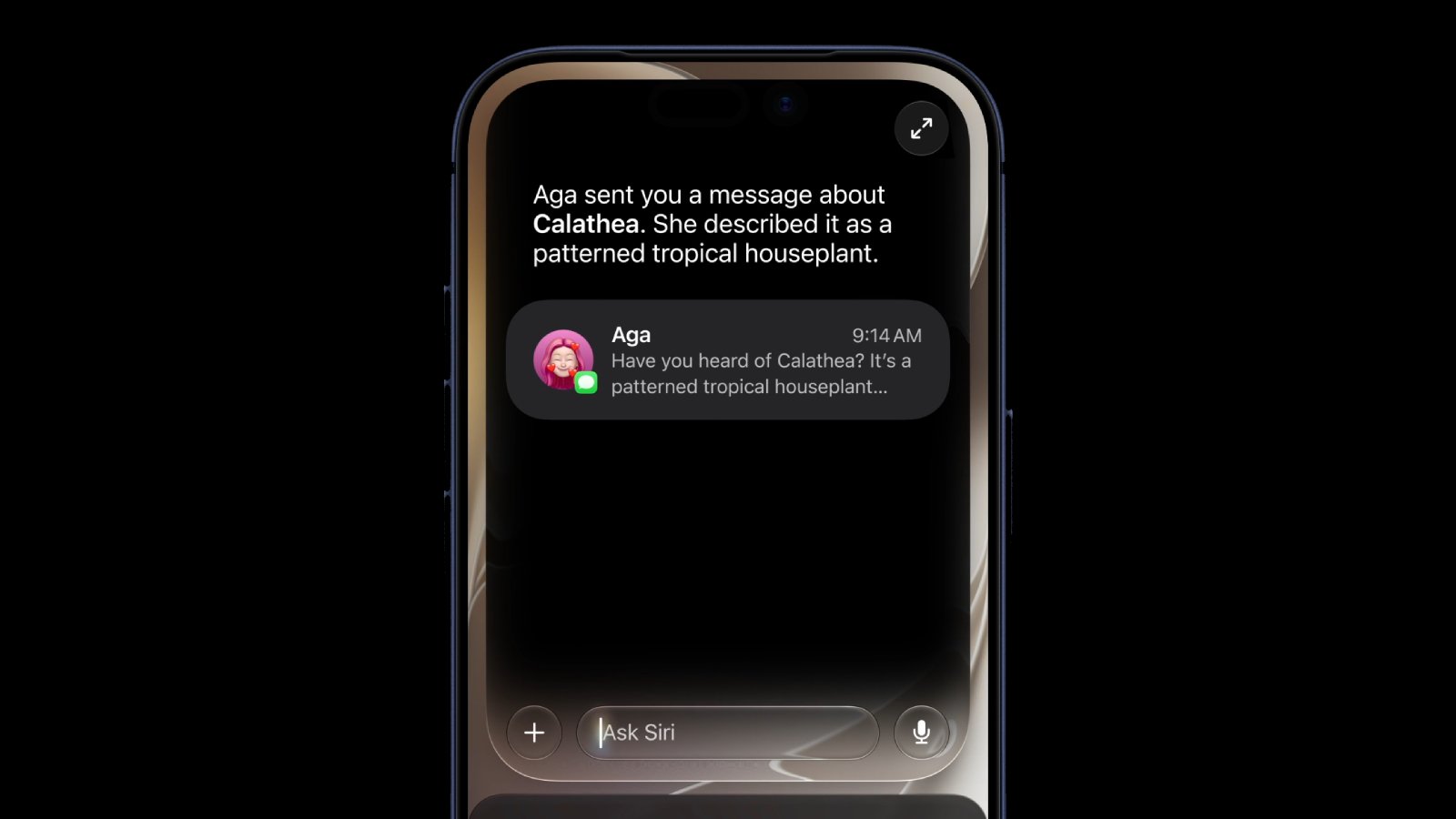
When Apple announced the new Siri app at WWDC 2026, it did so as part of a broader expansion of Apple Intelligence capabilities in iOS 27. The app provides users with a centralized hub where they can access ongoing and past conversations with Siri AI. Rather than treating each Siri interaction as a one-off exchange that disappears the moment you close an app or lock your screen, the new experience allows for persistent, reviewable, and continuable conversations.
This is a meaningful functional shift. For users who rely on Siri for complex, multi-step tasks — drafting messages, researching topics, managing schedules — the ability to return to a conversation thread and pick up where you left off has obvious practical value. It mirrors a behavior that users of other AI platforms, like ChatGPT and Google Gemini, have come to expect as a baseline feature.
The question on everyone's mind was straightforward: why now, and why after Apple publicly argued against it?
Federighi's Explanation: Practical User Needs Drove the Decision
Speaking to members of the media at Apple Park following the WWDC 2026 keynote, Federighi addressed the apparent about-face directly. He did not shy away from the contrast with last year's messaging. Instead, he framed the decision as a response to a genuine and practical user need that Apple ultimately could not ignore.
According to Federighi, the core insight was simple: users needed a way to return to and continue their past Siri conversations. Once Apple accepted that need as legitimate, the question became how to serve it in the most natural way possible within its own platform. The answer, Federighi explained, was a home screen app — the most intuitive and familiar affordance available on iPhone for accessing persistent content.
Crucially, Federighi was careful to draw a distinction between what Apple has built and what it previously criticized. In his framing, the new Siri app is not a standalone chatbot in the way that phrase was used last year. It is not an isolated destination where users go to have unrelated, decontextualized conversations with an AI. Rather, it is an extension of the broader system-level Siri experience — a place to review and continue conversations that began in the flow of real tasks and real workflows.
As Federighi put it, Apple sees Siri not as a separate chatbot — just an unintegrated place to go and chit-chat — but as an integral, conversational tool used throughout the Apple ecosystem.
Integration vs. Isolation: How Apple Draws the Line
The distinction Federighi is drawing is subtle but worth unpacking. Apple's concern with standalone chatbot interfaces has always centered on the idea of fragmentation — pulling users away from their natural digital environments into a separate conversational bubble. The worry is that this model prioritizes the AI interaction itself over the underlying task the user actually wants to accomplish.
The new Siri app, as Apple describes it, does not replace that integrated experience. Siri still operates across the system, inside apps, and in response to contextual prompts throughout iOS 27. The app simply adds a layer of continuity and visibility. Think of it less as a chatbot destination and more as a conversation history panel — similar in spirit to how you might revisit a Notes document or reread a Messages thread.
Whether that distinction resonates with users and industry observers remains to be seen. Critics may argue that a home screen app with a persistent chat log is, functionally, a chatbot — regardless of the philosophical framing around it. Supporters will likely point out that execution and intent matter, and that Apple's approach still differs meaningfully from the chat-first models offered by OpenAI and Google.
What This Means for Apple Intelligence Going Forward
The introduction of the Siri app in iOS 27 signals something broader about Apple Intelligence as a platform: it is maturing, and Apple is willing to evolve its strategy as it learns what users actually need. The company that once dismissed chatbot interfaces has now built one — or at least something that looks very much like one. That kind of pragmatic flexibility may prove to be one of Apple's most important traits as the AI landscape continues to develop at a rapid pace.
For users upgrading to iOS 27 this fall, the Siri app represents a tangible improvement in how they can interact with AI on their devices. For the broader tech industry, Craig Federighi's explanation offers a rare window into how Apple reconciles its public positioning with the practical demands of building products that people actually want to use.
As Apple Intelligence continues to evolve, one thing is increasingly clear: the line between integrated AI assistant and standalone chatbot is blurrier than any keynote slide can capture — and Apple knows it.