
Council Faces Backlash Over $8,600 Fine Threat Against Woman Living in Caravan During Housing Crisis
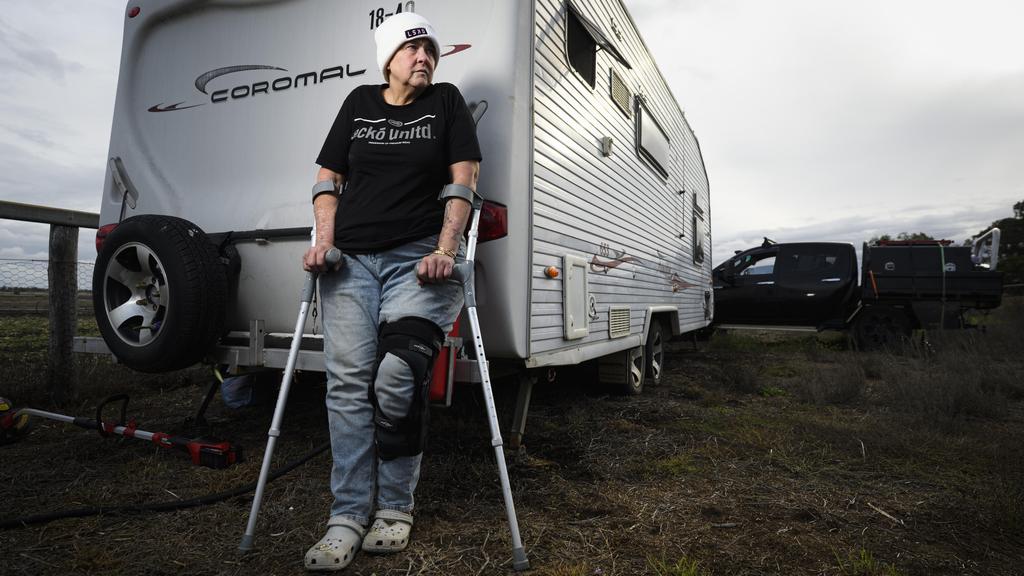
Australia's housing crisis has reached a point where ordinary people are being forced into extraordinary living situations — and one woman's story has struck a nerve with thousands across the country. Georgina "Georgie" Irwin, a woman recovering from a severe leg injury and still reliant on crutches, is living in a caravan parked on private property. Rather than receiving support from her local council, she faces a potential fine of up to $8,600 simply for trying to keep a roof — however modest — over her head.
The backlash has been swift and fierce. A petition Georgie launched calling on her local council to exercise "compassion" rather than threaten vulnerable residents with punishing fines has quickly gathered thousands of signatures. Her case has become a flashpoint in the broader national conversation about whether Australia's housing rules are fit for purpose in a crisis that shows no signs of easing.
Who Is Georgina Irwin and What Happened?
Five months ago, Georgie Irwin broke her leg so severely that she still depends on crutches to get around, with further surgery still ahead of her. Dealing with a long recovery, limited mobility, and the pressures of finding affordable housing, she made the practical decision to live in a caravan on private property. It is a solution that keeps her housed, keeps her from burdening the already overwhelmed rental market, and allows her a degree of independence during an incredibly difficult period in her life.
What she did not anticipate was that her council would respond not with understanding, but with the threat of a financial penalty that could reach $8,600. For someone managing a serious injury, unable to work at full capacity, and navigating Australia's brutal housing landscape, a fine of that magnitude is not just inconvenient — it is potentially devastating.
Determined not to stay silent, Georgie launched a public petition asking council to reconsider its approach and show some basic compassion to people like her who are simply trying to survive.
Why Are So Many Australians Living in Caravans?
Georgie's situation is far from unique. As rental vacancy rates remain critically low across much of Australia and rents continue to climb well beyond what many households can afford, an increasing number of Australians are turning to alternative living arrangements. Caravans, converted sheds, granny flats, and other non-traditional dwellings have become lifelines for people priced out of the conventional housing market.
The data paints a stark picture. Some Australian suburbs are already seeing nearly one in forty home loans fall into arrears, a sign that financial stress is not limited to renters. Meanwhile, warnings from peak bodies suggest that proposed policy changes could further reduce the supply of new homes at exactly the wrong time. For many Australians, living in a caravan on private property is not a lifestyle choice — it is a matter of necessity.
In this context, councils that rigidly enforce rules designed for different times and different circumstances are increasingly being seen as part of the problem rather than part of the solution.
The Problem With Outdated Council Regulations
Most Australian councils have regulations that restrict or outright prohibit people from using caravans as permanent residences, even when those caravans are parked on privately owned land with the permission of the property owner. These rules were largely written during periods when housing supply was not in crisis and when alternative arrangements were considered a matter of choice rather than survival.
The fine being threatened against Georgie Irwin is a product of this regulatory environment. Councils argue they must enforce the rules as written, but critics say that blind enforcement without discretion causes real harm to real people and does nothing to solve the underlying problem.
What Georgie and her supporters are asking for is not the abolition of all planning controls. They are asking for councils to be given — and to use — discretionary powers that allow them to respond humanely to people in genuine hardship. A temporary exemption for someone recovering from major surgery, living quietly on private property and harming no one, seems like a reasonable ask. Threatening them with a nearly $9,000 fine does not.
What Needs to Change?
Georgie's petition has brought a spotlight to several specific issues that housing advocates have been raising for years. Among the changes being called for are the following reforms:
- Hardship exemptions: Councils should have clear, accessible processes allowing individuals in demonstrated financial or health-related hardship to apply for temporary exemptions from regulations that would otherwise penalise their living arrangements.
- Updated planning frameworks: State and local governments need to update planning rules to reflect contemporary housing realities, including formal recognition of caravans on private land as a legitimate temporary housing option during a declared housing crisis.
- Compassionate enforcement policies: Even within existing rules, councils retain discretion in many cases. Advocates are calling on councils to adopt internal policies that require officers to consider a person's circumstances before issuing fines.
- National coordination: Because housing is both a state and a local government responsibility, there is a patchwork of rules across the country. A coordinated national response that recognises the scale of the crisis would help ensure that people like Georgie do not fall through the cracks.
Public Sentiment Is Shifting
The overwhelming public response to Georgie's petition suggests that Australians have reached a tipping point. The thousands who signed are not just expressing sympathy for one woman — they are signalling a broader frustration with a system that seems increasingly unable or unwilling to adapt to the reality of a housing emergency.
For many signatories, the image of a woman on crutches, still facing further surgery, being threatened with an $8,600 fine for having the audacity to find herself somewhere to sleep, encapsulates everything that feels broken about how Australia currently treats its most vulnerable residents.
The Bigger Picture
Georgie Irwin's case is a microcosm of a much larger crisis. Australia's housing shortage has passed what many experts are now calling crisis levels, with supply failing to keep pace with demand, rents at record highs in many markets, and government policy struggling to keep up. In that environment, the stories of individuals caught in the gap between unaffordable formal housing and inflexible regulations will only multiply.
Whether her council responds with the compassion she is asking for remains to be seen. But one thing is clear: the thousands of Australians who rallied behind her petition are watching closely — and so is the rest of the country.