
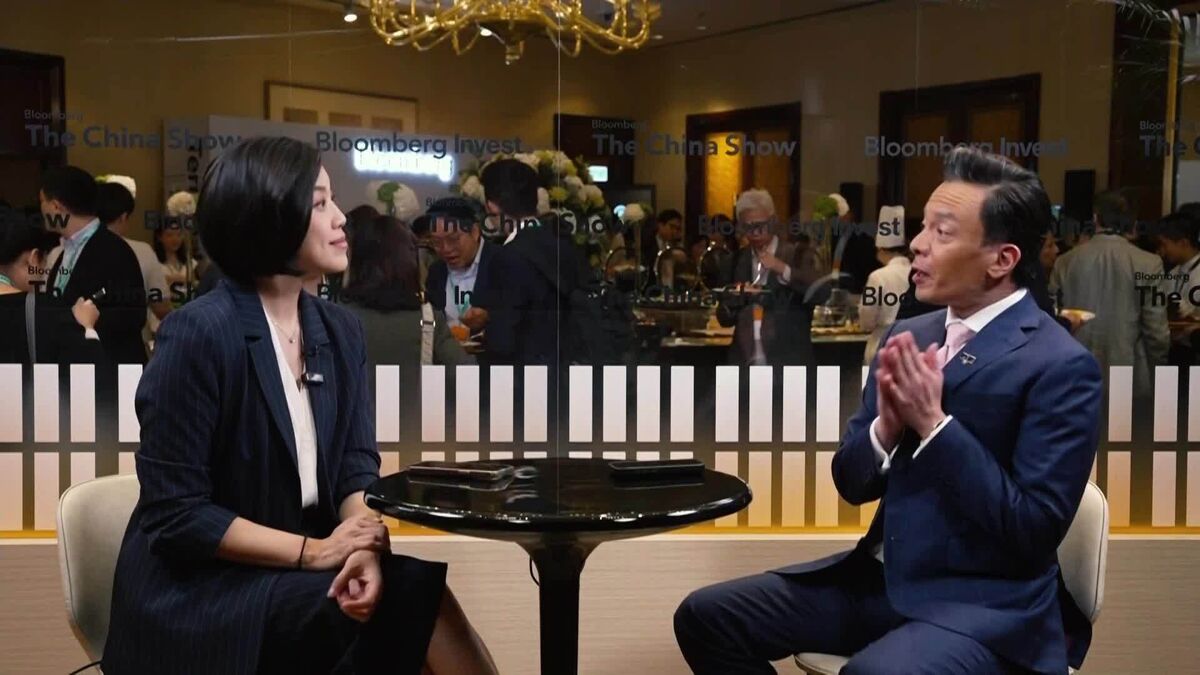
Bloomberg Invest Hong Kong: What the World's Top Finance Voices Are Saying
The world's most influential voices in finance recently converged at Bloomberg Invest Hong Kong, one of the most closely watched financial summits in the Asia-Pacific region. From the far-reaching consequences of China's sweeping regulatory crackdown to growing fears of a global technology selloff, the conversations that unfolded offered a rare and candid window into the minds of the people shaping global capital markets. Bloomberg anchors David Ingles and Yvonne Man were on hand to break down the most critical takeaways for investors, analysts, and market watchers worldwide.
China's Regulatory Crackdown: A Turning Point for Asian Markets?
Perhaps no topic dominated the Bloomberg Invest Hong Kong discussions more forcefully than China's ongoing regulatory crackdown. Over the past several years, Beijing has unleashed a broad wave of policy interventions targeting sectors ranging from technology and education to real estate and financial services. For global investors, the uncertainty created by these moves has been both profound and disorienting.
Senior financial leaders at the summit were largely in agreement that China's regulatory environment has fundamentally shifted the calculus for foreign capital allocation. The era of unchecked hypergrowth in Chinese tech giants now appears firmly in the rearview mirror, replaced by a new paradigm in which compliance, state priorities, and national security considerations weigh heavily on corporate strategy and investor returns.
Several panelists noted that while the crackdown has introduced significant short-term volatility, it does not necessarily signal a closed door to foreign investment. Rather, it demands a more nuanced, sector-specific approach. Industries aligned with Beijing's stated goals — advanced manufacturing, green energy, semiconductors, and domestic consumption — were highlighted as areas where carefully positioned investors may still find compelling long-term opportunities.
The question of transparency, however, remains a persistent concern. Without predictable regulatory frameworks, even the most bullish participants acknowledged that pricing risk in Chinese assets requires a degree of tolerance for ambiguity that many Western institutional investors are simply not equipped — or mandated — to accept.
The Risk of a Global Tech Selloff: How Worried Should Investors Be?
Beyond China's domestic regulatory story, Bloomberg Invest Hong Kong tackled another pressing concern for portfolio managers around the globe: the mounting risk of a broad global technology selloff. After years of extraordinary gains driven by low interest rates, pandemic-era digital acceleration, and the explosive rise of artificial intelligence narratives, technology valuations in many markets are sitting at historically elevated levels.
Finance professionals at the summit were divided on the timing and severity of a potential correction, but few dismissed the risk entirely. The consensus leaned toward a view that while transformative technology — particularly AI infrastructure and cloud computing — continues to offer genuine long-run value creation, near-term valuations in certain pockets of the market may be running well ahead of underlying earnings fundamentals.
Rising interest rates in major economies have already begun to apply pressure on growth stock valuations, and any shift in central bank policy rhetoric can trigger rapid repricing events. Panelists urged institutional investors to stress-test their tech-heavy portfolios against multiple rate scenarios and to distinguish more carefully between companies with durable competitive moats and those riding a broader wave of speculative enthusiasm.
Hong Kong's Role in the Evolving Global Financial Landscape
As host city of the summit, Hong Kong itself was a recurring subject of conversation. The city's financial status has been the subject of intense debate in recent years, particularly in the wake of geopolitical tensions, capital outflows, and the gradual shift of some regional business activity to rival financial centers such as Singapore and Tokyo.
Yet many participants at Bloomberg Invest Hong Kong pushed back against overly pessimistic narratives about the city's decline. They argued that Hong Kong retains irreplaceable structural advantages as the primary gateway between mainland Chinese capital and global financial markets. Its deep liquidity pools, sophisticated legal infrastructure, and unique access to Chinese corporate issuers continue to make it a vital hub for cross-border deal-making, IPO activity, and asset management.
The path forward, speakers suggested, involves Hong Kong doubling down on its core strengths while adapting to a world in which its relationship with both Beijing and Western financial partners requires careful and ongoing calibration.
Broader Market Themes: What Investors Should Watch
In addition to the headline topics, Bloomberg Invest Hong Kong surfaced a number of broader themes that investors would be wise to monitor in the months ahead:
- Currency volatility: Fluctuations in the Chinese yuan and other Asian currencies are creating both risks and tactical opportunities for global currency traders and multinational corporations managing cross-border exposure.
- Geopolitical fragmentation: The ongoing decoupling of supply chains between the United States and China is reshaping trade flows, corporate investment decisions, and the competitive landscape across multiple industries.
- ESG and sustainable investing: Despite rising political pushback in some Western markets, ESG-oriented capital allocation continues to grow in influence across Asia, driven in part by sovereign wealth funds and large institutional mandates.
- Private credit expansion: As traditional bank lending tightens in several markets, private credit is emerging as a significant source of financing, attracting growing attention from yield-seeking institutional investors.
Final Thoughts: Navigating Complexity With Conviction
Bloomberg Invest Hong Kong served as a timely reminder that the global investment landscape has rarely been more complex — or more consequential. Whether grappling with the downstream effects of China's regulatory transformation, calibrating exposure to richly valued technology assets, or reassessing the role of Hong Kong in a shifting geopolitical order, investors face decisions today that will shape portfolio outcomes for years to come.
The overarching message from the summit's top voices was one of disciplined vigilance: stay informed, diversify thoughtfully, pressure-test assumptions, and resist the temptation to reduce complex, fast-moving markets to simple narratives. In an environment defined by uncertainty, the quality of the questions investors ask may matter every bit as much as the answers they find.