
Arizona Train Burglary Leads to $500K Recovery — But Investigators Say It's Just the Tip of the Iceberg
Two men are behind bars and more than $500,000 in stolen merchandise has been recovered following a brazen train burglary near Meteor Crater, west of Winslow, Arizona. While the arrests made local headlines, law enforcement officials are warning that this single incident represents only a fraction of an escalating cargo theft crisis plaguing the rail corridors of Northern Arizona. According to investigators, organized criminal crews are systematically targeting stopped trains along the region's freight lines, and the problem shows no signs of slowing down.
What Happened: The Winslow Train Burglary
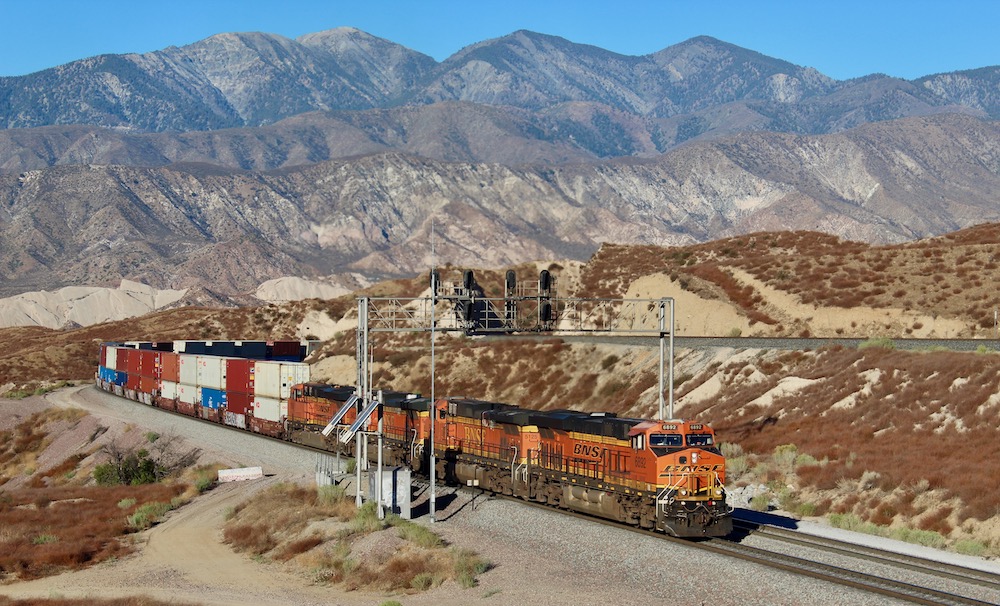
On May 29, the Coconino County Sheriff's Office received a report that multiple individuals were actively removing merchandise from a stopped BNSF Railway train parked near Meteor Crater, west of Winslow. Witnesses observed the suspects loading stolen goods into both a van and a box truck that had been stationed near the tracks — a classic hallmark of a coordinated, premeditated theft operation rather than an opportunistic crime.
Responding deputies moved quickly to intercept the vehicles. They successfully stopped the van and arrested two men: Jaime Beltran-Bojorquez, 32, and Gerardo Mares Vazquez, 28. A second vehicle — the box truck — fled the scene before authorities could stop it. The pursuit ended near Williams, Arizona, where the truck crashed. Two unidentified suspects escaped on foot and remain at large as of this writing, making this an open and ongoing investigation.
From the recovered vehicles alone, law enforcement officials seized merchandise with a retail value exceeding $500,000. Detective Curtis Peery of the Coconino County Sheriff's Office confirmed that the valuation is based on the retail prices of the recovered products, underscoring just how lucrative a single train burglary can be for organized theft crews.
8 to 12 Rail Theft Events Every Single Month
As significant as the Winslow bust was, Detective Peery made clear that it is part of a much larger pattern. Speaking to local media, Peery stated plainly: "We probably have somewhere between 8 to 12 events a month." That staggering frequency means Northern Arizona's rail corridors are being targeted roughly every two to four days on average — a pace that strains law enforcement resources and signals deep-rooted criminal infrastructure in the region.
The sheer volume of incidents points to something far more complex than isolated opportunistic theft. Rail freight corridors in Northern Arizona, including those running along the Interstate 40 corridor, have become hunting grounds for professional theft operations that understand train schedules, know where trains are likely to slow or stop, and arrive prepared with vehicles large enough to haul away significant volumes of goods in a short window of time.
Organized Criminal Networks Behind the Thefts
In comments provided to FreightWaves, Detective Peery offered additional detail about who is responsible for these crimes. Investigators have encountered a mix of actors operating in the region. "For the crews we have encountered both independent and organized network crews," Peery said. This distinction matters enormously for how law enforcement approaches the problem. Independent theft crews may be reactive and disorganized, while structured criminal networks operate with planning, communication, and supply chains for moving stolen goods — making them significantly harder to dismantle.
Organized cargo theft networks typically scout target corridors in advance, identify vulnerable points where trains slow or stop, coordinate vehicle logistics, and have established fencing operations to rapidly liquidate stolen merchandise. The fact that the Winslow suspects arrived with a van and a box truck — not just personal vehicles — suggests a level of preparation consistent with an organized operation rather than spontaneous crime of opportunity.
What's Being Stolen: Electronics and Clothing Top the List
According to Detective Peery, electronics and clothing are among the most frequently targeted commodities in these rail burglaries. These categories make sense from a criminal logistics standpoint: both product types are high in value relative to their size and weight, are easy to transport in bulk, and have well-established secondary markets where stolen goods can be quickly resold — whether through online marketplaces, informal networks, or unscrupulous resellers.
The targeting of consumer electronics is particularly concerning for shippers and retailers. Items like smartphones, laptops, gaming consoles, and home appliances can fetch significant sums on the grey market, and organized theft groups often have pre-existing buyer networks ready to absorb large quantities of stolen product almost immediately after a theft event. Clothing, particularly brand-name apparel, faces similar challenges, with counterfeit and stolen goods markets well-developed both domestically and internationally.
The Broader Impact on Freight and Supply Chains
Cargo theft of any kind carries ripple effects far beyond the initial loss. For shippers, retailers, and logistics providers, repeated theft along a particular corridor forces costly adaptations: increased insurance premiums, enhanced security investments, route adjustments, and the administrative burden of filing theft claims and tracking losses. When theft events occur at the frequency seen in Northern Arizona — nearly a dozen per month — those costs compound rapidly and can affect the competitiveness of rail freight as a logistics option for certain cargo types.
BNSF Railway is one of the most critical freight arteries in the American West, moving billions of dollars in goods annually across the country. Persistent theft along its Arizona corridors undermines not only individual shipments but also the reliability and security reputation of rail freight as a whole. Shippers who lose confidence in rail security may shift volume to trucking, adding congestion and cost to an already strained transportation network.
What Investigators and Shippers Can Do
Law enforcement agencies like the Coconino County Sheriff's Office are working to address the problem through active patrolling, inter-agency coordination, and rapid response to reported incidents. However, the scale and organization of the theft crews present a challenge that no single agency can solve alone. Effective solutions will likely require collaboration between railroad operators, local law enforcement, federal agencies, and the private sector.
For shippers and freight stakeholders, the key steps to reduce exposure include working with carriers to understand high-risk corridors, using GPS and IoT tracking technology on high-value shipments, improving cargo sealing and tamper-evidence measures, and maintaining robust theft reporting protocols that feed into law enforcement intelligence. Awareness of hotspot regions — like the Northern Arizona rail corridor — is itself a valuable risk management tool.
Two Suspects Still at Large
As investigators continue their work, the two unidentified suspects who fled the crashed box truck near Williams remain at large. The Coconino County Sheriff's Office is presumably seeking additional information from the public and pursuing investigative leads. The arrests of Beltran-Bojorquez and Vazquez represent meaningful progress, but the escape of their alleged co-conspirators — and the broader criminal networks they may be connected to — means this case is far from closed.
The Winslow train burglary and its aftermath serve as a stark reminder that cargo theft along America's rail corridors is not a minor nuisance — it is an organized, high-volume criminal enterprise with serious economic consequences. Until law enforcement can systematically disrupt the networks behind these operations, freight stakeholders in Northern Arizona and beyond would be wise to treat rail corridor security as a top-tier priority.