
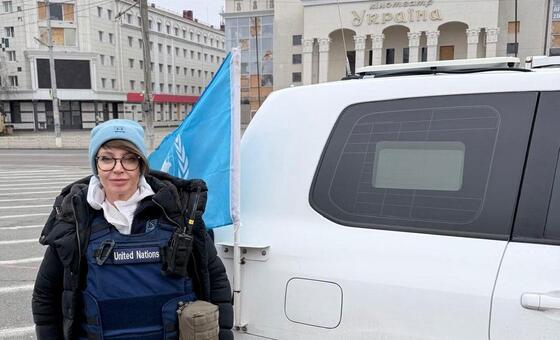
The Unrelenting Frontline: Humanitarian Work in Wartime Ukraine
As Russia's full-scale invasion of Ukraine grinds into its fifth consecutive year, the human cost of the conflict shows no signs of easing. For the aid workers stationed across the country — particularly in the rapidly deteriorating conditions of southern Ukraine — every single day is a mission that carries life-or-death stakes. Missiles fall without warning. Drones circle overhead at night. And still, the work does not stop.
"The day never stops," one relief worker summarized — a phrase that captures not just the relentless pace, but the psychological and physical toll of delivering humanitarian assistance in one of the world's most active war zones. This is the reality of modern humanitarian operations in Ukraine: a delicate and dangerous balancing act between saving lives and preserving the lives of those doing the saving.
Southern Ukraine: A Region Under Siege
While the war has brought devastation to communities across Ukraine, conditions in the country's southern regions have worsened with particular speed in recent months. Civilian infrastructure has been repeatedly targeted, displacement figures continue to climb, and access to basic necessities — food, clean water, medical care, and shelter — has become increasingly difficult for hundreds of thousands of people.
The strategic importance of southern Ukraine to both sides of the conflict means that military activity in the area is relentless. For humanitarian organizations operating on the ground, this translates into an environment where planning an aid delivery route requires real-time intelligence, flexible contingency planning, and an acceptance that even the best-laid logistics can be upended in minutes by an air raid siren or an incoming strike.
Towns and villages that were once accessible have been cut off. Roads are damaged or mined. Communication infrastructure is fragile. Aid convoys must navigate not only physical destruction but the ever-present threat of aerial bombardment, making each humanitarian mission a carefully calculated risk.
Balancing Aid Delivery Against Personal Risk
One of the most complex challenges facing humanitarian organizations in Ukraine today is striking the right balance between enabling the flow of assistance to those who desperately need it and protecting the safety of the workers delivering it. This tension — between mission and survival — sits at the heart of humanitarian operations in any conflict zone, but the scale and intensity of the war in Ukraine has pushed it to an extreme.
Organizations working in southern Ukraine have had to develop highly adaptive operational frameworks. Delivery windows are often narrow, timed around intelligence reports about air activity or artillery patterns. Teams work in smaller units to reduce the impact of any single incident. Safe rooms and evacuation protocols have become standard components of any field office setup. And psychological support for staff — many of whom are Ukrainian nationals working to help their own communities — has become a recognized operational priority, not an afterthought.
The mental health burden on aid workers is significant and often underreported. Prolonged exposure to trauma, the constant proximity to danger, grief over colleagues and community members lost, and the moral weight of decisions about who can and cannot be reached — these are stresses that compound over months and years of continuous deployment.
Who Are the Aid Workers on the Ground?
The humanitarian response in Ukraine is carried out by a wide coalition of actors: large international organizations such as the United Nations and the International Committee of the Red Cross, international NGOs with decades of crisis-response experience, and a vast network of local Ukrainian civil society organizations that were already embedded in their communities when the full-scale invasion began in February 2022.
It is this last group — local responders — who are often most exposed and least resourced. They know their communities intimately and can reach people that international organizations cannot, but they also tend to operate with fewer security resources, less access to training, and less institutional backing when things go wrong. Supporting and protecting local humanitarian actors has become a critical conversation across the sector.
Many of these workers have themselves been displaced, have lost family members to the war, or are coordinating relief efforts while simultaneously worrying about relatives in contested or occupied areas. Their resilience is extraordinary — and their vulnerability is real.
The Humanitarian Toll: By the Numbers
- Millions of Ukrainians remain internally displaced, with particularly high concentrations in eastern and southern regions.
- Humanitarian organizations have recorded dozens of incidents in which aid workers or humanitarian assets have been directly affected by hostilities since 2022.
- Access constraints — including active combat, damaged infrastructure, and administrative barriers — continue to limit the reach of relief operations in the hardest-hit areas.
- Mental health needs among both civilians and aid workers have been flagged as a growing and underfunded dimension of the overall crisis response.
Why This Matters Beyond Ukraine
The situation in Ukraine holds lessons and implications that reach far beyond its borders. The conflict has tested the limits of international humanitarian law, strained global aid funding, and raised urgent questions about how the world protects those who choose to stand between vulnerable populations and the worst effects of war.
When aid workers speak of days that never stop, they are describing something more than a demanding work schedule. They are describing a commitment that persists through fear, exhaustion, and grief — a refusal to abandon people who have nowhere else to turn. As the fifth year of this war continues to unfold, that commitment deserves recognition, resources, and the full support of the international community.
The crisis in southern Ukraine is not a distant abstraction. It is a daily, human emergency — and the people responding to it are doing so at tremendous personal cost. Their work must be seen, supported, and safeguarded.