
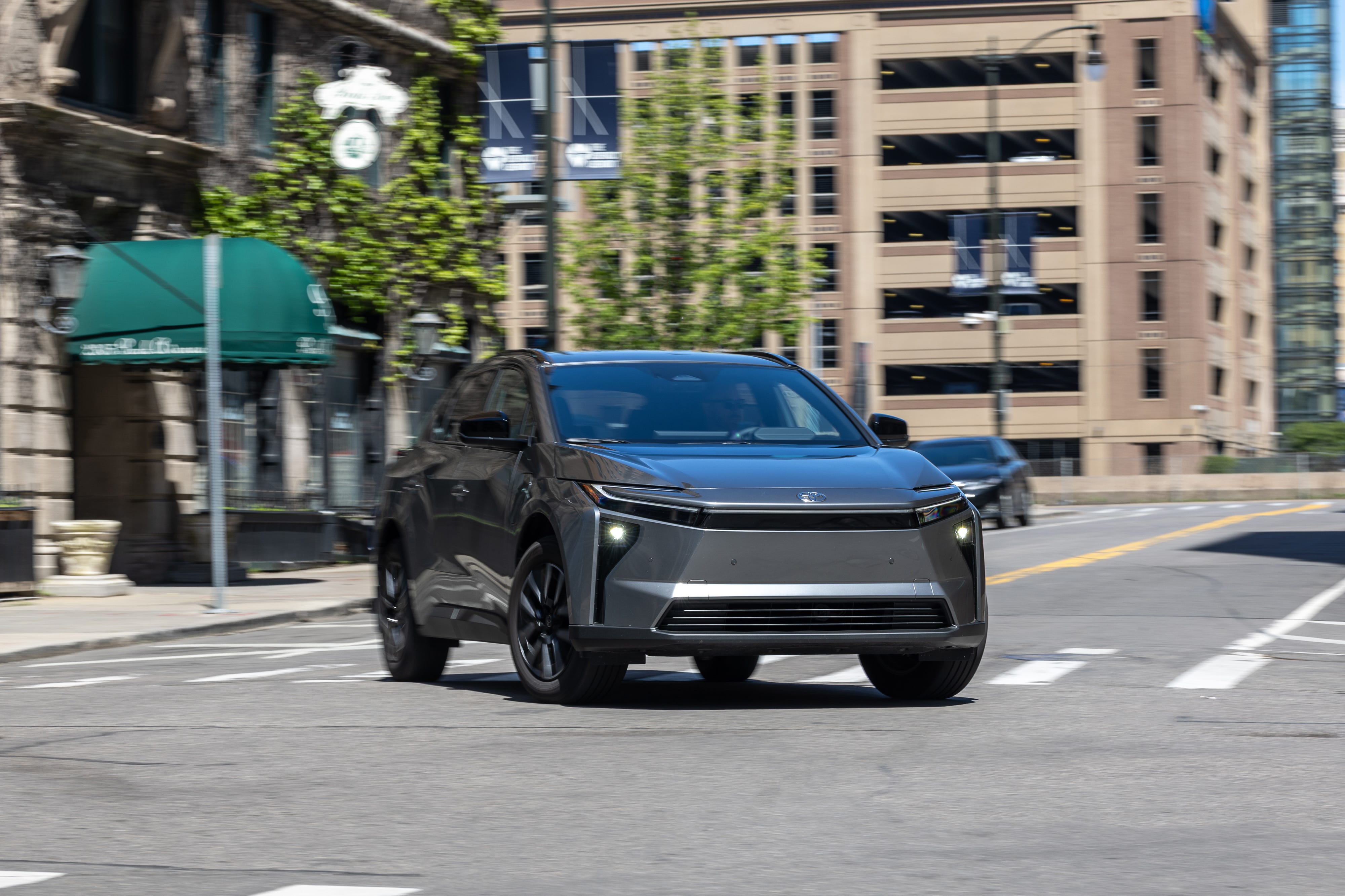
The 2026 Toyota bZ Gets Serious About Being an EV
Toyota has never been shy about taking its time. The Japanese automaker built its reputation on methodical refinement, incremental improvement, and an almost stubborn commitment to getting things right before declaring victory. For years, critics pointed to the original Toyota bZ4X as proof that the brand was still finding its footing in the all-electric vehicle space. Charging speeds felt dated, driving range lagged behind rivals, and the overall experience lacked the polish that EV-native brands had been offering for years. With the 2026 Toyota bZ, that narrative is changing — and changing meaningfully.
After extensive real-world testing, the updated compact electric SUV emerges as a noticeably more capable, more enjoyable, and more competitive machine. It is not a complete reinvention, but the improvements Toyota has made are exactly where they needed to be: driving range, charging capabilities, and acceleration. If the original bZ4X was Toyota dipping its toes into the electric pool, the 2026 bZ feels like the brand finally deciding to swim.
What's Actually New for 2026
The 2026 Toyota bZ represents a targeted but impactful round of upgrades rather than a ground-up redesign. Toyota's engineers focused their energy on three core areas where the previous model fell short relative to class rivals like the Hyundai Ioniq 5, Volkswagen ID.4, and Ford Mustang Mach-E. Those areas are battery efficiency and range, DC fast-charging performance, and powertrain output.
The result is a vehicle that finally feels like it belongs in the modern EV conversation rather than trailing behind it. Each improvement, while not revolutionary in isolation, adds up to a significantly better ownership proposition for anyone considering making the switch to electric.
Driving Range: Closing the Gap on the Competition
One of the most persistent complaints about the original bZ4X was its driving range. In a segment where buyers increasingly expect 250-plus miles of real-world range, the previous model struggled to meet expectations. The 2026 bZ addresses this directly with a revised battery pack and improved energy management systems that push the vehicle's range closer to where it needs to be to compete seriously.
Efficiency gains come from multiple directions — aerodynamic refinements, updated thermal management for the battery pack, and software calibration improvements that optimize energy consumption in a wider range of driving conditions. For daily commuters and weekend road-trippers alike, the updated range figure translates into fewer charging stops and less anxiety behind the wheel. In practical terms, more range means more freedom, and that shift in ownership experience is difficult to overstate.
Charging Speed: Finally Playing Catch-Up
If range anxiety is the defining fear of EV ownership, charging speed is the factor that determines how quickly that anxiety can be resolved. The original Toyota bZ4X was notably limited in its DC fast-charging capability, accepting a maximum of around 150 kilowatts when many rivals had already moved on to faster rates. The 2026 bZ improves on this significantly, allowing for faster peak charging speeds that reduce the time spent tethered to a public charger.
In testing, the improved charging curve proved to be not just faster at its peak but more consistent throughout the charging session. Real-world charging sessions — particularly those that occur during a long-distance drive — benefit enormously from a battery that maintains higher acceptance rates for a greater portion of its charging window. The 2026 bZ delivers a more predictable, more efficient charging experience that makes road trips feel far less like a negotiation with your vehicle's limitations.
Acceleration and Driving Dynamics: A More Engaging Experience
Electric vehicles should, by their very nature, be quick. The instant torque delivery of an electric motor is one of the format's most compelling selling points, and the 2026 Toyota bZ leans into this more confidently than its predecessor. Updated powertrain calibration delivers quicker acceleration figures, particularly in the critical zero-to-sixty sprint that enthusiast drivers and everyday commuters alike use to gauge how a vehicle feels in real-world traffic.
Beyond the raw numbers, the driving character of the 2026 bZ feels more refined and more assured. Throttle response has been sharpened, and the transition between regenerative braking and friction braking is smoother than before. Handling has also received attention, with suspension tuning that strikes a better balance between ride comfort and cornering composure. The end result is an SUV that does not merely transport its occupants but actually engages them.
Interior Quality and Technology Improvements
It would be unfair to discuss the 2026 Toyota bZ purely in terms of powertrain metrics. The interior has also received meaningful attention, with upgraded materials, a more intuitive infotainment interface, and an overall cabin ambiance that feels more premium than what the outgoing model offered. Touchscreen responsiveness is improved, wireless smartphone connectivity works more reliably, and the general sense of fit and finish is closer to what Toyota buyers have come to expect from the brand's broader lineup.
- Updated infotainment system with faster processing and a cleaner interface
- Higher-quality soft-touch materials on key contact surfaces throughout the cabin
- Improved acoustic insulation for a quieter highway cruising experience
- Refined driver assistance technology with more natural intervention behavior
- Enhanced ambient lighting options that contribute to a more upscale atmosphere
How the 2026 Toyota bZ Stacks Up Against Rivals
The compact electric SUV segment is one of the most hotly contested spaces in the automotive industry today. Hyundai and Kia have set an extremely high bar with the Ioniq 5 and EV6 respectively, while Volkswagen's ID.4 offers strong value and Tesla's Model Y remains the segment's sales leader. The 2026 Toyota bZ is not necessarily positioned to unseat any of these competitors overnight, but it is now genuinely competitive rather than merely present.
Toyota's loyal customer base has historically been somewhat cautious about adopting new technologies, and there is a large population of Camry, RAV4, and Highlander owners who represent a natural audience for an electric SUV that carries the Toyota badge. For that audience, the 2026 bZ now offers a compelling enough package to justify serious consideration. It combines the reliability reputation that Toyota has spent decades building with an EV experience that no longer feels like a compromise.
Final Verdict: Toyota's Electric Future Looks Brighter
The 2026 Toyota bZ will not satisfy everyone, and for some buyers the top-tier alternatives from Hyundai or Tesla may still represent better value or a more cutting-edge experience. But the meaningful improvements to range, charging capability, and acceleration represent exactly the kind of progress that turns a flawed first attempt into a credible contender. Toyota has listened to the criticism, addressed the weaknesses, and delivered an updated compact electric SUV that earns its place on any serious EV shopping shortlist. The journey toward Toyota's electric future is well underway — and the 2026 bZ proves the brand is accelerating.